Product Description
The main planetary gearbox on the 12 concrete mixer truck (FK730B)
| مواصفة Model |
FK130B | FK230B | FK270B | FK330B | FK430B | FK530B | FK730B | FK830B | FK930B |
| Mixer Volume (cbm) | 3-5 | 4-6 | 6-7 | 7-8 | 9-10 | 10-12 | 12-14 | 15-16 | 17-20 |
| Output Torque (Nm) | 30000 | 36000 | 42000 | 48000 | 54000 | 70000 | 75000 | 85000 | 95000 |
| Reduction ration | 103 | 103 | 128.5 | 133.7 | 135.5 | 135.5 | 144.3 | 141.3 | 141.3 |
| Drum angle (°) | 15 | 15 | 15 | 15 | 15 | 15 | 13 | 12 | 10 |
| Input rotation | 2500 | 2500 | 2500 | 2500 | 2500 | 2500 | 2500 | 2500 | 2500 |
| Radial load (kN) | 70 | 72 | 100 | 130 | 160 | 170 | 190 | 235 | 275 |
| Axial load (kN) | 20 | 22 | 28 | 36 | 45 | 50 | 60 | 70 | 90 |
| Weight (kg) | 160 | 162 | 175 | 185 | 325 | 330 | 340 | 405 | 415 |
| Lubricating oil (L) | 5.5 | 7.0 | 7.0 | 7.5 | 11.5 | 11.5 | 11.5 | 13.5 | 15.5 |
| Swing angle of Flange plate | ±6 | ±6 | ±6 | ±6 | ±6 | ±6 | ±6 | ±6 | ±6 |
| Model of Gear oil | SAE 85W-90/API GL4 GL5 | SAE 85W-90/API GL4 GL5 | SAE 85W-90/API GL4 GL5 | SAE 85W-90/API GL4 GL5 | SAE 85W-90/API GL4 GL5 | SAE 85W-90/API GL4 GL5 | SAE 85W-90/API GL4 GL5 | SAE 85W-90/API GL4 GL5 | SAE 85W-90/API GL4 GL5 |
| Connection port of Water pump | NO | NO | NO | NO | NO | NO | NO | NO | NO |
| Connection flange of Hydraulic motor | SAE C 16/32 Z21 |
SAE C 16/32 Z21 |
SAE C 16/32 Z21 |
SAE C 16/32 Z21 |
SAE C 16/32 Z21 |
SAE C 16/32 Z21 |
SAE C 16/32 Z21 |
SAE C 16/32 Z21 |
SAE C 16/32 Z21 |
| Application: | Electric Cars, Motorcycle, Machinery, Marine, Agricultural Machinery, Car |
|---|---|
| Hardness: | Hardened Tooth Surface |
| Installation: | Horizontal Type |
| Layout: | Coaxial |
| Gear Shape: | Teeth Gear |
| Step: | Stepless |
| Samples: |
US$ 500/Piece
1 Piece(Min.Order) | |
|---|
| Customization: |
Available
| Customized Request |
|---|
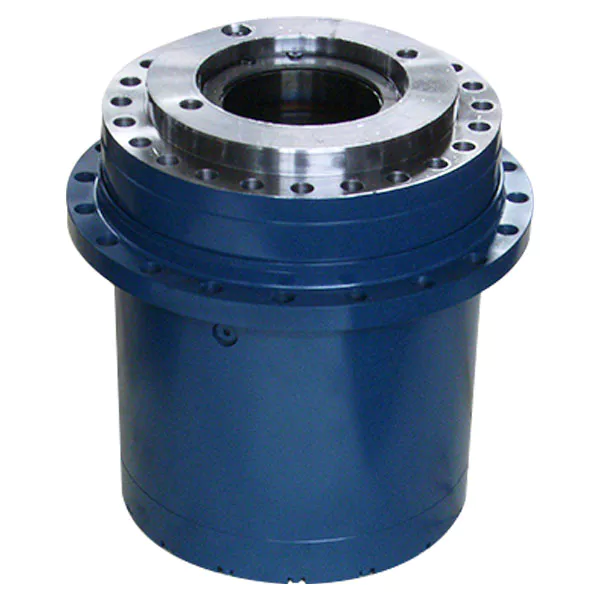
Challenges in Achieving High Gear Ratios with Compactness in Planetary Gearboxes
Designing planetary gearboxes with high gear ratios while maintaining compactness presents several challenges:
- Space Constraints: As the gear ratio increases, the number of gear stages required also increases. This can lead to larger gearbox sizes, which may be challenging to accommodate in applications with limited space.
- Bearing Loads: Higher gear ratios often result in increased loads on the bearings and other components due to the redistribution of forces. This can impact the durability and lifespan of the gearbox.
- Efficiency: Each gear stage introduces losses due to friction and other factors. With multiple stages, the overall efficiency of the gearbox can decrease, affecting its energy efficiency.
- Complexity: Achieving high gear ratios can require complex gear arrangements and additional components, which can lead to increased manufacturing complexity and costs.
- Thermal Effects: Higher gear ratios can lead to greater heat generation due to increased friction and loads. Managing thermal effects becomes crucial to prevent overheating and component failure.
To address these challenges, gearbox designers use advanced materials, precise machining techniques, and innovative bearing arrangements to optimize the design for both compactness and performance. Computer simulations and modeling play a critical role in predicting the behavior of the gearbox under different operating conditions, helping to ensure reliability and efficiency.
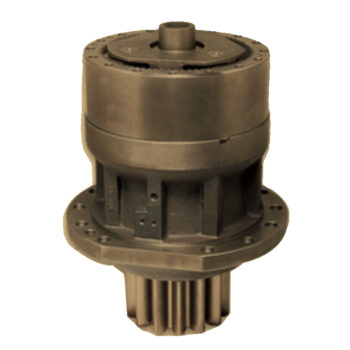
Advantages of Backlash Reduction Mechanisms in Planetary Gearboxes
Backlash reduction mechanisms in planetary gearboxes offer several advantages that contribute to improved performance and precision:
Improved Positioning Accuracy: Backlash, or the play between gear teeth, can lead to positioning errors in applications where precise movement is crucial. Reduction mechanisms help minimize or eliminate this play, resulting in more accurate positioning.
Better Reversal Characteristics: Backlash can cause a delay in reversing the direction of motion. With reduction mechanisms, the reversal is smoother and more immediate, making them suitable for applications requiring quick changes in direction.
Enhanced Efficiency: Backlash can lead to energy losses and reduced efficiency due to the impacts between gear teeth. Reduction mechanisms minimize these impacts, improving overall power transmission efficiency.
Reduced Noise and Vibration: Backlash can contribute to noise and vibration in gearboxes, affecting both the equipment and the surrounding environment. By reducing backlash, the noise and vibration levels are significantly decreased.
Better Wear Protection: Backlash can accelerate wear on gear teeth, leading to premature gearbox failure. Reduction mechanisms help distribute the load more evenly across the teeth, extending the lifespan of the gearbox.
Enhanced System Stability: In applications where stability is crucial, such as robotics and automation, backlash reduction mechanisms contribute to smoother operation and reduced oscillations.
Compatibility with Precision Applications: Industries such as aerospace, medical equipment, and optics require high precision. Backlash reduction mechanisms make planetary gearboxes suitable for these applications by ensuring accurate and reliable motion.
Increased Control and Performance: In applications where control is critical, such as CNC machines and robotics, reduction mechanisms provide better control over the motion and enable finer adjustments.
Minimized Error Accumulation: In systems with multiple gear stages, backlash can accumulate, leading to larger positioning errors. Reduction mechanisms help minimize this error accumulation, maintaining accuracy throughout the system.
Overall, incorporating backlash reduction mechanisms in planetary gearboxes leads to improved accuracy, efficiency, reliability, and performance, making them essential components in precision-driven industries.
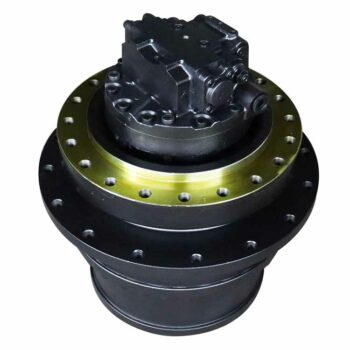
Factors to Consider When Selecting a Planetary Gearbox
Choosing the right planetary gearbox for a specific application involves considering various factors to ensure optimal performance and compatibility. Here are the key factors to keep in mind:
- Load Requirements: Determine the torque and speed requirements of your application. Planetary gearboxes offer different torque and speed ratios, so selecting the appropriate gearbox with the right load capacity is crucial.
- Ratio: Evaluate the gear reduction ratio needed to achieve the desired output speed and torque. Planetary gearboxes come in various gear ratios, allowing you to customize the output characteristics.
- Efficiency: Consider the gearbox’s efficiency, as it affects energy consumption and heat generation. Higher efficiency gearboxes minimize power losses during transmission.
- Size and Compactness: Planetary gearboxes are known for their compact size, but it’s essential to choose a size that fits within the available space while meeting performance requirements.
- Mounting Configuration: Determine how the gearbox will be mounted in your application. Planetary gearboxes can have different mounting options, including flange, shaft, or foot mountings.
- Input and Output Types: Select the appropriate input and output shaft configurations, such as male, female, keyed, splined, or hollow shafts, to ensure compatibility with your equipment.
- Environment: Consider the operating environment, including temperature, humidity, dust, and potential exposure to chemicals. Choose a gearbox with appropriate seals and materials to withstand the conditions.
- Accuracy: Some applications require precise motion control. If accuracy is essential, choose a gearbox with minimal backlash and high gear mesh quality.
- Service Life and Reliability: Evaluate the gearbox’s expected service life and reliability based on the manufacturer’s specifications. Choose a reputable manufacturer known for producing reliable products.
- Backlash: Backlash is the play between gears that can affect positioning accuracy. Depending on your application, you might need a gearbox with low backlash or a method to compensate for it.
- Budget: Consider your budget constraints while balancing performance requirements. Sometimes, investing in a higher-quality gearbox upfront can lead to long-term cost savings through reduced maintenance and downtime.
By carefully considering these factors and consulting with gearbox manufacturers or experts, you can select a planetary gearbox that best meets the unique demands of your application.


editor by CX 2023-09-05