Produktbeschreibung
Company Profiles
-We are a leading gear motor manufacturer
ZHangZhoug Xihu (West Lake) Dis.hai Reducer is a leading manufacturer of gear motor and gearbox.
Since 1991, we have specialized in manufacturing a wide range of gear motor and gear box including:
- helical gear motor
- helical bevel gear motor
- parallel shaft helical gear motor
- helical worm gear motor
- hoist drive
- heavy-duty helical gearbox
- heavy-duty helical bevel gearbox
- gear motor for car parking system
- sprial bevel gearbox
Produktbeschreibung
P series gear motor is composed with two-stage or three-stage gears. Input shaft and output shaft is parallel.
Mounting position: footed mounting, flange mounting, shaft mounting etc.
Technical data:
output speed: 10 ~ 752 rpm
rated output torque:10 ~ 20000 Nm
motor power: 0.12 ~ 200 KW
Product Show
Product Specification
| Product features | |||||||
| 1. P series parallel shaft helical gear motor are the perfect solution when installation space is limited under the same permitted torque. | |||||||
| 2. Little vibration and low noise, with high transmission efficiency. | |||||||
| 3. The many different sizes and designs ensure that the gearmotors can be used in a wide variety of applications even under the most unfavorable conditions,typically used in conveyor and materials processing applications. | |||||||
| General Technical data | |||||||
| Housing material | HT250 high-strength cast iron | ||||||
| Housing hardness | HBS190-240 | ||||||
| Pinion material | 20CrMnTiH | ||||||
| Gear material | 20CrMnTiH | ||||||
| Surface hardness of gears | HRC58°~62 ° | ||||||
| Gear core hardness | HRC33~40 | ||||||
| Werkstoff der Eingangs-/Ausgangswelle | 40CrMnTiH | ||||||
| Input / Output shaft hardness | HRC25~30 | ||||||
| Machining precision of gears | accurate grinding, 6~7 Grade | ||||||
| Lubricating oil | GB L-CKC220 | ||||||
| Heat treatment | tempering, cementiting, quenching, etc. | ||||||
| Effizienz | 94%~96% (depends on the transmission stage) | ||||||
| Noise (MAX) | 60~68dB | ||||||
| Temp. rise (MAX) | 40°C | ||||||
| Temp. rise (Oil)(MAX) | 50°C | ||||||
| Vibration | ≤20µm | ||||||
| Gegenreaktion | ≤20Arcmin | ||||||
| Brand of bearings | China Top brand C&U,LYC,TMB or other brands requested, SKF….. | ||||||
| Brand of oil seal | CTY— ZheJiang or other brands requested | ||||||
| P —- series parallel shaft helical gear motor | |||||||
| P-series single stages | |||||||
| Modell | Output Shaft Dia. | Center Height | Output Flange Dia. | Power | Verhältnis | Permitted Torque | Output Speed |
| Solid (mm) | (mm) | (mm) | (kw) | (Nm) | (RPM) | ||
| P37 | 25k6 | 112h13 | 110/160 | 0.12~3 | 3.88~130 | 240 | 10~374 |
| P47 | 30k6 | 128.1h13 | 130/200 | 0.12~3 | 9.15~622 | 435 | 2.2~157 |
| P57 | 35k6 | 136h13 | 180/250 | 0.12~5.5 | 5.21~200 | 605 | 6.5~276 |
| P67 | 40k6 | 159.5h13 | 180/250 | 0.18~5.5 | 4.14~225 | 830 | 5.7~360 |
| P77 | 50k6 | 200h13 | 230/300 | 0.25~11 | 4.28~280 | 1720 | 3.1~336 |
| P87 | 60m6 | 246.7h13 | 250/350 | 0.37~22 | 4.13~1300 | 3060 | 1.1~356 |
| P97 | 70m6 | 285h13 | 350/450 | 1.1~30 | 4.52~253 | 4400 | 3.6~131 |
| P107 | 90m6 | 332.4h13 | 350/450 | 1.1~45 | 6.29~253 | 8990 | 2.7~236 |
| P127 | 110m6 | 382.6h13 | 450/550 | 4.0~90 | 4.84~176 | 13800 | 4.2~316 |
| P157 | 120m6 | 447h13 | 550/660 | 5.5~200 | 12.5~207 | 25710 | 3.3~125 |
| P series double stages | |||||||
| Modell | Output Shaft Dia. | Center Height | Output Flange Dia. | Power | Verhältnis | Permitted Torque | Output Speed |
| Solid (mm) | (mm) | (mm) | (kw) | (Nm) | (RPM) | ||
| P37D17 | 25k6 | 112h13 | 110/160 | 0.12~0.18 | 129~322 | 190 | 4~10 |
| P47D17 | 30k6 | 128.1h13 | 130/200 | 0.12~0.18 | 178~622 | 400 | 2.2~7.4 |
| P57D37 | 35k6 | 136h13 | 180/250 | 0.12~0.37 | 134~967 | 615 | 1.4~10 |
| P67D37 | 40k6 | 159.5h13 | 180/250 | 0.12~0.55 | 175~1429 | 900 | 0.9~8 |
| P77D37 | 50k6 | 200h13 | 230/300 | 0.12~0.75 | 280~2613 | 1690 | 0.51~4.9 |
| P87D57 | 60m6 | 246.7h13 | 250/350 | 0.12~1.5 | 249~4954 | 3070 | 0.28~5.7 |
| P97D57 | 70m6 | 285h13 | 350/450 | 0.12~2.2 | 363~7348 | 4390 | 0.19~3.9 |
| P107D77 | 90m6 | 332.4h13 | 350/450 | 0.12~4.0 | 255~14767 | 9630 | 0.09~5.6 |
| P127D77 | 110m6 | 382.6h13 | 450/550 | 0.12~5.5 | 376~22323 | 13500 | 0.06-3.8 |
| P127D87 | 110m6 | 382.6h13 | 450/550 | 5.5~11 | 166~418 | 13500 | 3.4~8.7 |
| P157D97 | 120m6 | 447h13 | 550/660 | 0.55~11 | 197~6295 | 19710 | 0.22~7.3 |
| Remarks: please refer to our catalogue or ask for sales man when your technical requirements is special. | |||||||
Package
Plastic bag + wooden carton
Zertifikat
Häufig gestellte Fragen
Q: Can you print other colors?
Yes. Customized color can be printed on the gear motor according to your requirements.
Q: Is that factory price?
Yes. We assure you all prices are based on factory.
Q: What is the life span? what is the guarantee
The lifespan of gear motor can reach 5-20 years depending on different working conditions .The guarantee time is 1 year after delivery.
Q: What documents are available?
A full range documents including structural drawings, packing list, installation manual and relative certificates can be provided. Moreover, customs declaration is provided. We provide one-stop service for you.
Q: Is it able to customized?
yes, we could re-design and produce the gear motor as your requirements if the quantity is large.
| Anwendung: | Motor, Machinery, Transmission Equipment/ Crane |
|---|---|
| Härte: | Gehärtete Zahnoberfläche |
| Installation: | Horizontal Type |
| Layout: | Shunting |
| Zahnradform: | Bevel |
| Schritt: | Three-Step |
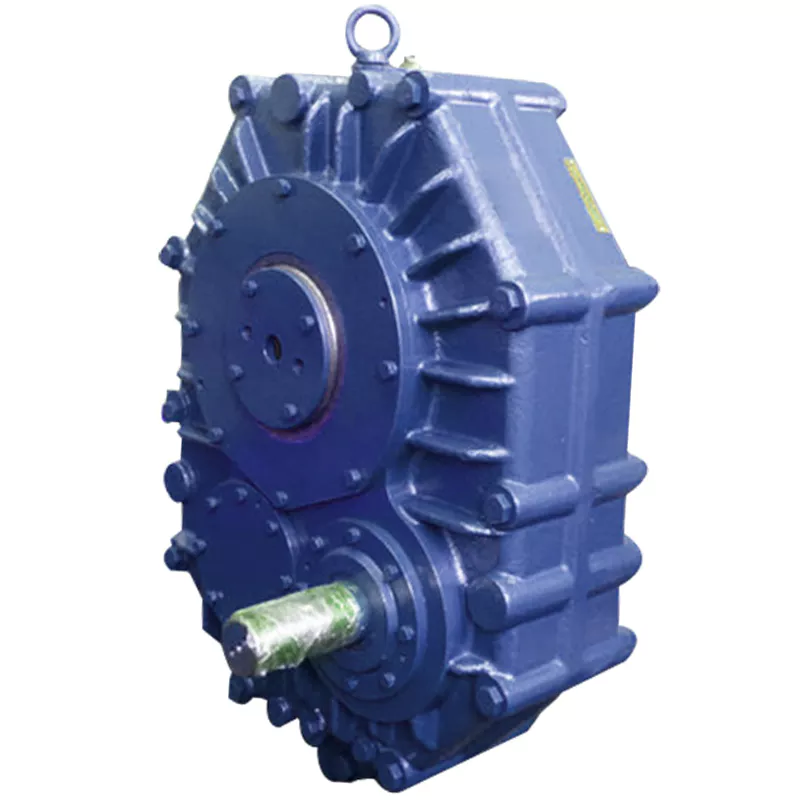
Are there any disadvantages or limitations to using gear reducer systems?
While gear reducer systems offer numerous advantages, they also come with certain disadvantages and limitations that should be considered during the selection and implementation process:
1. Size and Weight: Gear reducers can be bulky and heavy, especially for applications requiring high gear ratios. This can impact the overall size and weight of the machinery or equipment, which may be a concern in space-constrained environments.
2. Efficiency Loss: Despite their high efficiency, gear reducers can experience energy losses due to friction between gear teeth and other components. This can lead to a reduction in overall system efficiency, particularly in cases where multiple gear stages are used.
3. Cost: The design, manufacturing, and assembly of gear reducers can involve complex processes and precision machining, which can contribute to higher initial costs compared to other power transmission solutions.
4. Maintenance: Gear reducer systems require regular maintenance, including lubrication, inspection, and potential gear replacement over time. Maintenance activities can lead to downtime and associated costs in industrial settings.
5. Noise and Vibration: Gear reducers can generate noise and vibrations, especially at high speeds or when operating under heavy loads. Additional measures may be needed to mitigate noise and vibration issues.
6. Limited Gear Ratios: While gear reducers offer a wide range of gear ratios, there may be limitations in achieving extremely high or low ratios in certain designs.
7. Temperature Sensitivity: Extreme temperatures can affect the performance of gear reducer systems, particularly if inadequate lubrication or cooling is provided.
8. Shock Loads: While gear reducers are designed to handle shock loads to some extent, severe shock loads or abrupt changes in torque can still lead to potential damage or premature wear.
Despite these limitations, gear reducer systems remain widely used and versatile components in various industries, and their disadvantages can often be mitigated through proper design, selection, and maintenance practices.
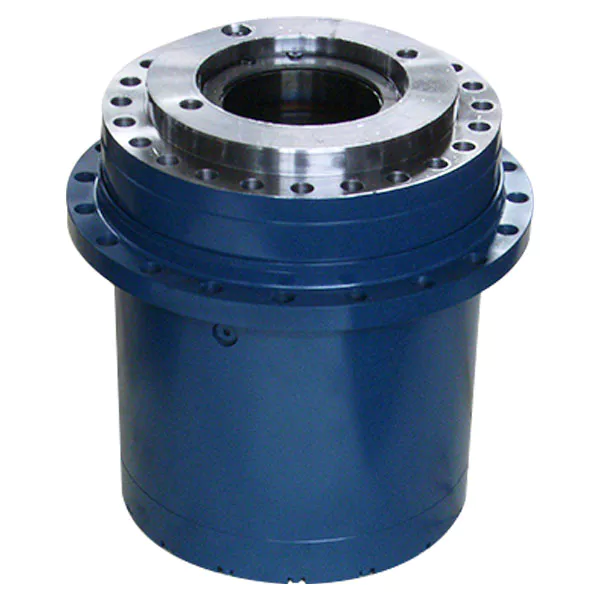
How do gear reducers ensure efficient power transmission and motion control?
Gear reducers play a vital role in ensuring efficient power transmission and precise motion control in various industrial applications. They achieve this through the following mechanisms:
- 1. Speed Reduction/Increase: Gear reducers allow you to adjust the speed between the input and output shafts. Speed reduction is essential when the output speed needs to be lower than the input speed, while speed increase is used when the opposite is required.
- 2. Drehmomentverstärkung: By altering the gear ratio, gear reducers can amplify torque from the input to the output shaft. This enables machinery to handle higher loads and provide the necessary force for various tasks.
- 3. Gear Train Efficiency: Well-designed gear trains within reducers minimize power losses during transmission. Helical and spur gears, for example, offer high efficiency by distributing load and reducing friction.
- 4. Precision Motion Control: Gear reducers provide precise control over rotational motion. This is crucial in applications where accurate positioning, synchronization, or timing is required, such as in robotics, CNC machines, and conveyor systems.
- 5. Backlash Reduction: Some gear reducers are designed to minimize backlash, which is the play between gear teeth. This reduction in play ensures smoother operation, improved accuracy, and better control.
- 6. Load Distribution: Gear reducers distribute the load evenly among multiple gear teeth, reducing wear and extending the lifespan of the components.
- 7. Shock Absorption: In applications where sudden starts, stops, or changes in direction occur, gear reducers help absorb and dampen shocks, protecting the machinery and ensuring reliable operation.
- 8. Compact Design: Gear reducers provide a compact solution for achieving specific speed and torque requirements, allowing for space-saving integration into machinery.
By combining these principles, gear reducers facilitate the efficient and controlled transfer of power, enabling machinery to perform tasks accurately, reliably, and with the required force, making them essential components in a wide range of industries.
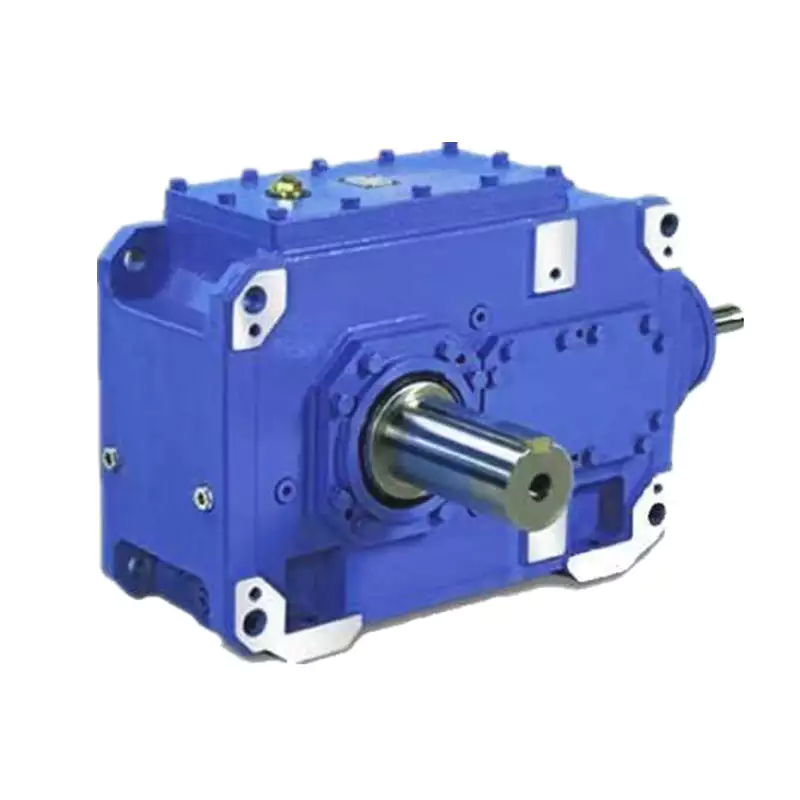
Gibt es bei den Getriebeuntersetzungsgetrieben Varianten für spezifische Aufgaben und Anwendungen?
Ja, Getriebe gibt es in vielen verschiedenen Ausführungen, um spezifischen Aufgaben und Anwendungen in unterschiedlichen Branchen gerecht zu werden. Hersteller bieten eine Reihe von Getriebetypen und -konfigurationen an, um verschiedenen Anforderungen gerecht zu werden, darunter:
- Stirnradgetriebe: Diese vielseitigen Bauteile gewährleisten eine gleichmäßige und effiziente Drehmomentübertragung. Sie werden häufig in Anwendungen eingesetzt, die hohe Präzision und moderate Drehzahlreduzierung erfordern, wie beispielsweise Förderbänder, Mischer und Rührwerke.
- Kegelradgetriebe: Sie eignen sich ideal zur Kraftübertragung zwischen sich kreuzenden Wellen. Sie werden häufig in schweren Maschinen, Druckmaschinen und Automobilanwendungen eingesetzt.
- Schneckengetriebe: Diese bieten kompakte Lösungen und eignen sich für Anwendungen mit höheren Anforderungen an die Geschwindigkeitsreduzierung, wie z. B. Förderanlagen, Winden und Aufzüge.
- Planetengetriebe: Diese bieten eine hohe Drehmomentdichte und werden in Anwendungen eingesetzt, die eine präzise Steuerung erfordern, wie z. B. Robotik, Luft- und Raumfahrt sowie Schwermaschinenbau.
- Parallelwellen-Getriebe: Diese in Industriemaschinen häufig verwendeten Getriebe sind auf hohes Drehmoment und Zuverlässigkeit ausgelegt.
- rechtwinklige Untersetzungsgetriebe: Sie kommen zum Einsatz, wenn aufgrund von Platzmangel eine Änderung der Wellenrichtung erforderlich ist, wie es häufig bei Verpackungsmaschinen und Förderbändern der Fall ist.
Jeder Getriebetyp besitzt einzigartige Merkmale und Vorteile, die ihn für bestimmte Aufgaben geeignet machen. Hersteller bieten häufig Anpassungsmöglichkeiten an, um Getriebe exakt an die Anforderungen einer Anwendung anzupassen, darunter Übersetzungsverhältnisse, Montageoptionen und Eingangs-/Ausgangskonfigurationen.
Die Vielfalt der Getriebekonstruktionen ermöglicht es der Industrie daher, den am besten geeigneten Typ anhand von Faktoren wie Drehmoment, Drehzahl, Platzverhältnissen, Präzision und Umgebungsbedingungen auszuwählen.


editor by CX 2023-09-28