Produktbeschreibung
Product Description:
Planetar gearbox is a kind of reducer with wide versatility. The inner gear adopts low carbon alloy steel carburizing quenching and grinding or nitriding process. Planetary gearbox has the characteristics of small structure size, large output torque, high speed ratio, high efficiency, safe and reliable performance, etc. The inner gear of the planetary gearbox can be divided into spur gear and helical gear.
Technical parameter:
| Section number | single section | ||||||||
| Reduction ratio | i | 3 | 4 | 5 | 6 | 7 | 8 | 9 | 10 |
| Rated output torque (Ta) | Nm | 55 | 50 | 60 | 55 | 50 | 45 | 40 | 40 |
| Emergency stop torque (Tzwor*) | Nm | Three times the rated output torque | |||||||
| Rated input speed (n) | U/min | 5000 | |||||||
| Maximum input speed (na) | U/min | 1000o | |||||||
| Ultra-precision backlash (PO) | Bogenminute | – | |||||||
| Precision backlash (P1) | Bogenminute | ≤3 | |||||||
| Standard backlash (P2) | Bogenminute | ≤5 | |||||||
| Torsional rigidity | Nm/arcmin | 7 | |||||||
| Allowable radial force | N | 1530 | |||||||
| allowable axial force | N | 765 | |||||||
| service life | hr | 20000 | |||||||
| effectiveness (n) | % | ≥97% | |||||||
| weight | kg | 1.3 | |||||||
| Operating temperature | ºC | -10°ºC~+90°ºC | |||||||
| lubricating | Synthetic grease | ||||||||
| Protection class | IP64 | ||||||||
| Installation direction | any direction | ||||||||
| Noise value(n1=3000rpm,no load) | dB(A) | ≤58 | |||||||
| Moment of inertia (J) | kg-cm’ | 0.16 0.14 0.13 | |||||||
Picture:
Rear Reducer features:
1. High-quality aluminum alloy, light in weight and non-rusting.
2. Large in output torque.
3. Smooth running and low noise,durable in dreadful conditions.
4. High radiation efficiency.
5. Good-looking appearance, durable in service life and small volume.
6. Geeignet für omnilagerfähige Installationen.
Company Information:
HangZhou ChangLong Motor Co.,Ltd
( original HangZhou LINNAN Special Motor Factory)
With 20 years’ hard working on developing , designing and manufacturing the high-speed electrical spindle, we have got our new GDZ-series electrical spindle, which is well recognized by clients for its great and stable quality after being put large quantities to the market. We provide quality guarantee and after-sales service for all of our products with the free manual work and the cost price for the materials or fittings.
FAQ:
How about the warrantly about your company?
bearings=half a year, other parts a year
Which kinds of bearing you are using?
It will according to your order. We have different price range for you with different bearing.
Do you have other spare parts for spindle motor, just like gripper, VFD, collet ?
We have all kits.And we can let engineers help you to program them.
Can I visit your factory?
Yes, welcome to our factory.
Do you have installation page?
Yes,we have.
Can you show me the inspection report ?
Yes We will send you inspection report of spindle after you send me full money before despatch.
The reasen is that I’m not sure which spindle will be sent to you.Every spindle have it’s inspection report .And they are different in details.Only if you pay the money,we can decide which spindle to deliver you.
We also have spindle motor matching inverter(VFD), collet , gripper etc.
If you need other kinds of parts, please don’t hesitate to contact us.
| Anwendung: | Motor, Electric Cars, Motorcycle, Machinery, Marine, Toy, Agricultural Machinery |
|---|---|
| Funktion: | Distribution Power, Change Drive Torque, Speed Changing, Speed Reduction |
| Layout: | Zykloid |
| Härte: | Gehärtete Zahnoberfläche |
| Schritt: | Double-Step |
| Typ: | Planetary Gear Box |
| Anpassung: |
Verfügbar
| Kundenspezifische Anfrage |
|---|
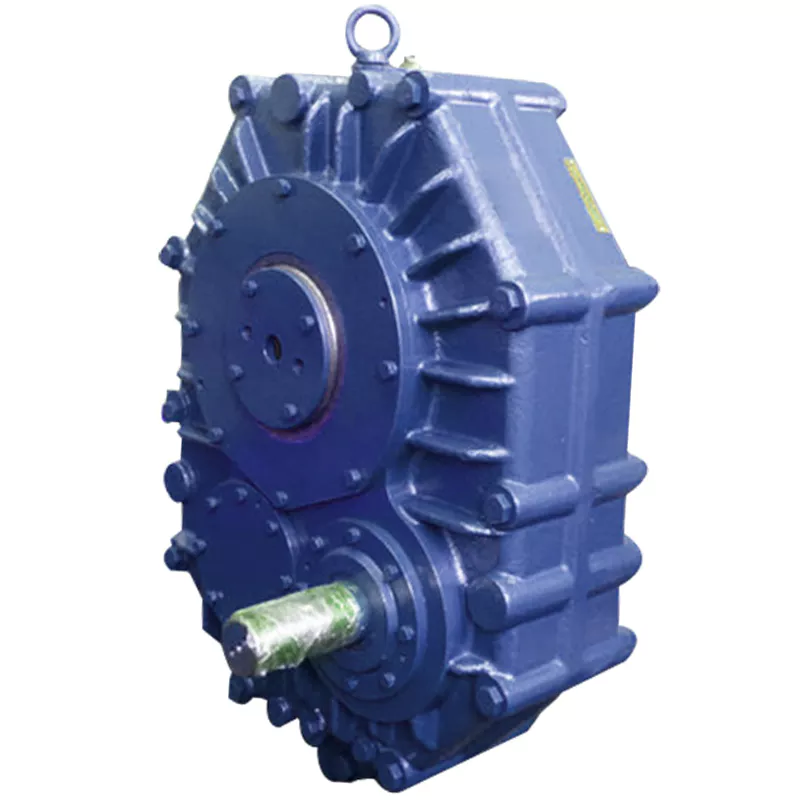
Are there any disadvantages or limitations to using gear reducer systems?
While gear reducer systems offer numerous advantages, they also come with certain disadvantages and limitations that should be considered during the selection and implementation process:
1. Size and Weight: Gear reducers can be bulky and heavy, especially for applications requiring high gear ratios. This can impact the overall size and weight of the machinery or equipment, which may be a concern in space-constrained environments.
2. Efficiency Loss: Despite their high efficiency, gear reducers can experience energy losses due to friction between gear teeth and other components. This can lead to a reduction in overall system efficiency, particularly in cases where multiple gear stages are used.
3. Cost: The design, manufacturing, and assembly of gear reducers can involve complex processes and precision machining, which can contribute to higher initial costs compared to other power transmission solutions.
4. Maintenance: Gear reducer systems require regular maintenance, including lubrication, inspection, and potential gear replacement over time. Maintenance activities can lead to downtime and associated costs in industrial settings.
5. Noise and Vibration: Gear reducers can generate noise and vibrations, especially at high speeds or when operating under heavy loads. Additional measures may be needed to mitigate noise and vibration issues.
6. Limited Gear Ratios: While gear reducers offer a wide range of gear ratios, there may be limitations in achieving extremely high or low ratios in certain designs.
7. Temperature Sensitivity: Extreme temperatures can affect the performance of gear reducer systems, particularly if inadequate lubrication or cooling is provided.
8. Shock Loads: While gear reducers are designed to handle shock loads to some extent, severe shock loads or abrupt changes in torque can still lead to potential damage or premature wear.
Despite these limitations, gear reducer systems remain widely used and versatile components in various industries, and their disadvantages can often be mitigated through proper design, selection, and maintenance practices.
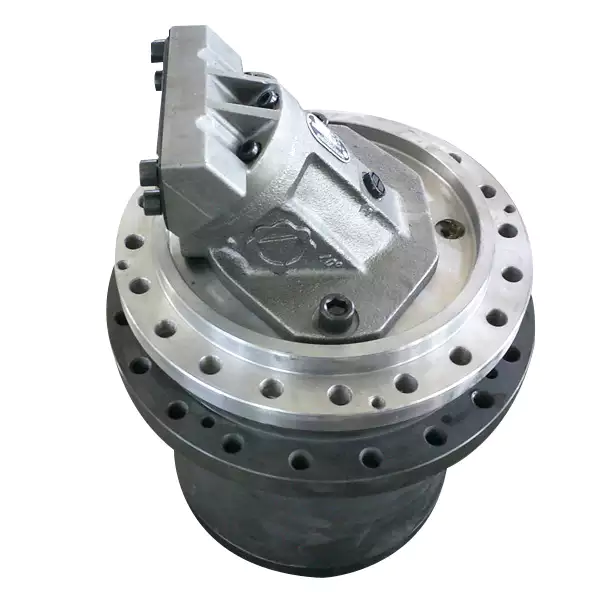
Welche Faktoren sollten bei der Auswahl des richtigen Getriebes berücksichtigt werden?
Bei der Auswahl des geeigneten Getriebes müssen mehrere entscheidende Faktoren berücksichtigt werden, um optimale Leistung und Effizienz für Ihre spezifische Anwendung zu gewährleisten:
- 1. Drehmoment- und Leistungsanforderungen: Ermitteln Sie, welches Drehmoment und welche Leistung Ihre Maschine für ihren Betrieb benötigt.
- 2. Geschwindigkeitsverhältnis: Berechnen Sie die erforderliche Drehzahlreduzierung oder -erhöhung, um die Eingangs- und Ausgangsdrehzahlen aufeinander abzustimmen.
- 3. Getriebetyp: Wählen Sie den geeigneten Getriebetyp (Schräg-, Kegel-, Schnecken-, Planetengetriebe usw.) basierend auf den Drehmoment-, Präzisions- und Effizienzanforderungen Ihrer Anwendung.
- 4. Montageoptionen: Berücksichtigen Sie den verfügbaren Platz und die Montagekonfiguration, die am besten zu Ihren Maschinen passt.
- 5. Umgebungsbedingungen: Bewerten Sie Faktoren wie Temperatur, Luftfeuchtigkeit, Staub und korrosive Elemente, die die Leistung des Getriebes beeinträchtigen können.
- 6. Effizienz: Prüfen Sie den Wirkungsgrad des Getriebes, um Leistungsverluste zu minimieren und die Gesamtleistung des Systems zu verbessern.
- 7. Gegenreaktion: Beachten Sie das zulässige Spiel zwischen den Zahnrädern, da dieses die Präzision beeinträchtigen kann.
- 8. Wartungsanforderungen: Ermitteln Sie die Wartungsintervalle und -verfahren, die für einen zuverlässigen Betrieb erforderlich sind.
- 9. Lärm und Vibrationen: Prüfen Sie die Geräusch- und Vibrationswerte, um sicherzustellen, dass sie den Anforderungen Ihrer Maschinen entsprechen.
- 10. Kosten: Vergleichen Sie die Anschaffungskosten und den langfristigen Wert verschiedener Getriebeoptionen.
Durch die sorgfältige Bewertung dieser Faktoren und die Beratung mit Getriebeherstellern können Ingenieure und Branchenexperten fundierte Entscheidungen treffen, um das richtige Getriebe für ihre spezifische Anwendung auszuwählen und so Leistung, Lebensdauer und Kosteneffizienz zu optimieren.
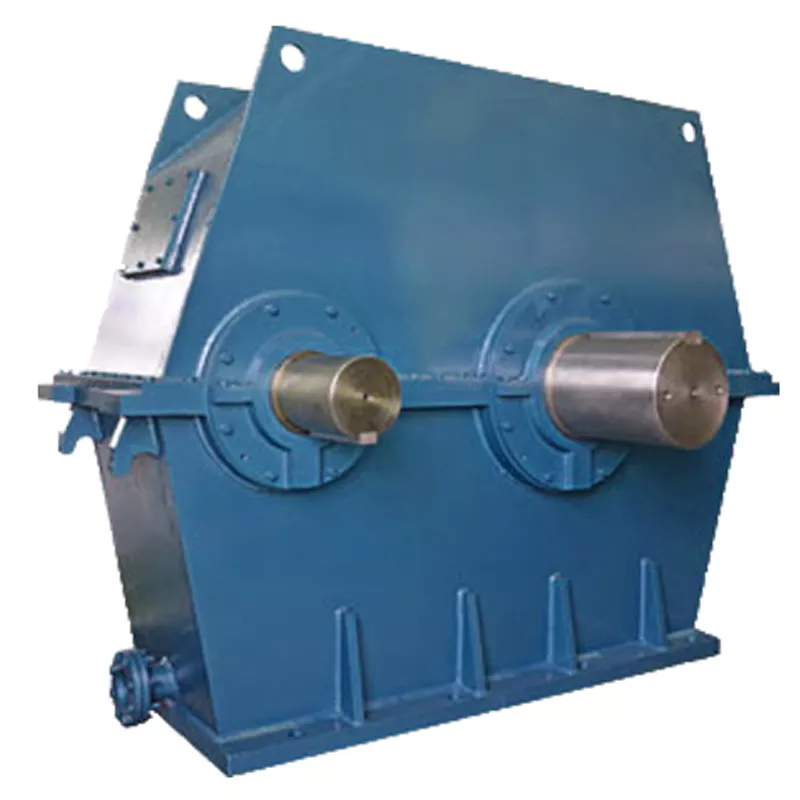
Funktion von Getrieben in mechanischen Systemen
Ein Untersetzungsgetriebe, auch bekannt als Getriebeeinheit oder Getriebegetriebe im engeren Sinne, ist ein mechanisches Gerät, das die Drehzahl einer Eingangswelle reduziert und gleichzeitig deren Drehmoment erhöht. Dies wird durch den Einsatz von ineinandergreifenden Zahnrädern unterschiedlicher Größe erreicht.
Die Hauptfunktion eines Getriebes in mechanischen Systemen ist:
- Geschwindigkeitsreduzierung: Das Untersetzungsgetriebe überträgt die hohe Drehzahl der Eingangswelle über ein Zahnradpaar auf die Ausgangswelle. Die Zahnräder sind so angeordnet, dass das Ausgangszahnrad einen größeren Durchmesser als das Eingangszahnrad aufweist. Dadurch dreht sich die Ausgangswelle mit einer geringeren Drehzahl als die Eingangswelle, erzeugt aber ein höheres Drehmoment.
- Drehmomentsteigerung: Aufgrund des Größenunterschieds zwischen Eingangs- und Ausgangszahnrad ist das auf die Ausgangswelle wirkende Drehmoment größer als das auf die Eingangswelle. Diese Drehmomentverstärkung ermöglicht es dem System, höhere Lasten zu bewältigen und Aufgaben mit höherem Kraftaufwand auszuführen.
Getriebe finden breite Anwendung in verschiedenen Branchen und Bereichen, in denen die Drehzahl- und Drehmomentcharakteristik einer Antriebsquelle an die Anforderungen der angetriebenen Geräte angepasst werden muss. Sie werden beispielsweise in Förderanlagen, Industriemaschinen und Fahrzeugen eingesetzt.


editor by CX 2023-11-02