Produktbeschreibung
earth moving equipment post hole digger auger driver head gearbox for sale
Product description:
Daixin planetary reducer gearbox is designed with large torque, high start and transmission efficiency, low-speed stability, compact radial size, low noise, etc.
The main devices we are making are walking reducers, lifting reducers and swing reducers.
They are widely used for vehicle cranes, crawler cranes, truck mounted cranes, marine cranes, aerial work trucks, excavators, etc.
| Product | Auger drive planetary gearbox |
| Modell | DH4B4Y |
| Nenndrehmoment | 3500 Nm |
| Max. output torque | 4000 Nm |
| Verhältnis | 3.5:1 |
| Rated input torque | 455 Nm |
| Max. input torque | 625 Nm |
| Max. input speed | 560 r/min |
| Max. output speed | 165 r/min |
| Application | slewing drive for augers, concrete mixers, mowers, and any other devices which need to increase torque |
| OEM | Acceptable |
Product features:
1.Compact size
2.Low noise
3.High start-up and working efficiency
4.Easy installation, operation and maintenance
5.Various models for wide applications
6.One year warranty
7.Free components for replacement within warranty period
8.Professional and tailored solution for different requirements
9.Free technical support at any time
10.Customer training is available.
Packing and delivery details:
Packing method: plywood box (1 pc / box)
Packing dimensions: 490*350*350 mm
Weight: 50kg
Company details:
ZheJiang CHINAMFG Intelligent Technology Co., Ltd is a scientific and technological enterprise engaged in the research, development and production of planetary gear transmission products, like slewing reducers, Travel drive reducers, lifting winch reducers, hydraulic winches, etc.
The company has always put quality management as the top priority of the company’s development. The products are manufactured not only meet the international ISO 4301 and ISO9001 standards, but also meet the US SAE J706 and the European Union CE standards.
Daixin Intelligent Technology relies on quality, reputation and service to develop, cultivate and consolidate the national and global markets. Be our partners and be our friends.
Our clients:
The company relies on quality, reputation and service to develop, cultivate and consolidate the national and global markets.
Currently, the cooperative customers include: the famous construction machinery manufacturers, the largest wrecker manufacturer ZheJiang CHINAMFG Company, and the largest high-altitude vehicle manufacturer HangZhou Handler Company.
Products are also exported to Russia, Belarus, Spain, UK, Canada, Australia, India, Malaysia and other countries.
FAQ:
1.How to choose the product which meets our requirement?
A) Look through our shop, find a proper item, send me an inquiry, I quote details for you.
B) In case no suitable item in our shop, send me an inquiry with your requirements, we can customize for you.
2.What is payment term?
A) For regular design: 30% deposit, the balance before loading.
B) For customized design: 50% deposit, the balance before loading.
Payment term is negotiable according to order.
3.What is delivery time?
A) For common models in stock, delivery time are 5-7 days.
B) For customized models and new production, delivery time are 30-40 days.
5.How about after-sale service?
A) Within warranty, all spare parts are delivered for free.
B) Exceed warranty, all spare parts are offered with the lowest production cost.
Warranty period is 1 year, but our servicing is for the whole lifetime of product, so no worry for reselling and personal resell.
Thank you for the time. For any question or requirements, please contact me :-)
/* March 10, 2571 17:59:20 */!function(){function s(e,r){var a,o={};try{e&&e.split(“,”).forEach(function(e,t){e&&(a=e.match(/(.*?):(.*)$/))&&1
| Anwendung: | Machinery, Agricultural Machinery, Auger |
|---|---|
| Härte: | Gehärtete Zahnoberfläche |
| Installation: | Horizontal Type |
| Layout: | Koaxial |
| Zahnradform: | Zylinderzahnrad |
| Schritt: | Single-Step |
| Anpassung: |
Verfügbar
| Kundenspezifische Anfrage |
|---|
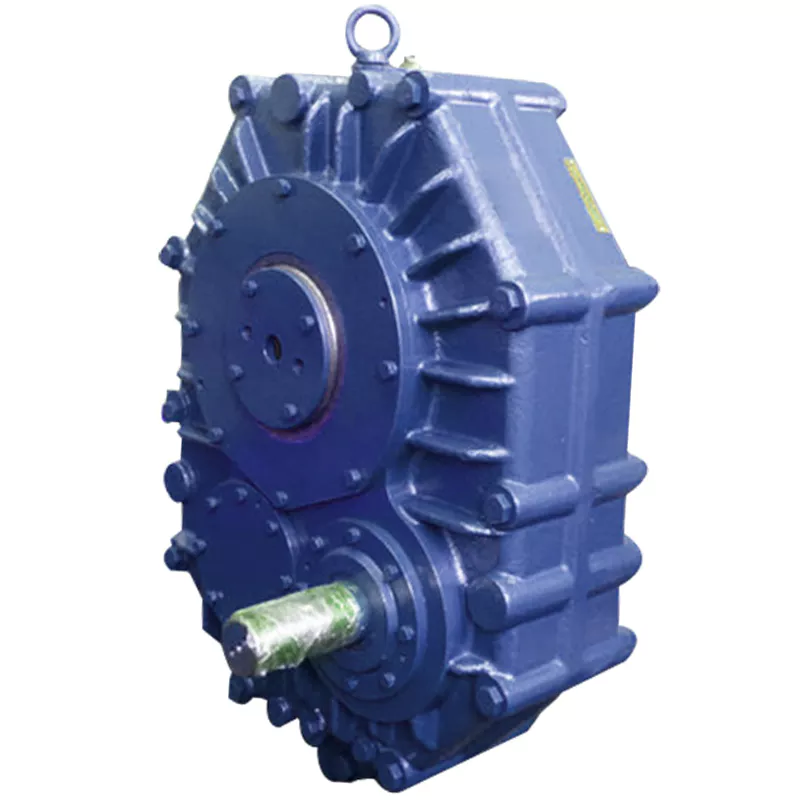
Are there any disadvantages or limitations to using gear reducer systems?
While gear reducer systems offer numerous advantages, they also come with certain disadvantages and limitations that should be considered during the selection and implementation process:
1. Size and Weight: Gear reducers can be bulky and heavy, especially for applications requiring high gear ratios. This can impact the overall size and weight of the machinery or equipment, which may be a concern in space-constrained environments.
2. Efficiency Loss: Despite their high efficiency, gear reducers can experience energy losses due to friction between gear teeth and other components. This can lead to a reduction in overall system efficiency, particularly in cases where multiple gear stages are used.
3. Cost: The design, manufacturing, and assembly of gear reducers can involve complex processes and precision machining, which can contribute to higher initial costs compared to other power transmission solutions.
4. Maintenance: Gear reducer systems require regular maintenance, including lubrication, inspection, and potential gear replacement over time. Maintenance activities can lead to downtime and associated costs in industrial settings.
5. Noise and Vibration: Gear reducers can generate noise and vibrations, especially at high speeds or when operating under heavy loads. Additional measures may be needed to mitigate noise and vibration issues.
6. Limited Gear Ratios: While gear reducers offer a wide range of gear ratios, there may be limitations in achieving extremely high or low ratios in certain designs.
7. Temperature Sensitivity: Extreme temperatures can affect the performance of gear reducer systems, particularly if inadequate lubrication or cooling is provided.
8. Shock Loads: While gear reducers are designed to handle shock loads to some extent, severe shock loads or abrupt changes in torque can still lead to potential damage or premature wear.
Despite these limitations, gear reducer systems remain widely used and versatile components in various industries, and their disadvantages can often be mitigated through proper design, selection, and maintenance practices.
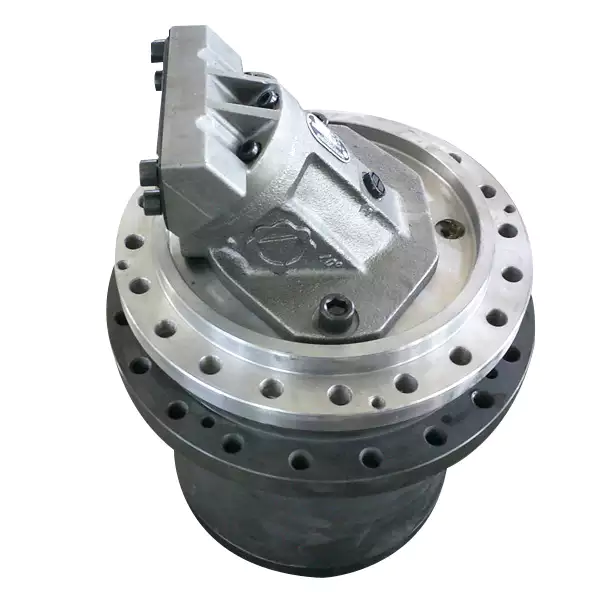
Welche Faktoren sollten bei der Auswahl des richtigen Getriebes berücksichtigt werden?
Bei der Auswahl des geeigneten Getriebes müssen mehrere entscheidende Faktoren berücksichtigt werden, um optimale Leistung und Effizienz für Ihre spezifische Anwendung zu gewährleisten:
- 1. Drehmoment- und Leistungsanforderungen: Ermitteln Sie, welches Drehmoment und welche Leistung Ihre Maschine für ihren Betrieb benötigt.
- 2. Geschwindigkeitsverhältnis: Berechnen Sie die erforderliche Drehzahlreduzierung oder -erhöhung, um die Eingangs- und Ausgangsdrehzahlen aufeinander abzustimmen.
- 3. Getriebetyp: Wählen Sie den geeigneten Getriebetyp (Schräg-, Kegel-, Schnecken-, Planetengetriebe usw.) basierend auf den Drehmoment-, Präzisions- und Effizienzanforderungen Ihrer Anwendung.
- 4. Montageoptionen: Berücksichtigen Sie den verfügbaren Platz und die Montagekonfiguration, die am besten zu Ihren Maschinen passt.
- 5. Umgebungsbedingungen: Bewerten Sie Faktoren wie Temperatur, Luftfeuchtigkeit, Staub und korrosive Elemente, die die Leistung des Getriebes beeinträchtigen können.
- 6. Effizienz: Prüfen Sie den Wirkungsgrad des Getriebes, um Leistungsverluste zu minimieren und die Gesamtleistung des Systems zu verbessern.
- 7. Gegenreaktion: Beachten Sie das zulässige Spiel zwischen den Zahnrädern, da dieses die Präzision beeinträchtigen kann.
- 8. Wartungsanforderungen: Ermitteln Sie die Wartungsintervalle und -verfahren, die für einen zuverlässigen Betrieb erforderlich sind.
- 9. Lärm und Vibrationen: Prüfen Sie die Geräusch- und Vibrationswerte, um sicherzustellen, dass sie den Anforderungen Ihrer Maschinen entsprechen.
- 10. Kosten: Vergleichen Sie die Anschaffungskosten und den langfristigen Wert verschiedener Getriebeoptionen.
Durch die sorgfältige Bewertung dieser Faktoren und die Beratung mit Getriebeherstellern können Ingenieure und Branchenexperten fundierte Entscheidungen treffen, um das richtige Getriebe für ihre spezifische Anwendung auszuwählen und so Leistung, Lebensdauer und Kosteneffizienz zu optimieren.
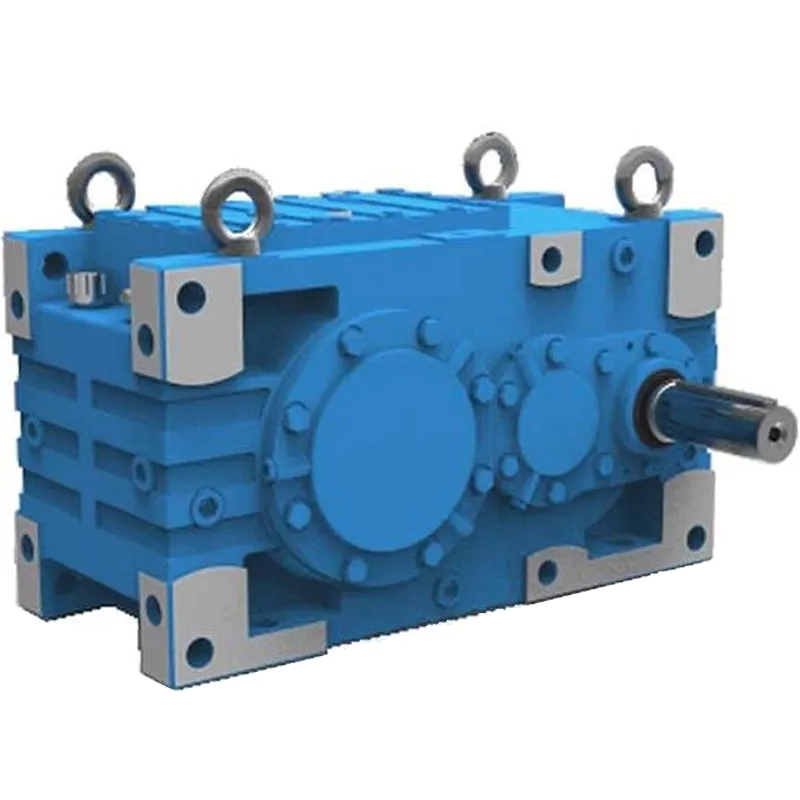
Can you explain the different types of gear reducers available in the market?
There are several types of gear reducers commonly used in industrial applications:
1. Spur Gear Reducers: These reducers have straight teeth and are cost-effective for applications requiring moderate torque and speed reduction. They are efficient but may produce more noise compared to other types.
2. Helical Gear Reducers: Helical gears have angled teeth, which provide smoother and quieter operation compared to spur gears. They offer higher torque capacities and are suitable for heavy-duty applications.
3. Bevel Gear Reducers: Bevel gears have conical shapes and intersect at an angle, allowing them to transmit power between non-parallel shafts. They are commonly used in applications where shafts intersect at 90 degrees.
4. Worm Gear Reducers: Worm gears consist of a worm (screw) and a mating gear (worm wheel). They offer high torque reduction and are used for applications requiring high ratios, although they can be less efficient.
5. Planetary Gear Reducers: These reducers use a system of planetary gears to achieve high torque output in a compact design. They provide excellent torque multiplication and are commonly used in robotics and automation.
6. Cycloidal Gear Reducers: Cycloidal drives use an eccentric cam to achieve speed reduction. They offer high shock load resistance and are suitable for applications with frequent starting and stopping.
7. Harmonic Drive Reducers: Harmonic drives use a flexible spline to achieve high gear reduction ratios. They provide high precision and are commonly used in applications requiring accurate positioning.
8. Hypoid Gear Reducers: Hypoid gears have helical teeth and non-intersecting shafts, making them suitable for applications with space limitations. They offer high torque and efficiency.
Each type of gear reducer has its own advantages and limitations, and the choice depends on factors such as torque requirements, speed ratios, noise levels, space constraints, and application-specific needs.


editor by CX 2024-01-09