Produktbeschreibung
Produktbeschreibung
The NHK series is an economic version with a round body design, an integrated sun gear motor shaft design, and high-strength deep groove ball bearings. Mainly used in injection moulding robots, food packaging machines, filling machine lines, labelling machines, appliance production lines, non-metal processing equipment and many other industries.
Applicable industries:
Injection moulding robots, food packaging machines, filling machine lines, labelling machines, appliance production lines, non-metal processing equipment and many other industries.
Product Name: High Precision Planetary Gedarbox
Product Series:NHK Series
Features:High precision,low noise,light weight
Product Description:
Integrated design concept with high-strength bearings ensure the product itself is durable and efficient
A variety of output ideas such as shaft output, flange and gear are available.
1 arc minute ≤ backlash ≤ 3 arc minutes
Reduction ratios ranging from 3 to 100
Frame design: increases torque and optimizes power transmission
Optimised selection of oil seals: reduces friction and laminate transmission efficiency
Protection class IP65
Warranty: 2 years
Unsere Vorteile
Advantages:
High precision
Low noise
Light-weight
Detailed Photos
Produktparameter
| Frame | Modell | Verhältnis | Nominal | Maximum | Emergency | Nominal | Maximum | Permitted | Permitted axial load | Maximum | Maximum | Weight | Moment | Moment | Moment | Moment |
| size | output torque | output torque | stop torque | input speed | input speed | radial load | radial load | axial load | of inertia(≤Φ28) | of inertia(≤Φ38) | of inertia(≤Φ48) | of inertia(≤Φ65) | ||||
| [Nm] | [Nm] | [Nm] | [rpm] | [rpm] | [N] | [N] | [N] | [N] | [KG] | [kgcm²] | [kgcm²] | [kgcm²] | [kgcm²] | |||
| 180 | single | 3 | 500 | 970 | 2200 | 1500 | 3000 | 5600 | 4300 | 15000 | 14000 | 36 | – | 44 | 66 | 130 |
| 4 | 750 | 1400 | 2750 | 1500 | 3000 | 6200 | 4900 | 15000 | 14000 | – | 28 | 50 | 110 | |||
| 5 | 750 | 1400 | 2750 | 1500 | 3000 | 6700 | 5400 | 15000 | 14000 | – | 22 | 44 | 100 | |||
| 6 | 750 | 1400 | 2750 | 1500 | 3000 | 7100 | 5800 | 15000 | 14000 | – | 18 | 41 | 100 | |||
| 7 | 750 | 1400 | 2750 | 1500 | 3000 | 7400 | 6300 | 15000 | 14000 | – | 16 | 38 | 99 | |||
| 8 | 750 | 1400 | 2750 | 1500 | 3000 | 7800 | 6600 | 15000 | 14000 | – | 15 | 37 | 97 | |||
| 9 | 500 | 970 | 2200 | 1500 | 3000 | 8100 | 7000 | 15000 | 14000 | – | 14 | 36 | 97 | |||
| 10 | 500 | 970 | 2200 | 1500 | 3000 | 8400 | 7300 | 15000 | 14000 | – | 14 | 36 | 96 |
Anwendbare Branchen
Packaging Machinery Mechanical Hand Textile Machinery
Non Standard automation Machine Tool Printing Equipment
Certifications
Unternehmensprofil
DESBOER (HangZhou) Transmission Technology Co., Ltd. is a subsidiary of DESBOER (China), which is committed to the design, development, customized production and sales of high precision planetary reducer as 1 of the technology company. Our company has over 10 years of design, production and sales experience, the main products are the high precision planetary reducer, gear, rack, etc., with high quality, short delivery period, high cost performance and other advantages to better serve the demand of global customers. It is worth noting that we remove the intermediate link sale from the factory directly to customers, so that you can get the most ideal price and also get our best quality service simultaneously.
About Research
In order to strengthen the advantages of products in the international market, the head company in Kyoto, Japan to established KABUSHIKIKAISYA KYOEKI, mainly engaged in the development of DESBOER high precision planetary reducer, high precision of transmission components such as the development work, to provide the most advanced design technology and the most high-quality products for the international market.
| Anwendung: | Motor, Machinery, Marine, Agricultural Machinery, CNC Machine |
|---|---|
| Funktion: | Change Drive Torque, Speed Changing, Speed Reduction |
| Layout: | Plantery Type |
| Härte: | Gehärtete Zahnoberfläche |
| Installation: | All Directions |
| Schritt: | Single-Step |
| Anpassung: |
Verfügbar
| Kundenspezifische Anfrage |
|---|
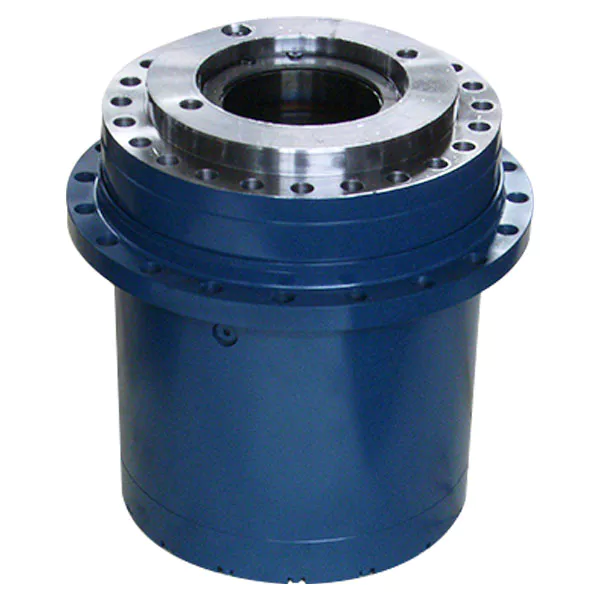
Herausforderungen bei der Realisierung hoher Übersetzungsverhältnisse und kompakter Bauweise in Planetengetrieben
Die Konstruktion von Planetengetrieben mit hohen Übersetzungsverhältnissen bei gleichzeitiger Beibehaltung der Kompaktheit stellt mehrere Herausforderungen dar:
- Platzbeschränkungen: Mit steigendem Übersetzungsverhältnis erhöht sich auch die Anzahl der benötigten Getriebestufen. Dies kann zu größeren Getriebeabmessungen führen, deren Einbau in Anwendungen mit begrenztem Platzangebot problematisch sein kann.
- Lagerbelastungen: Höhere Übersetzungsverhältnisse führen aufgrund der veränderten Kraftverteilung häufig zu höheren Belastungen der Lager und anderer Bauteile. Dies kann die Haltbarkeit und Lebensdauer des Getriebes beeinträchtigen.
- Effizienz: Jede Getriebestufe verursacht Verluste durch Reibung und andere Faktoren. Bei mehreren Stufen kann der Gesamtwirkungsgrad des Getriebes sinken, was sich negativ auf dessen Energieeffizienz auswirkt.
- Komplexität: Um hohe Übersetzungsverhältnisse zu erreichen, können komplexe Getriebeanordnungen und zusätzliche Bauteile erforderlich sein, was zu einer erhöhten Komplexität und höheren Kosten in der Fertigung führen kann.
- Thermische Effekte: Höhere Übersetzungsverhältnisse können aufgrund erhöhter Reibung und Belastung zu einer stärkeren Wärmeentwicklung führen. Die Kontrolle der thermischen Effekte ist daher entscheidend, um Überhitzung und Bauteilausfälle zu vermeiden.
Um diese Herausforderungen zu meistern, setzen Getriebekonstrukteure auf fortschrittliche Werkstoffe, präzise Bearbeitungstechniken und innovative Lageranordnungen, um die Konstruktion hinsichtlich Kompaktheit und Leistung zu optimieren. Computersimulationen und Modellierungen spielen eine entscheidende Rolle bei der Vorhersage des Getriebeverhaltens unter verschiedenen Betriebsbedingungen und tragen so zur Gewährleistung von Zuverlässigkeit und Effizienz bei.
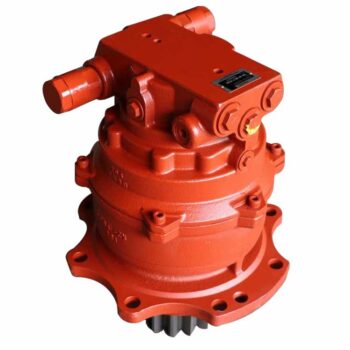
Recent Advancements in Planetary Gearbox Technology
Advancements in planetary gearbox technology have led to improved performance, efficiency, and durability. Here are some notable developments:
High-Efficiency Gearing: Manufacturers are using advanced materials and precision manufacturing techniques to create gears with optimized tooth profiles. This reduces friction and enhances overall efficiency, resulting in higher power transmission with lower energy losses.
Enhanced Lubrication: Innovative lubrication systems and high-performance lubricants are being employed to ensure consistent and reliable lubrication even in extreme conditions. This helps to reduce wear and extend the lifespan of the gearbox.
Compact Designs: Engineers are focusing on designing more compact and lightweight planetary gearboxes without compromising their performance. This is particularly important for applications with limited space and weight constraints.
Integrated Sensors: Planetary gearboxes are now being equipped with sensors and monitoring systems that provide real-time data on temperature, vibration, and other operating parameters. This allows for predictive maintenance and early detection of potential issues.
Smart Gearboxes: Some modern planetary gearboxes are equipped with smart features such as remote monitoring, adaptive control, and data analysis. These features contribute to more efficient operation and better integration with automation systems.
Advanced Materials: The use of high-strength and wear-resistant materials, such as advanced alloys and composites, improves the durability and load-carrying capacity of planetary gearboxes. This is particularly beneficial for heavy-duty and high-torque applications.
Customization and Simulation: Advanced simulation and modeling tools enable engineers to design and optimize planetary gearboxes for specific applications. This customization helps achieve the desired performance and reliability levels.
Noise and Vibration Reduction: Innovations in gear design and manufacturing techniques have led to quieter and smoother-running planetary gearboxes, making them suitable for applications where noise and vibration are concerns.
Environmental Considerations: With growing environmental awareness, manufacturers are developing more eco-friendly lubricants and materials for planetary gearboxes, reducing their ecological footprint.
Overall, recent advancements in planetary gearbox technology are aimed at enhancing efficiency, durability, and versatility to meet the evolving demands of various industries and applications.
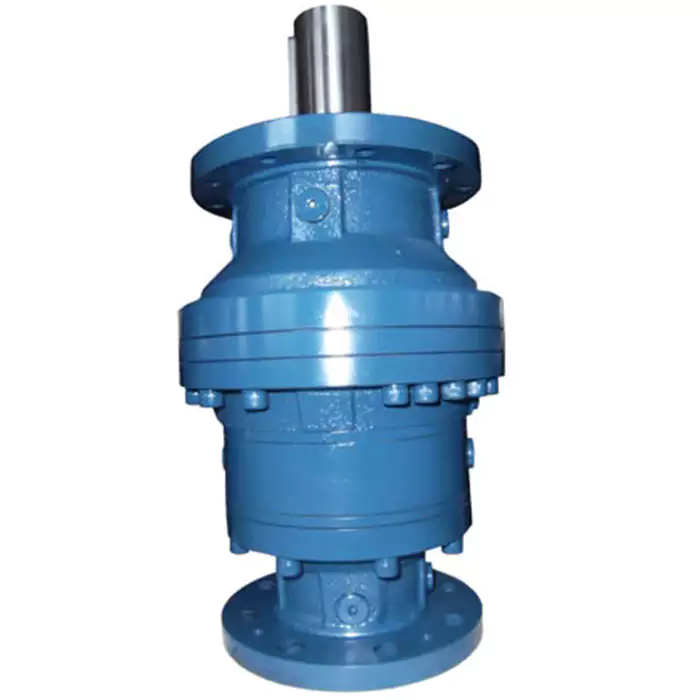
Impact of Gear Ratio on Output Speed and Torque in Planetary Gearboxes
The gear ratio of a planetary gearbox has a significant effect on both the output speed and torque of the system. The gear ratio is defined as the ratio of the number of teeth on the driven gear (output) to the number of teeth on the driving gear (input).
1. Output Speed: The gear ratio determines the relationship between the input and output speeds of the gearbox. A higher gear ratio (more teeth on the output gear) results in a lower output speed compared to the input speed. Conversely, a lower gear ratio (fewer teeth on the output gear) leads to a higher output speed relative to the input speed.
2. Output Torque: The gear ratio also affects the output torque of the gearbox. An increase in gear ratio amplifies the torque delivered at the output, making it higher than the input torque. Conversely, a decrease in gear ratio reduces the output torque relative to the input torque.
The relationship between gear ratio, output speed, and output torque is inversely proportional. This means that as the gear ratio increases and output speed decreases, the output torque proportionally increases. Conversely, as the gear ratio decreases and output speed increases, the output torque proportionally decreases.
It’s important to note that the gear ratio selection in a planetary gearbox involves trade-offs between output speed and torque. Engineers choose a gear ratio that aligns with the specific application’s requirements, considering factors such as desired speed, torque, and efficiency.


editor by CX 2023-09-28