Produktbeschreibung
FK730B Gearbox Suitable for 12 cbm mixer nbsp truck with Low Price
Produktbeschreibung
Reducers are generally used for low-speed and high-torque transmission equipment. The power of an electric motor, internal combustion engine or other high-speed operation is achieved through the gear with a small number of teeth on the input shaft of the reducer and the large gear on the output shaft to achieve the purpose of deceleration. Ordinary The reducer will also have several pairs of gears with the same principle to achieve the ideal reduction effect. The ratio of the number of teeth of the large and small gears is the transmission ratio.
There are many types of reducers, which can be divided into gear reducers, worm reducers and planetary gear reducers according to the transmission type.
The main features of planetary gear reducer are small size, large load-bearing capacity and stable operation.
The main characteristics of planetary gear transmission are small size, large load-bearing capacity, and stable operation; however, the structure of high-power and high-speed planetary gear transmission is complex and requires high manufacturing precision;
Some types of planetary gear transmission are highly efficient, but have small transmission ratios;
For other types, the transmission ratio can be very large, but the efficiency is low. When they are used as reducers, their efficiency decreases as the transmission ratio increases;When used as a speed increaser, self-locking may occur.
Produktparameter
| Spezifikation Modell |
FK130B | FK230B | FK270B | FK330B | FK430B | FK530B | FK730B | FK830B | FK930B |
| Mixer Volume (cbm) | 3-5 | 4-6 | 6-7 | 7-8 | 9-10 | 10-12 | 12-14 | 15-16 | 17-20 |
| Output Torque (Nm) | 30000 | 36000 | 42000 | 48000 | 54000 | 70000 | 75000 | 85000 | 95000 |
| Reduction ration | 103 | 103 | 128.5 | 133.7 | 135.5 | 135.5 | 144.3 | 141.3 | 141.3 |
| Drum angle (°) | 15 | 15 | 15 | 15 | 15 | 15 | 13 | 12 | 10 |
| Input rotation | 2500 | 2500 | 2500 | 2500 | 2500 | 2500 | 2500 | 2500 | 2500 |
| Radial load (kN) | 70 | 72 | 100 | 130 | 160 | 170 | 190 | 235 | 275 |
| Axial load (kN) | 20 | 22 | 28 | 36 | 45 | 50 | 60 | 70 | 90 |
| Weight (kg) | 160 | 162 | 175 | 185 | 325 | 330 | 340 | 405 | 415 |
| Lubricating oil (L) | 5.5 | 7.0 | 7.0 | 7.5 | 11.5 | 11.5 | 11.5 | 13.5 | 15.5 |
| Swing angle of Flange plate | ±6 | ±6 | ±6 | ±6 | ±6 | ±6 | ±6 | ±6 | ±6 |
| Model of Gear oil | SAE 85W-90/API GL4 GL5 | SAE 85W-90/API GL4 GL5 | SAE 85W-90/API GL4 GL5 | SAE 85W-90/API GL4 GL5 | SAE 85W-90/API GL4 GL5 | SAE 85W-90/API GL4 GL5 | SAE 85W-90/API GL4 GL5 | SAE 85W-90/API GL4 GL5 | SAE 85W-90/API GL4 GL5 |
| Connection port of Water pump | NO | NO | NO | NO | NO | NO | NO | NO | NO |
| Connection flange of Hydraulic motor | SAE C 16/32 Z21 |
SAE C 16/32 Z21 |
SAE C 16/32 Z21 |
SAE C 16/32 Z21 |
SAE C 16/32 Z21 |
SAE C 16/32 Z21 |
SAE C 16/32 Z21 |
SAE C 16/32 Z21 |
SAE C 16/32 Z21 |
Dimensions
Application
/* 22. Januar 2571 19:08:37 */!function(){function s(e,r){var a,o={};try{e&&e.split(“,”).forEach(function(e,t){e&&(a=e.match(/(.*?):(.*)$/))&&1
| Anwendung: | Electric Cars, Motorcycle, Machinery, Marine, Agricultural Machinery, Car |
|---|---|
| Härte: | Gehärtete Zahnoberfläche |
| Installation: | Horizontal Type |
| Anpassung: |
Verfügbar
| Kundenspezifische Anfrage |
|---|
.shipping-cost-tm .tm-status-off{background: none;padding:0;color: #1470cc}
|
Versandkosten:
Geschätzte Frachtkosten pro Einheit. |
über Versandkosten und voraussichtliche Lieferzeit. |
|---|
| Zahlungsmethode: |
|
|---|---|
|
Erste Zahlung Vollständige Zahlung |
| Währung: | US$ |
|---|
| Rückgabe & Erstattung: | Sie können bis zu 30 Tage nach Erhalt der Produkte eine Rückerstattung beantragen. |
|---|
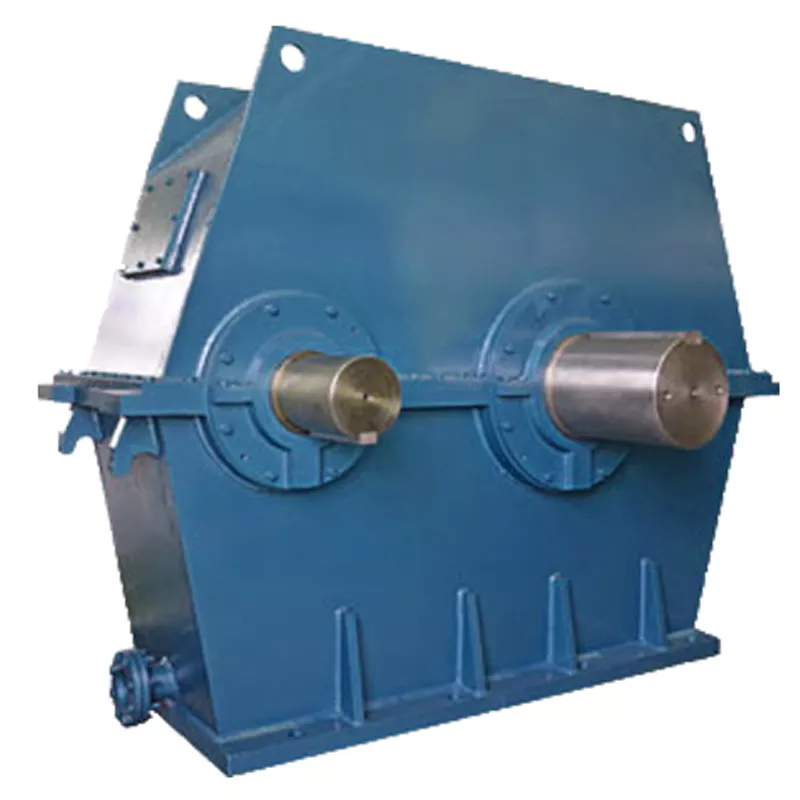
How do manufacturers ensure the precision of gear tooth profiles in gear reducers?
Manufacturers employ several techniques to ensure the precision of gear tooth profiles in gear reducers, which is crucial for optimal performance and efficiency:
1. Precision Machining: Gear teeth are typically machined using advanced CNC (Computer Numerical Control) machines that can achieve high levels of accuracy and repeatability. This ensures consistent gear tooth profiles across multiple components.
2. Quality Control Measures: Rigorous quality control processes, such as dimensional inspections and profile measurements, are performed at various stages of manufacturing to verify that gear tooth profiles meet the required specifications.
3. Tooth Profile Design: Engineers use specialized software and simulation tools to design gear tooth profiles with precise involute shapes and accurate dimensions. These designs are then translated into machine instructions for manufacturing.
4. Material Selection: High-quality materials with excellent wear resistance and dimensional stability are chosen to minimize the potential for deformation or inaccuracies during machining and operation.
5. Heat Treatment: Heat treatment processes, such as carburizing and quenching, are applied to enhance the surface hardness and durability of gear teeth, reducing the risk of wear and deformation over time.
6. Tooth Grinding and Finishing: After initial machining, gear teeth often undergo precision grinding and finishing processes to achieve the desired tooth profile accuracy and surface finish.
7. Post-Processing Inspection: Gear tooth profiles are inspected again after manufacturing processes to verify that the final components meet the specified tolerances and performance criteria.
8. Computer-Aided Manufacturing (CAM): CAM software is used to generate tool paths and machining instructions, enabling precise control over tool movements and material removal during gear manufacturing.
By combining these techniques and leveraging advanced manufacturing technologies, manufacturers can achieve the necessary precision in gear tooth profiles, resulting in reliable and efficient gear reducers for various industrial applications.
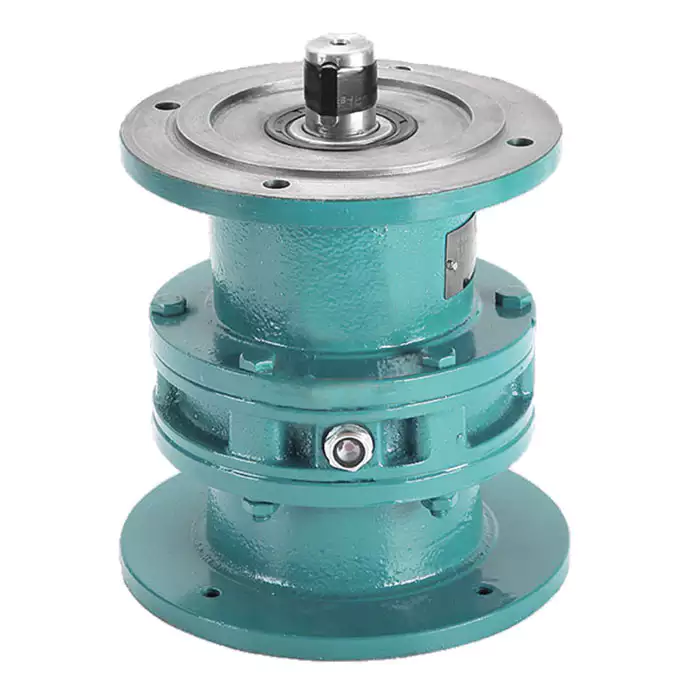
Wie bewältigen Getriebeuntersetzungen Stoßbelastungen und plötzliche Drehmomentänderungen?
Getriebeuntersetzungsgetriebe sind so konstruiert, dass sie Stoßbelastungen und plötzliche Drehmomentänderungen durch verschiedene Mechanismen bewältigen können, die ihre Haltbarkeit und Zuverlässigkeit unter anspruchsvollen Betriebsbedingungen verbessern.
1. Robuste Konstruktion: Getriebe werden aus hochfesten Werkstoffen und mit präzisen Fertigungstechniken hergestellt. Dadurch wird sichergestellt, dass Zahnräder, Lager und andere Bauteile plötzlichen Stößen und hohen Drehmomentschwankungen ohne Verformung oder Ausfall standhalten.
2. Stoßdämpfende Eigenschaften: Manche Getriebekonstruktionen verfügen über stoßdämpfende Merkmale wie flexible Kupplungen, Elastomerelemente oder torsionsflexible Zahnradkonstruktionen. Diese Merkmale tragen dazu bei, die Energie von plötzlichen Stößen oder Drehmomentspitzen zu dämpfen und abzuleiten und so die Belastung des Gesamtsystems zu reduzieren.
3. Drehmomentbegrenzer: Bei Anwendungen mit häufigen Stoßbelastungen können Drehmomentbegrenzer in das Getriebe integriert werden. Diese Vorrichtungen schalten sich automatisch ab oder rutschen durch, sobald ein bestimmter Drehmomentschwellenwert überschritten wird, und verhindern so Schäden an den Zahnrädern und anderen Bauteilen.
4. Überlastschutz: Getriebe können mit Überlastschutzmechanismen wie Scherbolzen oder Drehmomentsensoren ausgestattet sein. Diese Mechanismen erkennen ein zu hohes Drehmoment und schalten den Antrieb vorübergehend ab, sodass das System den Stoß abfangen oder sich an die plötzliche Drehmomentänderung anpassen kann.
5. Richtige Schmierung: Eine ausreichende Schmierung ist unerlässlich, um Stoßbelastungen und plötzliche Drehmomentänderungen abzufangen. Hochwertige Schmierstoffe reduzieren Reibung und Verschleiß und tragen dazu bei, dass das Getriebe dynamischen Kräften standhält und einen reibungslosen Betrieb gewährleistet.
6. Dynamische Lastverteilung: Getriebeuntersetzungsgetriebe verteilen dynamische Lasten auf mehrere Zahnräder und tragen so dazu bei, lokale Spannungsspitzen zu vermeiden. Dadurch wird das Risiko von Zahnbruch und Getriebeschäden bei plötzlichen Drehmomentänderungen minimiert.
Durch die Integration dieser Konstruktionsmerkmale und Mechanismen können Getriebe Stoßbelastungen und plötzliche Drehmomentänderungen effektiv bewältigen und so die Langlebigkeit und Zuverlässigkeit verschiedener industrieller und mechanischer Systeme gewährleisten.
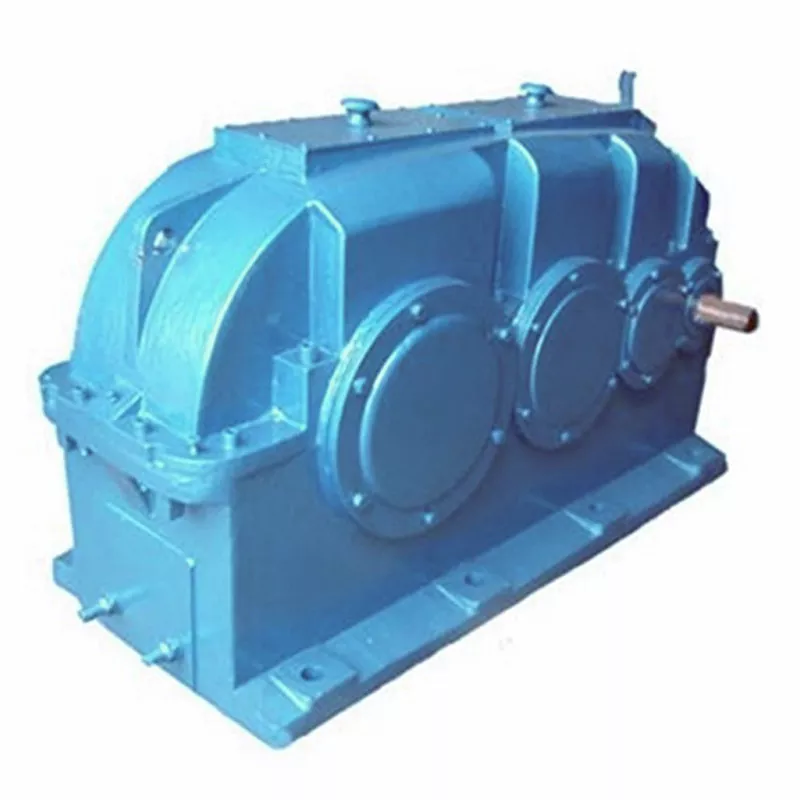
How do gear reducers contribute to speed reduction and torque increase?
Gear reducers play a crucial role in mechanical systems by achieving speed reduction and torque increase through the principle of gear ratios. Here’s how they work:
Gear reducers consist of multiple gears with different sizes, known as gear pairs. These gears are meshed together, and their teeth interlock to transmit motion and power. The gear ratio is determined by the ratio of the number of teeth on the input gear (driver) to the number of teeth on the output gear (driven).
Geschwindigkeitsreduzierung: When a larger gear (output gear) is driven by a smaller gear (input gear), the output gear rotates at a slower speed than the input gear. This reduction in speed is proportional to the gear ratio. As a result, gear reducers are used to slow down the rotational speed of the output shaft compared to the input shaft.
Drehmomentsteigerung: The interlocking teeth of gears create a mechanical advantage that allows gear reducers to increase torque output. When the input gear applies a force (torque) to the teeth, it is transmitted to the output gear with greater force due to the leverage provided by the larger diameter of the output gear. The torque increase is inversely proportional to the gear ratio and is essential for applications requiring high torque at lower speeds.
By selecting appropriate gear ratios and arranging gear pairs, gear reducers can achieve various speed reduction and torque multiplication factors, making them essential components in machinery and equipment where precise control of speed and torque is necessary.


editor by CX 2024-03-29