Produktbeschreibung
Detailed Photos
Produktparameter
Model:220BX-E
More Code And Specification:
| E series | C series | ||||
| Code | Outline dimension | General model | Code | Outline dimension | The original code |
| 120 | Φ122 | 6E | 10C | Φ145 | 150 |
| 150 | Φ145 | 20E | 27C | Φ181 | 180 |
| 190 | Φ190 | 40E | 50C | Φ222 | 220 |
| 220 | Φ222 | 80E | 100C | Φ250 | 250 |
| 250 | Φ244 | 110E | 200C | Φ345 | 350 |
| 280 | Φ280 | 160E | 320C | Φ440 | 440 |
| 320 | Φ325 | 320E | 500C | Φ520 | 520 |
| 370 | Φ370 | 450E | |||
Gear ratio And Specification
| E Series | C Series | ||
| Code | Reduktionsverhältnis | New code | Monomer reduction ratio |
| 120 | 43,53.5,59,79,103 | 10CBX | 27.00 |
| 150 | 81,105,121,141,161 | 27CBX | 36.57 |
| 190 | 81,105,121,153 | 50CBX | 32.54 |
| 220 | 81,101,121,153 | 100CBX | 36.75 |
| 250 | 81,111,161,175.28 | 200CBX | 34.86 |
| 280 | 81,101,129,145,171 | 320CBX | 35.61 |
| 320 | 81,101,118.5,129,141,171,185 | 500CBX | 37.34 |
| 370 | 81,101,118.5,129,154.8,171,192.4 | ||
| Note 1: E series,such as by the shell(pin shell)output,the corresponding reduction ratio by 1 | |||
| Note 2: C series gear ratio refers to the motor installed in the casing of the reduction ratio,if installed on the output flange side,the corresponding reduction ratio by 1 | |||
Reducer type code
REV: main bearing built-in E type
RVC: hollow type
REA: with input flange E type
RCA: with input flange hollow type
Other Related Products
Click here to find what you are looking for:
Customized Product Service
Unternehmensprofil
Häufig gestellte Fragen
Q: What’re your main products?
A: We currently produce Brushed Dc Motors, Brushed Dc Gear Motors, Planetary Dc Gear Motors, Brushless Dc Motors, Stepper motors, Ac Motors and High Precision Planetary Gear Box etc. You can check the specifications for above motors on our website and you can email us to recommend needed motors per your specification too.
Q: How to select a suitable motor?
A:If you have motor pictures or drawings to show us, or you have detailed specs like voltage, speed, torque, motor size, working mode of the motor, needed lifetime and noise level etc, please do not hesitate to let us know, then we can recommend suitable motor per your request accordingly.
Q: Do you have a customized service for your standard motors?
A: Yes, we can customize per your request for the voltage, speed, torque and shaft size/shape. If you need additional wires/cables soldered on the terminal or need to add connectors, or capacitors or EMC we can make it too.
Q: Do you have an individual design service for motors?
A: Yes, we would like to design motors individually for our customers, but it may need some mold developing cost and design charge.
Q: What’s your lead time?
A: Generally speaking, our regular standard product will need 15-30days, a bit longer for customized products. But we are very flexible on the lead time, it will depend on the specific orders.
Please contact us if you have detailed requests, thank you ! /* 22. Januar 2571 19:08:37 */!function(){function s(e,r){var a,o={};try{e&&e.split(“,”).forEach(function(e,t){e&&(a=e.match(/(.*?):(.*)$/))&&1
| Anwendung: | Machinery, Robotic |
|---|---|
| Härte: | Gehärtete Zahnoberfläche |
| Installation: | Vertikaler Typ |
| Layout: | Koaxial |
| Zahnradform: | Zylinderzahnrad |
| Schritt: | Double-Step |
| Anpassung: |
Verfügbar
| Kundenspezifische Anfrage |
|---|
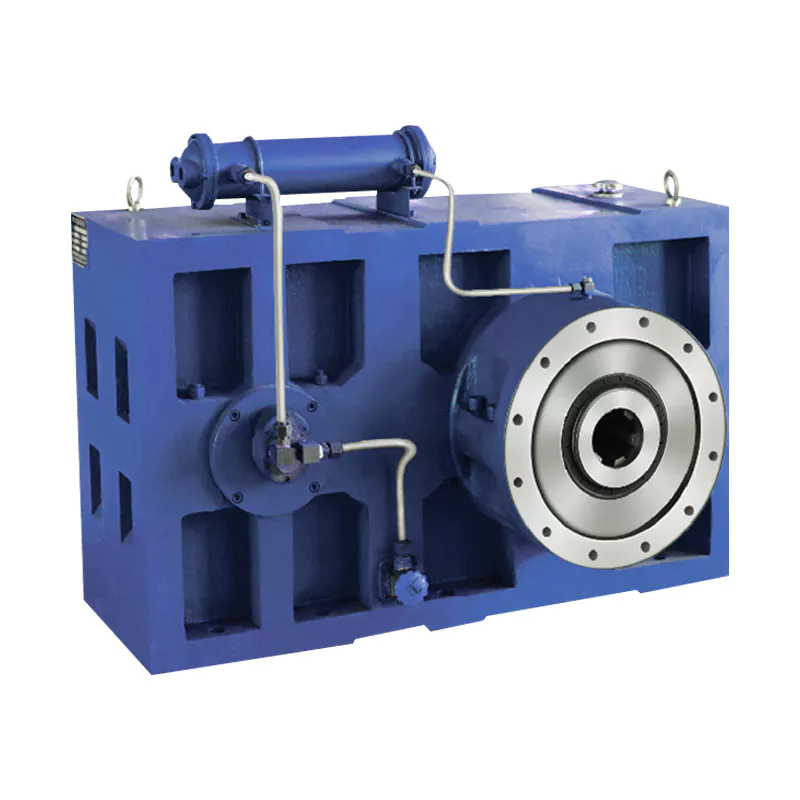
Können Sie Beispiele aus der Praxis für Produkte nennen, die Getriebeuntersetzungstechnologie nutzen?
Absolut! Getriebetechnik findet in verschiedenen Branchen und Produkten breite Anwendung, um Leistung und Effizienz zu steigern. Hier einige Beispiele aus der Praxis:
1. Industriemaschinen: Getriebeuntersetzungsgetriebe werden häufig in Fertigungsmaschinen eingesetzt, beispielsweise in Förderanlagen, Materialhandhabungsgeräten und Montagelinien, wo sie zur Steuerung von Drehzahl und Drehmoment für präzise Arbeitsgänge beitragen.
2. Windkraftanlagen: Windkraftanlagen nutzen Getriebeuntersetzungsgetriebe, um die niedrige Drehzahl des Windkraftanlagenrotors in die für die Stromerzeugung benötigte höhere Drehzahl umzuwandeln und so die Energieumwandlung zu optimieren.
3. Kfz-Getriebe: Automobile nutzen Getriebeuntersetzungsgetriebe als Teil ihres Antriebsstrangs, um die Kraftübertragung vom Motor auf die Räder zu optimieren und so einen effizienten Betrieb des Fahrzeugs bei unterschiedlichen Geschwindigkeiten zu ermöglichen.
4. Robotik: Robotersysteme nutzen Getriebe zur Steuerung der Bewegung und Gelenkigkeit von Roboterarmen und ermöglichen so präzise und kontrollierte Bewegungen für verschiedene Anwendungen.
5. Druckpressen: Getriebeuntersetzungsgetriebe sind ein wesentlicher Bestandteil von Druckmaschinen und gewährleisten die präzise und synchronisierte Bewegung von Druckplatten, Walzen und Papierzuführungsmechanismen.
6. Förderbänder: In Branchen wie dem Bergbau, der Landwirtschaft und der Logistik werden Fördersysteme mit Getrieben betrieben, um die Bewegung von Materialien entlang der Förderbänder zu regulieren.
7. Verpackungsmaschinen: Getriebeuntersetzungsgetriebe spielen eine entscheidende Rolle in Verpackungsmaschinen, indem sie die Geschwindigkeit und Bewegung von Verpackungsmaterialien, Abfüllmechanismen und Versiegelungskomponenten steuern.
8. Kräne und Hebezeuge: Krane und Hebezeuge sind auf Getriebe angewiesen, um schwere Lasten präzise und kontrolliert heben zu können und so einen sicheren und effizienten Materialtransport zu gewährleisten.
9. Pumpen und Kompressoren: Getriebe werden in Pumpen und Kompressoren eingesetzt, um den Flüssigkeitsstrom und den Druck zu regulieren und so den Energieverbrauch in Flüssigkeitstransportsystemen zu optimieren.
10. Landwirtschaftliche Geräte: Traktoren und andere landwirtschaftliche Maschinen verwenden Getriebeuntersetzungsgetriebe, um die Geschwindigkeit und die Kraftübertragung für verschiedene Aufgaben wie Pflügen, Säen und Ernten anzupassen.
Diese Beispiele veranschaulichen die vielfältigen Einsatzmöglichkeiten der Getriebetechnik in verschiedenen Branchen und zeigen deren Rolle bei der Steigerung von Effizienz, Kontrolle und Leistung in einer breiten Palette von Produkten und Systemen.
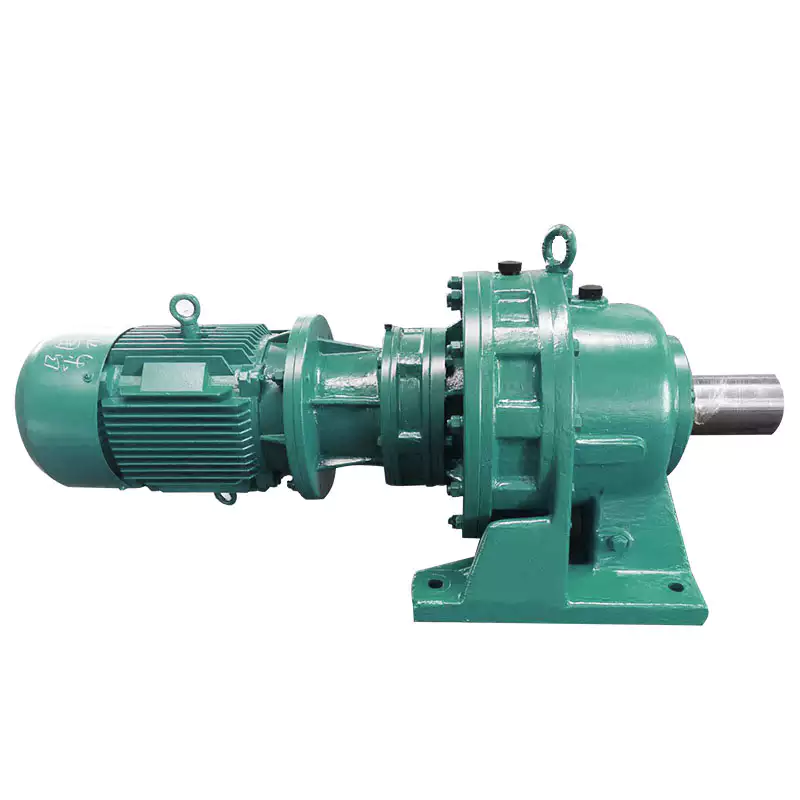
What role do gear ratios play in optimizing the performance of gear reducers?
Gear ratios play a crucial role in optimizing the performance of gear reducers by determining the relationship between input and output speeds and torques. A gear ratio is the ratio of the number of teeth between two meshing gears, and it directly influences the mechanical advantage and efficiency of the gear reducer.
1. Speed and Torque Conversion: Gear ratios allow gear reducers to convert rotational speed and torque according to the needs of a specific application. By selecting appropriate gear ratios, gear reducers can either reduce speed while increasing torque (speed reduction) or increase speed while decreasing torque (speed increase).
2. Mechanical Advantage: Gear reducers leverage gear ratios to provide mechanical advantage. In speed reduction configurations, a higher gear ratio results in a greater mechanical advantage, allowing the output shaft to deliver higher torque at a lower speed. This is beneficial for applications requiring increased force or torque, such as heavy machinery or conveyor systems.
3. Effizienz: Optimal gear ratios contribute to higher efficiency in gear reducers. By distributing the load across multiple gear teeth, gear reducers with suitable gear ratios minimize stress and wear on individual gear teeth, leading to improved overall efficiency and prolonged lifespan.
4. Speed Matching: Gear ratios enable gear reducers to match the rotational speeds of input and output shafts. This is crucial in applications where precise speed synchronization is required, such as in conveyors, robotics, and manufacturing processes.
When selecting gear ratios for a gear reducer, it’s important to consider the specific requirements of the application, including desired speed, torque, efficiency, and mechanical advantage. Properly chosen gear ratios enhance the overall performance and reliability of gear reducers in a wide range of industrial and mechanical systems.
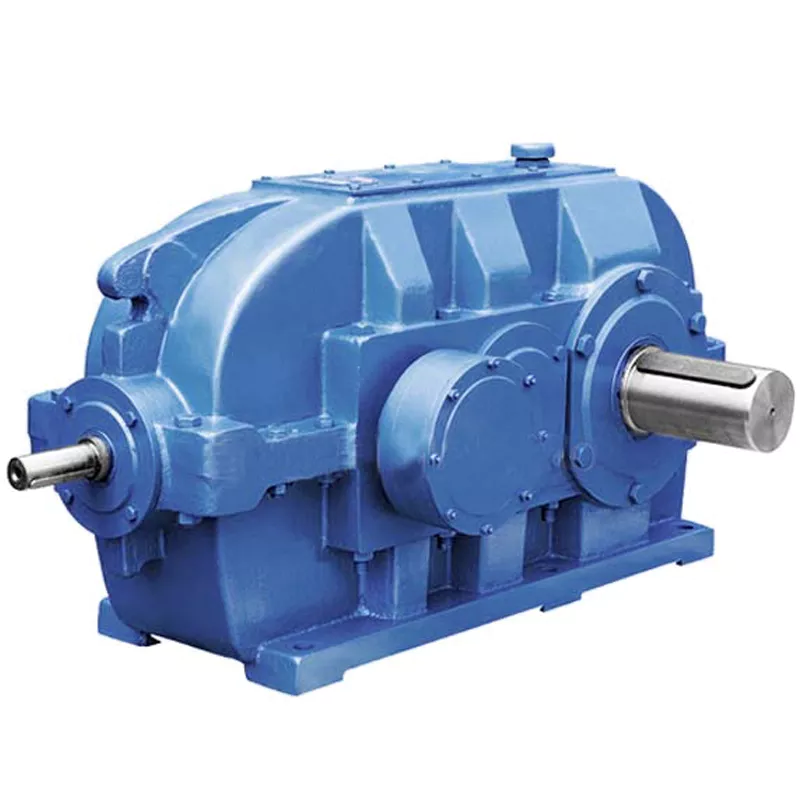
How do gear reducers handle variations in input and output speeds?
Gear reducers are designed to handle variations in input and output speeds through the use of different gear ratios and configurations. They achieve this by utilizing intermeshing gears of varying sizes to transmit torque and control rotational speed.
The basic principle involves connecting two or more gears with different numbers of teeth. When a larger gear (driving gear) engages with a smaller gear (driven gear), the rotational speed of the driven gear decreases while the torque increases. This reduction in speed and increase in torque enable gear reducers to efficiently adapt to variations in input and output speeds.
The gear ratio is a critical factor in determining how much the speed and torque change. It is calculated by dividing the number of teeth on the driven gear by the number of teeth on the driving gear. A higher gear ratio results in a greater reduction in speed and a proportionate increase in torque.
Planetary gear reducers, a common type, use a combination of gears including sun gears, planet gears, and ring gears to achieve different speed reductions and torque enhancements. This design provides versatility in handling variations in speed and torque requirements.
In summary, gear reducers handle variations in input and output speeds by using specific gear ratios and gear arrangements that enable them to efficiently transmit power and control motion characteristics according to the application’s needs.


editor by CX 2024-04-22