Produktbeschreibung
Produktbeschreibung
The ND090 series planetary gearboxes are designed and machined as a single unit with special tapered roller bearings to provide high radial load, high torque, ultra-precision, and small size. The ND series uses in highly rigid industries such as fiber optic laser equipment, floor track equipment, robot seventh axis, Parallel robots (spider hand) machine tools, and rotating arms.
Product Name: High Precision Planetary Reducer
Product Series: ND090 Series
Product features: high torque, high load, ultra-precision, small size
Product Description:
Integrated design concept with high-strength bearings ensure the product itself is durable and efficient
A variety of output ideas such as shaft output, flange and gear are available.
1 arc minute ≤ backlash ≤ 3 arc minutes
Reduction ratios ranging from 3 to 100
Frame design: increases torque and optimizes power transmission
Optimised selection of oil seals: reduces friction and laminate transmission efficiency
Protection class IP65
Warranty: 2 years
Unsere Vorteile
High torque
High load
ultra-precision
Small size
Detailed Photos
Produktparameter
| Segment number | Double segment | ||||||||
| Verhältnis | i | 16 | 20 | 25 | 35 | 40 | 50 | 70 | 100 |
| Nenndrehmoment | Nm | 120 | 120 | 150 | 130 | 120 | 150 | 130 | 95 |
| Emergency stop torque | Nm | Three times of Maximum Output Torque | |||||||
| Nenneingangsgeschwindigkeit | Rpm | 4000 | |||||||
| Max input speed | Rpm | 8000 | |||||||
| Ultraprecise backlash | Bogenminute | – | |||||||
| Precision backlash | Bogenminute | ≤3 | |||||||
| Standard backlash | Bogenminute | ≤5 | |||||||
| Torsional rigidity | Nm/arcmin | 31 | |||||||
| Max.bending moment | Nm | 235 | |||||||
| Max.axial force | N | 2850 | |||||||
| Service life | hr | 30000(15000 under continuous operation) | |||||||
| Effizienz | % | ≥94% | |||||||
| Weight | kg | 3.7 | |||||||
| Betriebstemperatur | ºC | -10ºC~+90ºC | |||||||
| Schmierung | Synthetic grease | ||||||||
| Protection class | IP64 | ||||||||
| Mounting Position | All directions | ||||||||
| Noise level(N1=3000rpm,non-loaded) | dB(A) | ≤60 | |||||||
| Rotary inertia | Kg·cm² | 0.13 | |||||||
/* 22. Januar 2571 19:08:37 */!function(){function s(e,r){var a,o={};try{e&&e.split(“,”).forEach(function(e,t){e&&(a=e.match(/(.*?):(.*)$/))&&1
| Anwendung: | Motor, Machinery, Marine, Agricultural Machinery, CNC Machine |
|---|---|
| Funktion: | Change Drive Torque, Speed Changing, Speed Reduction |
| Layout: | Plantery Type |
| Härte: | Gehärtete Zahnoberfläche |
| Installation: | All Directions |
| Schritt: | Double-Step |
| Anpassung: |
Verfügbar
| Kundenspezifische Anfrage |
|---|
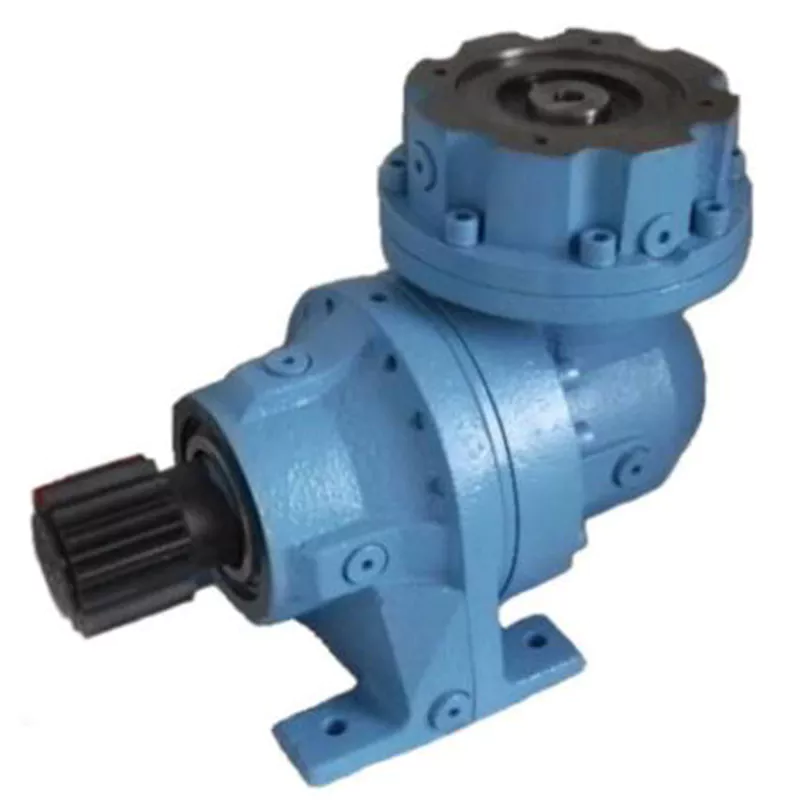
Die Rolle von Planetengetrieben in Antriebssystemen von Elektro- und Hybridfahrzeugen
Planetengetriebe spielen eine entscheidende Rolle in den Antriebssystemen von Elektro- und Hybridfahrzeugen und tragen zu deren Effizienz und Leistung bei:
Integration von Elektromotoren: In Elektrofahrzeugen und Hybridfahrzeugen werden häufig Planetengetriebe eingesetzt, um den Elektromotor mit dem Antriebsstrang zu verbinden. Sie ermöglichen die Drehmoment- und Drehzahlübertragung und stellen sicher, dass die Motorleistung für den gewünschten Drehzahlbereich und die Lastbedingungen des Fahrzeugs geeignet ist.
Drehmomentverteilung in Hybriden: Hybridfahrzeuge verfügen häufig sowohl über einen Verbrennungsmotor als auch über einen Elektromotor. Planetengetriebe ermöglichen die Drehmomentverteilung zwischen den beiden Antriebsquellen und optimieren so deren kombinierte Leistung für verschiedene Fahrszenarien, wie z. B. rein elektrischen Betrieb, Hybridbetrieb und regeneratives Bremsen.
Regeneratives Bremsen: Planetengetriebe ermöglichen die Bremsenergierückgewinnung in Elektro- und Hybridfahrzeugen. Sie lassen den Elektromotor als Generator fungieren und wandeln beim Bremsen kinetische Energie in elektrische Energie um. Diese Energie kann dann in der Fahrzeugbatterie für späteren Gebrauch gespeichert werden.
Kompaktes Design: Planetengetriebe zeichnen sich durch eine kompakte Bauweise und hohe Leistungsdichte aus und eignen sich daher ideal für den begrenzten Bauraum in Elektro- und Hybridfahrzeugen. Dank dieser Kompaktheit können Hersteller den Innenraum optimal nutzen und Akkus, Antriebskomponenten und weitere Systeme unterbringen.
Effiziente Stromverteilung: Die einzigartige Anordnung der Planetengetriebe ermöglicht eine effiziente Kraftverteilung und Drehmomentsteuerung. Dies ist besonders wichtig bei elektrischen und hybriden Antrieben, wo eine optimale Leistungsverteilung zwischen den verschiedenen Komponenten zur Gesamteffizienz beiträgt.
CVT-Funktionalität: Einige Hybridfahrzeuge verfügen über ein stufenloses Getriebe (CVT) mit Planetenradsätzen. Dies ermöglicht nahtlose und effiziente Übergänge zwischen verschiedenen Übersetzungsverhältnissen, verbessert das Fahrgefühl und senkt den Kraftstoffverbrauch.
Leistungsmodi: Planetengetriebe ermöglichen die Implementierung verschiedener Fahrmodi in Elektro- und Hybridfahrzeugen. Diese Modi, wie beispielsweise „Sport“ oder „Eco“, passen die Kraftverteilung und die Übersetzungsverhältnisse an, um die Leistung oder Energieeffizienz je nach Fahrerpräferenzen zu optimieren.
Untersetzungsgetriebe für Elektromotoren: Elektromotoren arbeiten oft mit hohen Drehzahlen und benötigen daher Untersetzungsgetriebe, um den Anforderungen des Fahrzeugs gerecht zu werden. Planetengetriebe bieten die notwendige Untersetzung bei gleichzeitiger Aufrechterhaltung von Wirkungsgrad und Drehmomentabgabe.
Effiziente Drehmomentübertragung: Planetengetriebe gewährleisten eine effiziente Drehmomentübertragung von der Antriebsquelle auf die Räder und sorgen so für eine gleichmäßige Beschleunigung und ein reaktionsschnelles Fahrverhalten bei Elektro- und Hybridfahrzeugen.
Integration mit Energiespeichern: Planetengetriebe tragen zur Integration von Energiespeichersystemen wie Lithium-Ionen-Batterien bei, indem sie die Energiequelle effizient mit dem Antriebsstrang verbinden und gleichzeitig die Energieabgabe und -rückgewinnung steuern.
Zusammenfassend lässt sich sagen, dass Planetengetriebe integrale Bestandteile der Antriebssysteme von Elektro- und Hybridfahrzeugen sind. Sie ermöglichen eine effiziente Kraftverteilung, Drehmomentumwandlung, regenerative Bremsung und verschiedene Fahrmodi und tragen so zur Gesamtleistung, Effizienz und Nachhaltigkeit dieser Fahrzeuge bei.
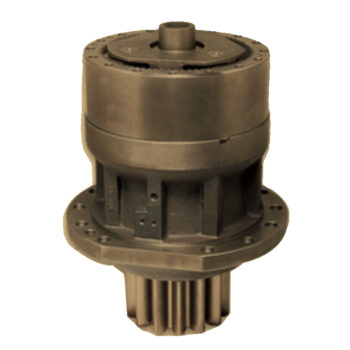
Advantages of Backlash Reduction Mechanisms in Planetary Gearboxes
Backlash reduction mechanisms in planetary gearboxes offer several advantages that contribute to improved performance and precision:
Improved Positioning Accuracy: Backlash, or the play between gear teeth, can lead to positioning errors in applications where precise movement is crucial. Reduction mechanisms help minimize or eliminate this play, resulting in more accurate positioning.
Better Reversal Characteristics: Backlash can cause a delay in reversing the direction of motion. With reduction mechanisms, the reversal is smoother and more immediate, making them suitable for applications requiring quick changes in direction.
Enhanced Efficiency: Backlash can lead to energy losses and reduced efficiency due to the impacts between gear teeth. Reduction mechanisms minimize these impacts, improving overall power transmission efficiency.
Reduced Noise and Vibration: Backlash can contribute to noise and vibration in gearboxes, affecting both the equipment and the surrounding environment. By reducing backlash, the noise and vibration levels are significantly decreased.
Better Wear Protection: Backlash can accelerate wear on gear teeth, leading to premature gearbox failure. Reduction mechanisms help distribute the load more evenly across the teeth, extending the lifespan of the gearbox.
Enhanced System Stability: In applications where stability is crucial, such as robotics and automation, backlash reduction mechanisms contribute to smoother operation and reduced oscillations.
Compatibility with Precision Applications: Industries such as aerospace, medical equipment, and optics require high precision. Backlash reduction mechanisms make planetary gearboxes suitable for these applications by ensuring accurate and reliable motion.
Increased Control and Performance: In applications where control is critical, such as CNC machines and robotics, reduction mechanisms provide better control over the motion and enable finer adjustments.
Minimized Error Accumulation: In systems with multiple gear stages, backlash can accumulate, leading to larger positioning errors. Reduction mechanisms help minimize this error accumulation, maintaining accuracy throughout the system.
Overall, incorporating backlash reduction mechanisms in planetary gearboxes leads to improved accuracy, efficiency, reliability, and performance, making them essential components in precision-driven industries.
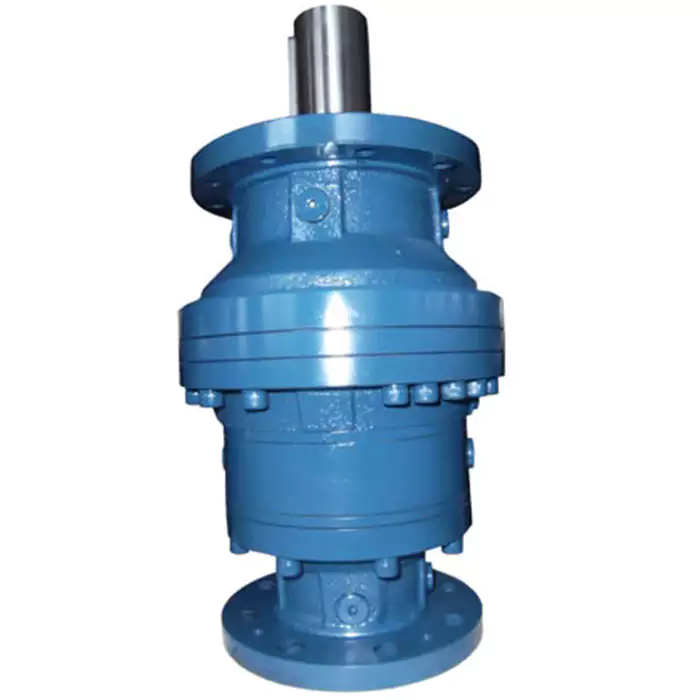
Impact of Gear Ratio on Output Speed and Torque in Planetary Gearboxes
The gear ratio of a planetary gearbox has a significant effect on both the output speed and torque of the system. The gear ratio is defined as the ratio of the number of teeth on the driven gear (output) to the number of teeth on the driving gear (input).
1. Output Speed: The gear ratio determines the relationship between the input and output speeds of the gearbox. A higher gear ratio (more teeth on the output gear) results in a lower output speed compared to the input speed. Conversely, a lower gear ratio (fewer teeth on the output gear) leads to a higher output speed relative to the input speed.
2. Output Torque: The gear ratio also affects the output torque of the gearbox. An increase in gear ratio amplifies the torque delivered at the output, making it higher than the input torque. Conversely, a decrease in gear ratio reduces the output torque relative to the input torque.
The relationship between gear ratio, output speed, and output torque is inversely proportional. This means that as the gear ratio increases and output speed decreases, the output torque proportionally increases. Conversely, as the gear ratio decreases and output speed increases, the output torque proportionally decreases.
It’s important to note that the gear ratio selection in a planetary gearbox involves trade-offs between output speed and torque. Engineers choose a gear ratio that aligns with the specific application’s requirements, considering factors such as desired speed, torque, and efficiency.


editor by CX 2024-04-22