Descripción del Producto
Features of H. B Series Gear Units/ Gear speed reducer/ Gear Motor/ Gearbox:
1. H. B series gear units adopt currency layout and may transform into special reducer according to customer’s requirement.
2. The housing of 1 size can realize parallel shaft, right-angle shaft modes and horizontal, vertical mounting modes. Variety of components is reducible; The number of reducer’s mode is augmentable.
3. Sound-absorbable structure, lager surface, big fan reduce temperature and noise, advanced grinding process of cylindrical gear and bevel gear improve stability and transmit power more efficiently.
| Housing material | HT250 High strength cast iron |
| Gear material | 20CrMnTi |
| Gear Surface&hardness | HRC58°-62° |
| Gear core hardness | HRC33°-78° |
| Input/Output shaft material | 40Cr |
| Gear Machining precision | Accurate grinding 6-5 grade |
| Heat treatment | Carburizing,Quenching etc |
| Eficiencia | up to 92% |
| Noise(Max) | 60-67dB |
| Installation type | Horizontal mounting position,Vertical mounting position |
| Output type | Solid shaft,Hollow shaft,hollow shaft with shrink disk,flanged shaft |
| Bearing brand | NSK,SKF,HRB,ZWZ etc |
| Oil seal brand | NAK,KSK etc |
| Lubricant | VG220 |
| Motor | IP55, F class |
| Motor shaft | 40Cr, Carburizing,Quenching etc |
| Warranty | 12months |
| Color | Blue,Grey |
Characteristic advantage
1.It adopts new modular design and is convenient for mass production; combining the flexible installation site and varied output types, it can meet the demands of most applications and installation sites;
2.It adopts various cooling and lubricating modes to ensure reliable meet heat dissipation in different environments, additionally, varied sealing modes can also be applied.
Specification parameter
Installation: horizontal and vertical
Drive Grade: Single-stage, 2, 3 and 4-stage drives are available
Output Torque: 3~900kNm
Drive ratio: 1.25 ~450
Efficiency: Single-stage 98%, 2-stage 96%, 3-stage 94%, 4-stage 92%
Industrial Application
Power Plant Equipment
Metallurgical Industry
Metal Forming Machinery
Petrochemical Industry
Mining Machine
Hoisting Machinery
Construction Industry
Environmental Protection Industry
Cable Industry
Food Machinery
Certificates
Passed ” ISO 9001 International Quality System Certificate”,”Europe CE Certificate”, ” Swiss SGS Certificate”,”High-tech enterprise certificate of ZheJiang city”,”Excellent performance management enterprise of ZheJiang city”,etc.
FAQ
1. Q: Can you make as per custom drawing?
A: Yes, we offer customized service for customers.
2. Q: Are you a factory or trading company?
A. We are manufacturer in ZheJiang China.
3. Q: What’s your MOQ?
A: One piece.
4. Q: What’s your production time?
A: 7-15 working days after receiving payment.
5. Q: What’s your payment terms?
A: T/T, 30% payment in advance, 70% balance payment should be paid before shipping.
6. Q: What’s your package?
A: In wooden box packaging.
Company Information:
ZheJiang CZPT Gear Reducer Co.,Ltd., former a joint venture invested by is a ZheJiang CZPT GROUP and Well Company of America.We are a large professional manufacturer &exporter of various gear reducers and specialize in the gear reducers area in China for 20 years. CZPT has excellent R&D team,top-ranking production and test equipment.
We have strong power in the developing and manufacturing the standard type as well as the customized type gear reducer for customers.
We make and supply 6 series of speed reducer as follows:
EWK series helical-bevel gear reducers,
EWR series helical gear reducers,
EWF series helical gear reducers,
EWS series helical-worm gear reducers
HB series gearboxes,
P series planetary gear reducers,etc.
Our products have been exporting to many countries and regions, including but not limited Argentina , Brazil, Mexico, Columbia , Ecuador , USA, South Korea, Vietnam, Indonesia, Georgia, South Africa, China HK, China Taiwai,
Welcome to send enquiry and visit us in ZheJiang .
| Solicitud: | Machinery |
|---|---|
| Función: | Change Drive Torque, Speed Changing, Speed Reduction |
| Dureza: | Superficie del diente endurecida |
Installation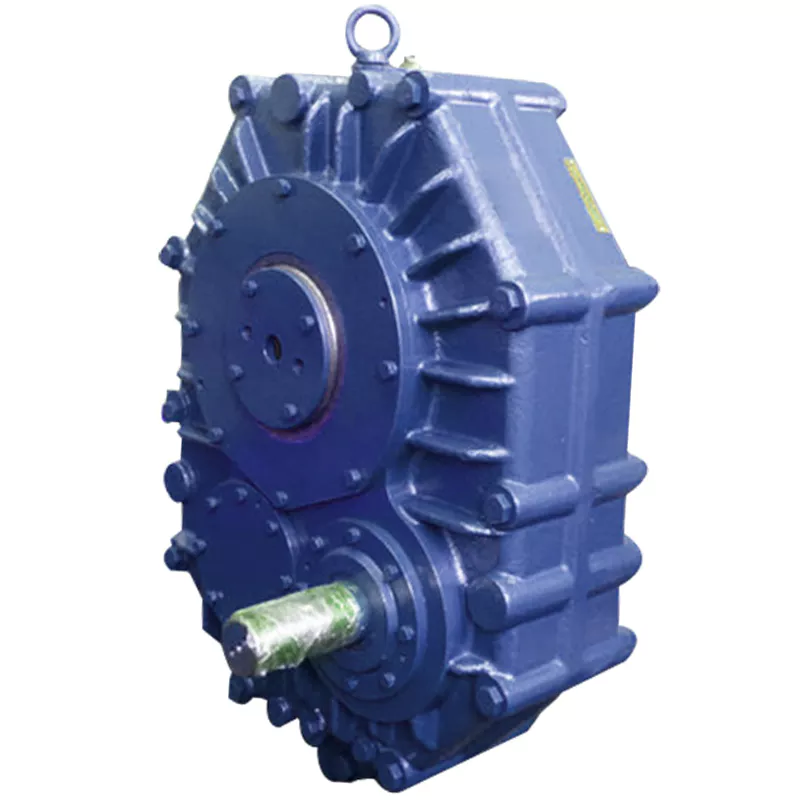
Are there any disadvantages or limitations to using gear reducer systems?While gear reducer systems offer numerous advantages, they also come with certain disadvantages and limitations that should be considered during the selection and implementation process: 1. Size and Weight: Gear reducers can be bulky and heavy, especially for applications requiring high gear ratios. This can impact the overall size and weight of the machinery or equipment, which may be a concern in space-constrained environments. 2. Efficiency Loss: Despite their high efficiency, gear reducers can experience energy losses due to friction between gear teeth and other components. This can lead to a reduction in overall system efficiency, particularly in cases where multiple gear stages are used. 3. Cost: The design, manufacturing, and assembly of gear reducers can involve complex processes and precision machining, which can contribute to higher initial costs compared to other power transmission solutions. 4. Maintenance: Gear reducer systems require regular maintenance, including lubrication, inspection, and potential gear replacement over time. Maintenance activities can lead to downtime and associated costs in industrial settings. 5. Noise and Vibration: Gear reducers can generate noise and vibrations, especially at high speeds or when operating under heavy loads. Additional measures may be needed to mitigate noise and vibration issues. 6. Limited Gear Ratios: While gear reducers offer a wide range of gear ratios, there may be limitations in achieving extremely high or low ratios in certain designs. 7. Temperature Sensitivity: Extreme temperatures can affect the performance of gear reducer systems, particularly if inadequate lubrication or cooling is provided. 8. Shock Loads: While gear reducers are designed to handle shock loads to some extent, severe shock loads or abrupt changes in torque can still lead to potential damage or premature wear. Despite these limitations, gear reducer systems remain widely used and versatile components in various industries, and their disadvantages can often be mitigated through proper design, selection, and maintenance practices. : |
Tipo horizontal |
| Paso: | Three-Step |
| Tipo: | Helical Gear |
| Personalización: |
Disponible
| ¿Qué papel juegan las relaciones de transmisión en la optimización del rendimiento de los reductores de engranajes?Las relaciones de transmisión desempeñan un papel crucial en la optimización del rendimiento de los reductores, ya que determinan la relación entre las velocidades de entrada y salida y los pares. Una relación de transmisión es la relación del número de dientes entre dos engranajes engranados e influye directamente en la ventaja mecánica y la eficiencia del reductor. 1. Conversión de velocidad y par: Las relaciones de transmisión permiten a los reductores convertir la velocidad de rotación y el par según las necesidades de una aplicación específica. Al seleccionar las relaciones de transmisión adecuadas, los reductores pueden reducir la velocidad y aumentar el par (reducción de velocidad) o aumentar la velocidad y disminuir el par (aumento de velocidad). 2. Ventaja mecánica: Los reductores de engranajes aprovechan las relaciones de transmisión para proporcionar una ventaja mecánica. En configuraciones de reducción de velocidad, una relación de transmisión más alta genera una mayor ventaja mecánica, lo que permite que el eje de salida proporcione un mayor par a menor velocidad. Esto resulta beneficioso para aplicaciones que requieren mayor fuerza o par, como maquinaria pesada o sistemas de transporte. 3. Eficiencia: Unas relaciones de transmisión óptimas contribuyen a una mayor eficiencia en los reductores. Al distribuir la carga entre varios dientes, los reductores con relaciones de transmisión adecuadas minimizan la tensión y el desgaste en cada diente, lo que se traduce en una mayor eficiencia general y una mayor vida útil. 4. Igualación de velocidad: Las relaciones de transmisión permiten que los reductores de engranajes adapten las velocidades de rotación de los ejes de entrada y salida. Esto es crucial en aplicaciones que requieren una sincronización precisa de la velocidad, como en cintas transportadoras, robótica y procesos de fabricación. Al seleccionar las relaciones de transmisión para un reductor, es importante considerar los requisitos específicos de la aplicación, como la velocidad, el par, la eficiencia y la ventaja mecánica deseados. Unas relaciones de transmisión bien seleccionadas mejoran el rendimiento general y la fiabilidad de los reductores en una amplia gama de sistemas industriales y mecánicos. Solicitud personalizada |
|---|
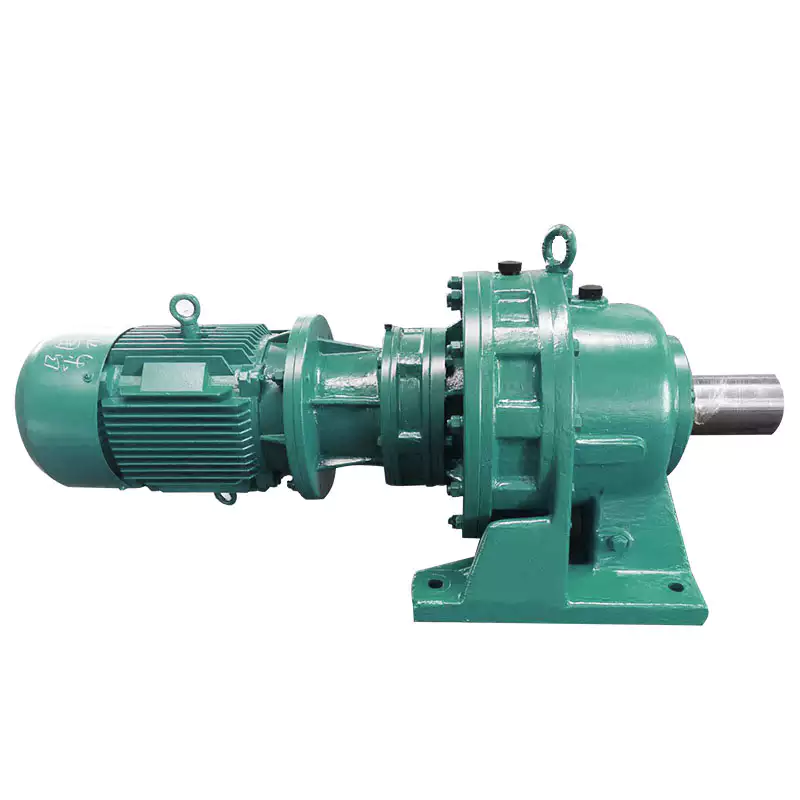
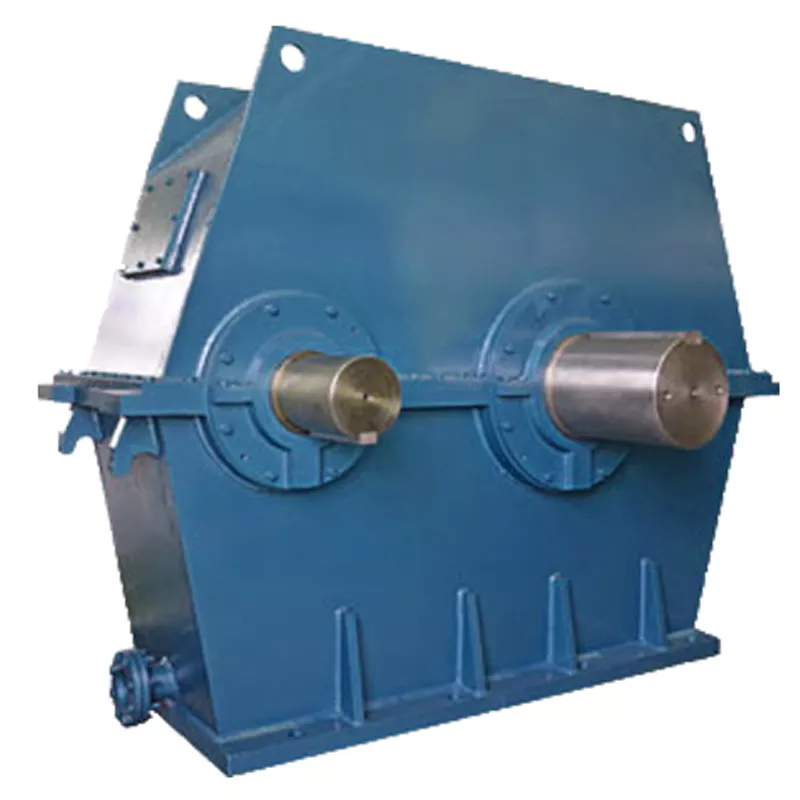
Function of Gear Reducers in Mechanical Systems
A gear reducer, also known as a gear reduction unit or gearbox, is a mechanical device designed to reduce the speed of an input shaft while increasing its torque output. It accomplishes this through the use of a set of interlocking gears with different sizes.
The primary function of a gear reducer in mechanical systems is to:
- Speed Reduction: The gear reducer takes the high-speed rotation of the input shaft and transmits it to the output shaft through a set of gears. The gears are configured in such a way that the output gear has a larger diameter than the input gear. As a result, the output shaft rotates at a lower speed than the input shaft, but with increased torque.
- Torque Increase: Due to the size difference between the input and output gears, the torque applied to the output shaft is greater than that of the input shaft. This torque multiplication allows the system to handle heavier loads and perform tasks requiring higher force.
Gear reducers are widely used in various industries and applications where it’s necessary to adapt the speed and torque characteristics of a power source to meet the requirements of the driven equipment. They can be found in machinery such as conveyor systems, industrial machinery, vehicles, and more.


editor by CX 2023-08-16