Descripción del Producto
Descripción del Producto
| Ratio : | 3:1—-10000:1 | Backlash : | up to 8 arcmin |
| Output : | up to 65000N.m | Frame : | PL/WPL040-550 |
Output: Straight teeth
Ball bearing
Single support
PL core feature
Structural feature
Reducer output planetary frame, gear ring are using split structure design, reducer parameters are uniform and good, product processing technology is the same as high-end products, and the same high precision processing equipment manufacturing, cost-effective.
Reducer gear ring, planetary frame, input shaft are made of 40Cr high-quality structural steel, hot forging process, so as to obtain higher material density, than the use of casting box, round steel, with higher strength, rigidity, toughness.
Gear characteristics
Real hard face spur gear, gear material is 20CrMnTi high quality alloy steel, after carburizing – grinding process processing, hardness up to HRC62, compared with ordinary steel 40Cr, 38CrMnTi surface nitriding treatment of gear has higher hardness, rigidity, toughness, wear resistance. The design and analysis technology of 3DSimulation is adopted to modify the tooth shape, tooth direction and follow the trimming, respectively, in order to reduce the noise of gear meshing and increase the service life of the gear train.
Application characteristics
The product parameters are uniform and good, can bear a certain radial and axial load, low and medium precision requirements, excellent performance.
Installation Instructions
Precision planetary reducer – about installation
| Solicitud: | Motor, Electric Cars, Machinery, Agricultural Machinery |
|---|---|
| Dureza: | Superficie del diente endurecida |
| Instalación: | Vertical Type |
| Disposición: | Coaxial |
| Gear Shape: | Cylindrical Gear |
| Paso: | Double-Step |
| Personalización: |
Disponible
| Solicitud personalizada |
|---|
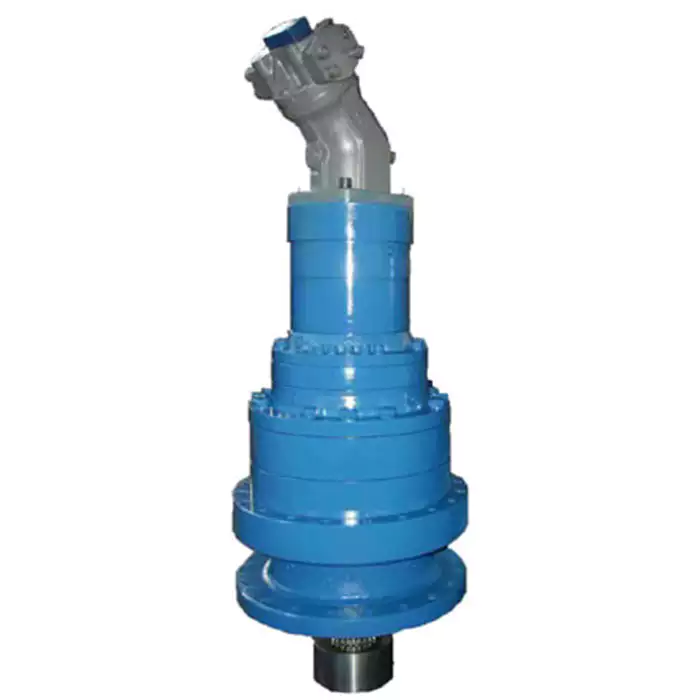
Desafíos para lograr altas relaciones de transmisión con compacidad en cajas de engranajes planetarios
El diseño de cajas de engranajes planetarios con altas relaciones de transmisión, manteniendo a la vez un formato compacto, plantea varios desafíos debido a la intrincada disposición de los engranajes y a la necesidad de equilibrar diversos factores:
Limitaciones de espacio: Aumentar la relación de transmisión generalmente requiere añadir más etapas planetarias, lo que implica engranajes y componentes adicionales. Sin embargo, el espacio limitado disponible puede dificultar la instalación de estos componentes adicionales sin comprometer la compacidad de la caja de cambios.
Eficiencia: Al aumentar el número de etapas planetarias para lograr relaciones de transmisión más altas, puede producirse una disminución en la eficiencia. El engrane adicional y las pérdidas por fricción pueden reducir la eficiencia general, afectando el rendimiento de la caja de cambios.
Distribución de la carga: La distribución de cargas entre las distintas etapas es fundamental al diseñar reductores planetarios de alta relación de transmisión. Una correcta distribución de la carga garantiza que cada etapa la comparta proporcionalmente, evitando el desgaste prematuro y asegurando un funcionamiento fiable.
Disposición de los cojinetes: Para alojar varias etapas de engranajes planetarios, se requiere una disposición de cojinetes eficaz que soporte los componentes giratorios. Una selección o disposición inadecuada de los cojinetes puede provocar mayor fricción, menor eficiencia y posibles fallos.
Tolerancias de fabricación: Para lograr relaciones de transmisión elevadas, se requieren tolerancias de fabricación estrictas que garanticen perfiles de dientes de engranaje precisos y un engrane exacto. Cualquier desviación puede provocar ruido, vibraciones y una disminución del rendimiento.
Lubricación: Una lubricación adecuada se vuelve crucial para mantener un funcionamiento suave y reducir la fricción a medida que aumentan las relaciones de transmisión. Sin embargo, lograr una distribución correcta del lubricante en las distintas etapas puede ser complicado, lo que afecta la eficiencia y la vida útil.
Ruido y vibración: La complejidad de las cajas reductoras planetarias de alta relación de transmisión puede generar mayores niveles de ruido y vibración debido al mayor número de interacciones entre engranajes. Controlar el ruido y la vibración resulta fundamental para garantizar un rendimiento aceptable y la comodidad del usuario.
Para afrontar estos retos, los ingenieros emplean técnicas de diseño avanzadas, procesos de fabricación de alta precisión, materiales especializados, disposiciones innovadoras de rodamientos y estrategias de lubricación optimizadas. Lograr el equilibrio adecuado entre relaciones de transmisión elevadas y compacidad requiere una cuidadosa consideración de estos factores para garantizar la fiabilidad, la eficiencia y el rendimiento de la caja de cambios.
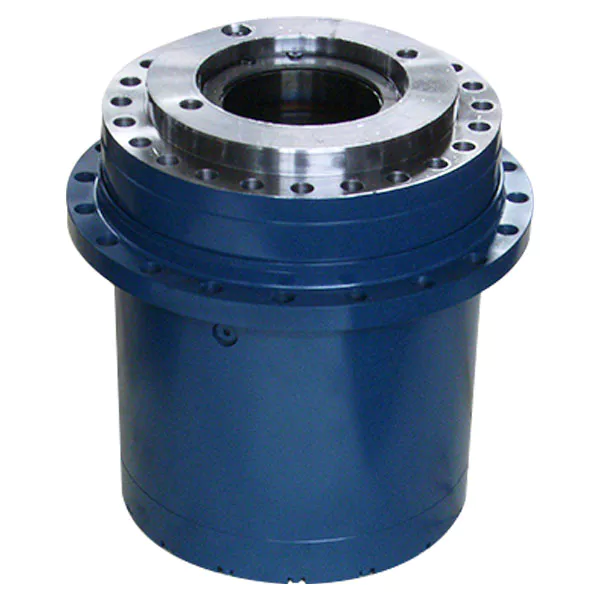
Enhancing Wind Turbine System Performance with Planetary Gearboxes
Planetary gearboxes play a crucial role in enhancing the performance and efficiency of wind turbine systems. Here’s how they contribute:
1. Speed Conversion: Wind turbines operate optimally at specific rotational speeds to generate electricity efficiently. Planetary gearboxes allow for speed conversion between the low rotational speed of the wind turbine rotor and the higher speed required by the generator. This speed adaptation ensures the generator operates at its peak efficiency, resulting in maximum power generation.
2. Torque Amplification: Wind turbine blades may experience varying wind speeds, which result in fluctuating torque loads. Planetary gearboxes can amplify the torque generated by the rotor blades before transmitting it to the generator. This torque multiplication helps maintain stable generator operation even during wind speed variations, improving overall energy production.
3. Compact Design: Wind turbines are often installed in locations with limited space, such as offshore platforms or densely populated areas. Planetary gearboxes offer a compact design, allowing for efficient power transmission within a small footprint. This compactness is vital for accommodating gearboxes in the limited nacelle space of the wind turbine.
4. Load Distribution: Wind turbines are subjected to varying wind conditions, including gusts and turbulence. Planetary gearboxes distribute the load evenly among multiple planet gears, reducing stress and wear on individual components. This balanced load distribution improves gearbox durability and reliability.
5. Efficiency Optimization: Planetary gearboxes are known for their high efficiency due to their parallel axis arrangement and multiple gear stages. The efficient power transmission minimizes energy losses within the gearbox, resulting in more power being converted from wind energy to electricity.
6. Maintenance and Reliability: The robust construction of planetary gearboxes contributes to their durability and longevity. Wind turbines often operate in challenging environments, and the reliability of the gearbox is crucial for minimizing maintenance and downtime. Planetary gearboxes’ low maintenance requirements and ability to handle varying loads contribute to the overall reliability of wind turbine systems.
7. Variable Speed Control: Some wind turbines use variable-speed operation to optimize power generation across a range of wind speeds. Planetary gearboxes can facilitate variable speed control by adjusting the gear ratio to match the wind conditions. This flexibility improves energy capture and reduces stress on turbine components.
8. Adaptation to Turbine Size: Planetary gearboxes are available in various sizes and gear ratios, making them adaptable to different turbine sizes and power outputs. This versatility allows wind turbine manufacturers to select gearboxes that align with specific project requirements.
Overall, planetary gearboxes play a pivotal role in optimizing the performance, efficiency, and reliability of wind turbine systems. Their ability to convert speed, amplify torque, and distribute loads makes them a key component in harnessing wind energy for clean and sustainable electricity generation.
Contribution of Planetary Gearboxes to Efficient Industrial Automation and Robotics
Planetary gearboxes play a crucial role in enhancing the efficiency of industrial automation and robotics systems by offering several advantages:
1. Compact Design: Planetary gearboxes provide high power density and a compact form factor. This is essential in robotics and automation where space is limited and components need to be tightly integrated.
2. High Torque Density: Planetary gearboxes can achieve high torque output in a compact size, allowing robots and automated systems to handle heavy loads and perform demanding tasks efficiently.
3. Precision and Accuracy: The design of planetary gear systems ensures accurate and precise motion control. This is vital in robotics applications where precise positioning and smooth movement are required for tasks such as pick-and-place operations and assembly.
4. Redundancy: Some planetary gearboxes feature multiple stages and redundant configurations. This provides a level of built-in redundancy, enhancing the reliability of automation systems by allowing continued operation even if one stage fails.
5. Efficiency: Planetary gearboxes are designed for high efficiency, minimizing energy losses and ensuring that the power delivered to the output stage is effectively utilized. This efficiency is crucial for reducing energy consumption and optimizing battery life in robotic applications.
6. Speed Control: Planetary gearboxes allow for precise speed control, enabling robots to perform tasks at varying speeds as needed. This flexibility is essential for tasks that require different motion dynamics or speed profiles.
7. Reduction of Motor Loads: Planetary gearboxes can reduce the load on the motor by providing mechanical advantage through gear reduction. This allows smaller, more efficient motors to be used without sacrificing performance.
8. Shock Absorption: The inherent elasticity of gear teeth in planetary gearboxes can help absorb shocks and impacts, protecting the system components and ensuring smooth operation in dynamic environments.
9. Customization: Planetary gearboxes can be tailored to specific application requirements, including gear ratios, output configurations, and mounting options. This adaptability allows for optimal integration into various automation and robotics setups.
10. Maintenance and Durability: High-quality planetary gearboxes are designed for durability and low maintenance. This is especially important in industrial automation and robotics, where continuous operation and minimal downtime are essential.
Overall, planetary gearboxes contribute significantly to the efficient operation of industrial automation and robotics systems by providing the necessary torque, precision, compactness, and reliability required for these dynamic and demanding applications.


editor by CX 2023-09-08