Descripción del Producto
FK230B Gearbox Suitable for 6 cbm mixer nbsp truck made in china
| Especificación Model |
FK130B | FK230B | FK270B | FK330B | FK430B | FK530B | FK730B | FK830B | FK930B |
| Mixer Volume (cbm) | 3-5 | 4-6 | 6-7 | 7-8 | 9-10 | 10-12 | 12-14 | 15-16 | 17-20 |
| Output Torque (Nm) | 30000 | 36000 | 42000 | 48000 | 54000 | 70000 | 75000 | 85000 | 95000 |
| Reduction ration | 103 | 103 | 128.5 | 133.7 | 135.5 | 135.5 | 144.3 | 141.3 | 141.3 |
| Drum angle (°) | 15 | 15 | 15 | 15 | 15 | 15 | 13 | 12 | 10 |
| Input rotation | 2500 | 2500 | 2500 | 2500 | 2500 | 2500 | 2500 | 2500 | 2500 |
| Radial load (kN) | 70 | 72 | 100 | 130 | 160 | 170 | 190 | 235 | 275 |
| Axial load (kN) | 20 | 22 | 28 | 36 | 45 | 50 | 60 | 70 | 90 |
| Weight (kg) | 160 | 162 | 175 | 185 | 325 | 330 | 340 | 405 | 415 |
| Lubricating oil (L) | 5.5 | 7.0 | 7.0 | 7.5 | 11.5 | 11.5 | 11.5 | 13.5 | 15.5 |
| Swing angle of Flange plate | ±6 | ±6 | ±6 | ±6 | ±6 | ±6 | ±6 | ±6 | ±6 |
| Model of Gear oil | SAE 85W-90/API GL4 GL5 | SAE 85W-90/API GL4 GL5 | SAE 85W-90/API GL4 GL5 | SAE 85W-90/API GL4 GL5 | SAE 85W-90/API GL4 GL5 | SAE 85W-90/API GL4 GL5 | SAE 85W-90/API GL4 GL5 | SAE 85W-90/API GL4 GL5 | SAE 85W-90/API GL4 GL5 |
| Connection port of Water pump | NO | NO | NO | NO | NO | NO | NO | NO | NO |
| Connection flange of Hydraulic motor | SAE C 16/32 Z21 |
SAE C 16/32 Z21 |
SAE C 16/32 Z21 |
SAE C 16/32 Z21 |
SAE C 16/32 Z21 |
SAE C 16/32 Z21 |
SAE C 16/32 Z21 |
SAE C 16/32 Z21 |
SAE C 16/32 Z21 |
| Solicitud: | Electric Cars, Motorcycle, Machinery, Marine, Agricultural Machinery, Car |
|---|---|
| Dureza: | Superficie del diente endurecida |
| Instalación: | Tipo horizontal |
| Disposición: | Coaxial |
| Gear Shape: | Teeth Gear |
| Paso: | Stepless |
| Muestras: |
US$ 500/Piece
1 pieza (pedido mínimo) | |
|---|
| Personalización: |
Disponible
| Solicitud personalizada |
|---|
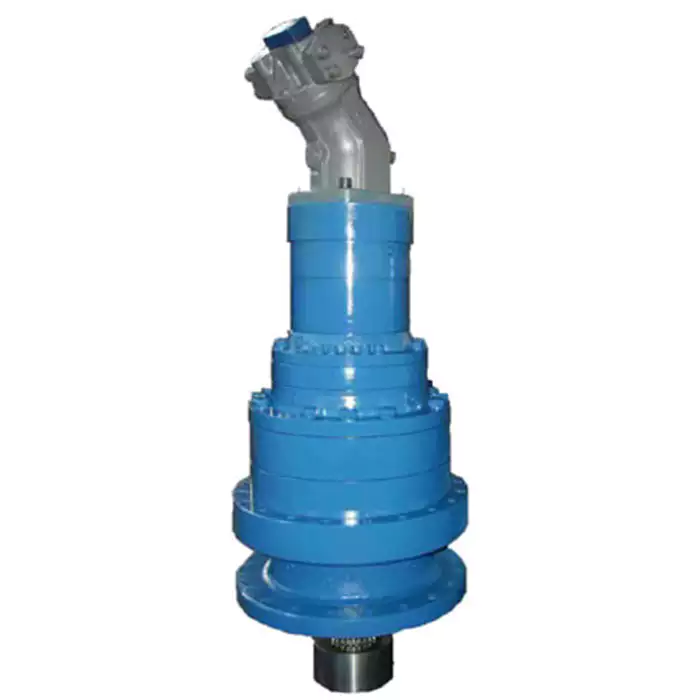
Desafíos para lograr altas relaciones de transmisión con compacidad en cajas de engranajes planetarios
El diseño de cajas de engranajes planetarios con altas relaciones de transmisión, manteniendo a la vez un formato compacto, plantea varios desafíos debido a la intrincada disposición de los engranajes y a la necesidad de equilibrar diversos factores:
Limitaciones de espacio: Aumentar la relación de transmisión generalmente requiere añadir más etapas planetarias, lo que implica engranajes y componentes adicionales. Sin embargo, el espacio limitado disponible puede dificultar la instalación de estos componentes adicionales sin comprometer la compacidad de la caja de cambios.
Eficiencia: Al aumentar el número de etapas planetarias para lograr relaciones de transmisión más altas, puede producirse una disminución en la eficiencia. El engrane adicional y las pérdidas por fricción pueden reducir la eficiencia general, afectando el rendimiento de la caja de cambios.
Distribución de la carga: La distribución de cargas entre las distintas etapas es fundamental al diseñar reductores planetarios de alta relación de transmisión. Una correcta distribución de la carga garantiza que cada etapa la comparta proporcionalmente, evitando el desgaste prematuro y asegurando un funcionamiento fiable.
Disposición de los cojinetes: Para alojar varias etapas de engranajes planetarios, se requiere una disposición de cojinetes eficaz que soporte los componentes giratorios. Una selección o disposición inadecuada de los cojinetes puede provocar mayor fricción, menor eficiencia y posibles fallos.
Tolerancias de fabricación: Para lograr relaciones de transmisión elevadas, se requieren tolerancias de fabricación estrictas que garanticen perfiles de dientes de engranaje precisos y un engrane exacto. Cualquier desviación puede provocar ruido, vibraciones y una disminución del rendimiento.
Lubricación: Una lubricación adecuada se vuelve crucial para mantener un funcionamiento suave y reducir la fricción a medida que aumentan las relaciones de transmisión. Sin embargo, lograr una distribución correcta del lubricante en las distintas etapas puede ser complicado, lo que afecta la eficiencia y la vida útil.
Ruido y vibración: La complejidad de las cajas reductoras planetarias de alta relación de transmisión puede generar mayores niveles de ruido y vibración debido al mayor número de interacciones entre engranajes. Controlar el ruido y la vibración resulta fundamental para garantizar un rendimiento aceptable y la comodidad del usuario.
Para afrontar estos retos, los ingenieros emplean técnicas de diseño avanzadas, procesos de fabricación de alta precisión, materiales especializados, disposiciones innovadoras de rodamientos y estrategias de lubricación optimizadas. Lograr el equilibrio adecuado entre relaciones de transmisión elevadas y compacidad requiere una cuidadosa consideración de estos factores para garantizar la fiabilidad, la eficiencia y el rendimiento de la caja de cambios.
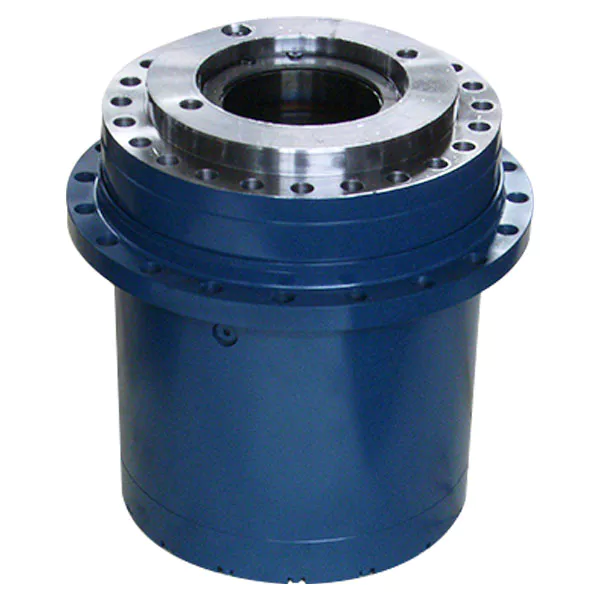
Enhancing Wind Turbine System Performance with Planetary Gearboxes
Planetary gearboxes play a crucial role in enhancing the performance and efficiency of wind turbine systems. Here’s how they contribute:
1. Speed Conversion: Wind turbines operate optimally at specific rotational speeds to generate electricity efficiently. Planetary gearboxes allow for speed conversion between the low rotational speed of the wind turbine rotor and the higher speed required by the generator. This speed adaptation ensures the generator operates at its peak efficiency, resulting in maximum power generation.
2. Torque Amplification: Wind turbine blades may experience varying wind speeds, which result in fluctuating torque loads. Planetary gearboxes can amplify the torque generated by the rotor blades before transmitting it to the generator. This torque multiplication helps maintain stable generator operation even during wind speed variations, improving overall energy production.
3. Compact Design: Wind turbines are often installed in locations with limited space, such as offshore platforms or densely populated areas. Planetary gearboxes offer a compact design, allowing for efficient power transmission within a small footprint. This compactness is vital for accommodating gearboxes in the limited nacelle space of the wind turbine.
4. Load Distribution: Wind turbines are subjected to varying wind conditions, including gusts and turbulence. Planetary gearboxes distribute the load evenly among multiple planet gears, reducing stress and wear on individual components. This balanced load distribution improves gearbox durability and reliability.
5. Efficiency Optimization: Planetary gearboxes are known for their high efficiency due to their parallel axis arrangement and multiple gear stages. The efficient power transmission minimizes energy losses within the gearbox, resulting in more power being converted from wind energy to electricity.
6. Maintenance and Reliability: The robust construction of planetary gearboxes contributes to their durability and longevity. Wind turbines often operate in challenging environments, and the reliability of the gearbox is crucial for minimizing maintenance and downtime. Planetary gearboxes’ low maintenance requirements and ability to handle varying loads contribute to the overall reliability of wind turbine systems.
7. Variable Speed Control: Some wind turbines use variable-speed operation to optimize power generation across a range of wind speeds. Planetary gearboxes can facilitate variable speed control by adjusting the gear ratio to match the wind conditions. This flexibility improves energy capture and reduces stress on turbine components.
8. Adaptation to Turbine Size: Planetary gearboxes are available in various sizes and gear ratios, making them adaptable to different turbine sizes and power outputs. This versatility allows wind turbine manufacturers to select gearboxes that align with specific project requirements.
Overall, planetary gearboxes play a pivotal role in optimizing the performance, efficiency, and reliability of wind turbine systems. Their ability to convert speed, amplify torque, and distribute loads makes them a key component in harnessing wind energy for clean and sustainable electricity generation.
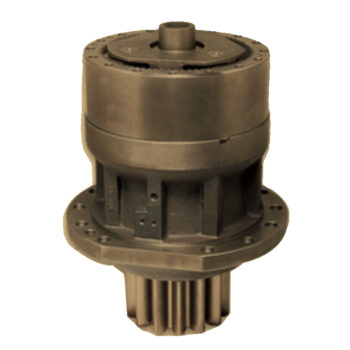
Common Applications and Industries of Planetary Gearboxes
Planetary gearboxes are widely utilized across various industries and applications due to their unique design and performance characteristics. Some common applications and industries where planetary gearboxes are commonly used include:
- Automotive Industry: Planetary gearboxes are found in automatic transmissions, hybrid vehicle systems, and powertrains. They provide efficient torque conversion and variable gear ratios.
- Robótica: Planetary gearboxes are used in robotic joints and manipulators, providing compact and high-torque solutions for precise movement.
- Industrial Machinery: They are employed in conveyors, cranes, pumps, mixers, and various heavy-duty machinery where high torque and compact design are essential.
- Aerospace: Aerospace applications include aircraft actuation systems, landing gear mechanisms, and satellite deployment mechanisms.
- Material Handling: Planetary gearboxes are used in equipment like forklifts and pallet jacks to provide controlled movement and high lifting capabilities.
- Renewable Energy: Wind turbines use planetary gearboxes to convert low-speed, high-torque rotational motion of the blades into higher-speed rotational motion for power generation.
- Medical Devices: Planetary gearboxes find applications in medical imaging equipment, prosthetics, and surgical robots for precise and controlled motion.
- Mining and Construction: Planetary gearboxes are used in heavy equipment like excavators, loaders, and bulldozers to handle heavy loads and provide controlled movement.
- Marine Industry: They are employed in marine propulsion systems, winches, and steering mechanisms, benefiting from their compact design and high torque capabilities.
The versatility of planetary gearboxes makes them suitable for applications that require compact size, high torque density, and efficient power transmission. Their ability to handle varying torque loads, offer high gear ratios, and maintain consistent performance has led to their widespread adoption across numerous industries.


editor by CX 2023-10-19