Descripción del Producto
Descripción del Producto
AC Motor 1:50 Ratio 90 Degree Small Hypoid Gear Velocity Reducer
1.KM series Helical-hypoid Gearbox’s Characteristics
KM series helical-hypoid gearbox is a new-generation of product developed by Aokman. With a compromise of advanced technology both at home and abroad, its main features are as follows:
(1) Driven by hypoid gears, which has big ratios.
(2) Large output torque, high efficiency, energy saving and environmental protection.
(3) High-quality aluminum alloy housing, and light in weight and non-rusting.
(4) Smooth in running and low in noise, and can work long time in dreadful conditions.
(5) Good-looking in appearance, durable in service life and small in volume.
(6) Suitable for all round installation, wide application and easy use.
(7) The mounting dimension of KM series helical-hypoid gearbox are compatible with RV series worm gearbox.
(8) Modular and multi-structure can meet the demands of various conditions.
Fotos detalladas
2. KM series Helical-hypoid Gearbox’s Main Materials
(1) Housing: die-cast aluminum alloy (frame size 27 to 57)
(2) Gear wheel: 20CrMnTiH1 carbonizing & quenching heat treatment make the hardness of gears surface be up to 56-62 HRC, and be retained carburization layers thickness between 0.3 and 0.5mm after precise grinding.
3. KM series Helical-hypoid Gearbox’s Surface Painting
Aluminum alloy housing:
(1) Shot blasting and special antiseptic treatment on the aluminum alloy surface.
(2) After phosphating, spray the RAL9571 silver white paint.4.Gearbox Parameters
Parámetros del producto
| Models | Stage | Nominal Ratio | Output Speed (n2)* | Max. Torque | Input Shaft Dia. | Output Hole Dia. | Output Shaft Dia. |
| KM050 | 3 Stage | 50~300 | 4.8~27 | 130N.m | Φ11 | Φ20, Φ24 | Φ25 |
| 2 Stage | 7.5~60 | 24~181 | 130N.m | Φ11 | |||
| KM063 | 3 Stage | 50~300 | 4.6~27 | 200N.m | Φ11 | Φ25, Φ28 | Φ25 |
| 2 Stage | 7.5~60 | 23~184 | 200N.m | Φ14 | |||
| KM075 | 3 Stage | 50~300 | 4.7~28 | 350N.m | Φ14 | Φ28, Φ30, Φ35 | Φ28 |
| 2 Stage | 7.5~60 | 24~187 | 350N.m | Φ16 | |||
| KM090 | 3 Stage | 50~300 | 4.7~28 | 500N.m | Φ14 | Φ35, Φ38 | Φ35 |
| 2 Stage | 7.5~60 | 24~187 | 500N.m | Φ19 | |||
| KM110 | 3 Stage | 50~300 | 4.7~27 | 750N.m | Φ19 | Φ40, Φ42 | Φ42 |
| 2 Stage | 7.5~60 | 24~187 | 750N.m | Φ24 |
Packaging & Shipping
Company Profile
Our Advantages
After Sales Service
| Pre-sale services | 1. Select equipment model. |
| 2.Design and manufacture products according to clients’ special requirement. | |
| 3.Train technical personal for clients | |
| Services during selling | 1.Pre-check and accept products ahead of delivery. |
| 2. Help clients to draft solving plans. | |
| After-sale services | 1.Assist clients to prepare for the first construction scheme. |
| 2. Train the first-line operators. | |
| 3.Take initiative to eliminate the trouble rapidly. | |
| 4. Provide technical exchanging. |
FAQ
1.Q:What kinds of gearbox can you produce for us?
A:Main products of our company: UDL series speed variator,RV series worm gear reducer, ATA series shaft mounted gearbox, X,B series gear reducer,
P series planetary gearbox and R, S, K, and F series helical-tooth reducer, more
than 1 hundred models and thousands of specifications
2.Q:Can you make as per custom drawing?
A: Yes, we offer customized service for customers.
3.Q:What is your terms of payment ?
A: 30% Advance payment by T/T after signing the contract.70% before delivery
4.Q:What is your MOQ?
A: 1 Set
If you have any demand for our products please feel free to contact me. /* 22 de enero de 2571 19:08:37 */!function(){function s(e,r){var a,o={};try{e&&e.split(“”,).forEach(function(e,t){e&&(a=e.match(/(.*?):(.*)$/))&&1
| Solicitud: | Motor, Maquinaria |
|---|---|
| Función: | Speed Changing, Speed Reduction |
| Disposición: | Orthogonal |
| Dureza: | Superficie del diente endurecida |
| Instalación: | Industry |
| Paso: | Double or Three-Step |
| Personalización: |
Disponible
| Solicitud personalizada |
|---|
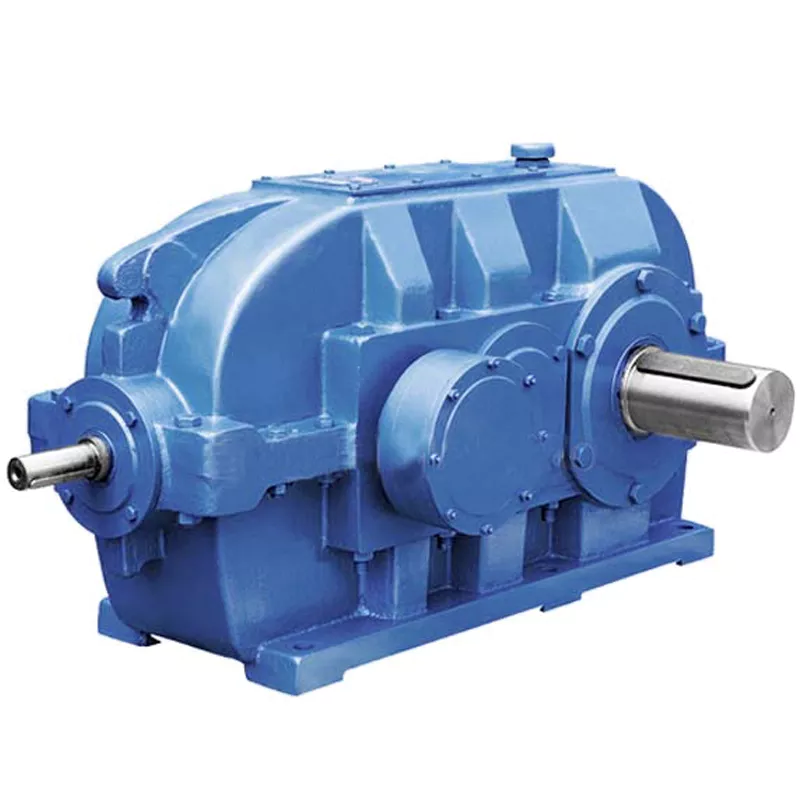
¿Cómo mejoran los reductores de engranajes la eficiencia de los sistemas de transporte y la robótica?
Los reductores de engranajes desempeñan un papel fundamental en la mejora de la eficiencia de los sistemas de transporte y la robótica, optimizando la velocidad, el par y el control. A continuación, se detalla su contribución:
Sistemas transportadores:
En los sistemas transportadores, los reductores de engranajes mejoran la eficiencia de las siguientes maneras:
- Control de velocidad: Los reductores de engranajes permiten un control preciso de la velocidad de rotación de las cintas transportadoras, garantizando que los materiales se transporten a la velocidad deseada para procesos de producción eficientes.
- Ajuste de par: Al ajustar las relaciones de engranajes, los reductores de engranajes proporcionan el torque necesario para manejar cargas variables y evitar la sobrecarga, minimizando el desperdicio de energía.
- Operación inversa: Los reductores de engranajes permiten un movimiento bidireccional suave de las cintas transportadoras, facilitando tareas como carga, descarga y distribución sin necesidad de componentes adicionales.
- Sincronización: Los reductores de engranajes garantizan el movimiento sincronizado de múltiples cintas transportadoras en sistemas complejos, optimizando el flujo de material y minimizando atascos o cuellos de botella.
Robótica:
En robótica, los reductores de engranajes mejoran la eficiencia a través de los siguientes medios:
- Movimiento de precisión: Los reductores de engranajes proporcionan un control preciso sobre el movimiento de las articulaciones y los brazos del robot, lo que permite un posicionamiento y una manipulación precisos de los objetos.
- Inercia reducida: Los reductores de engranajes ayudan a reducir la inercia que experimentan los componentes robóticos, lo que permite movimientos más rápidos y con mayor capacidad de respuesta al tiempo que conservan energía.
- Diseño compacto: Los reductores de engranajes ofrecen una solución compacta y liviana para lograr diversos perfiles de movimiento en sistemas robóticos, lo que permite un uso eficiente del espacio y los recursos.
- Amplificación de par: Al amplificar el torque del motor, los reductores de engranajes permiten a los robots manejar cargas más pesadas y realizar tareas que requieren mayor fuerza, mejorando sus capacidades generales.
Al proporcionar un control de velocidad preciso, ajuste de torque y transmisión de movimiento confiable, los reductores de engranajes optimizan el rendimiento de los sistemas transportadores y la robótica, lo que genera una mayor eficiencia, un menor consumo de energía y capacidades operativas mejoradas.
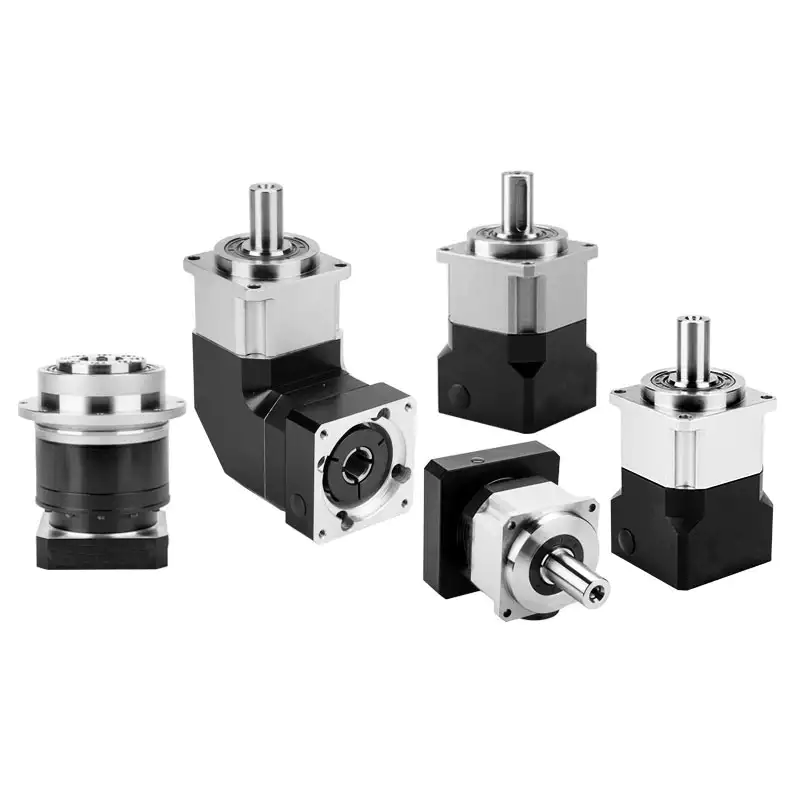
Can gear reducers be used for both speed reduction and speed increase?
Yes, gear reducers can be utilized for both speed reduction and speed increase, depending on their design and arrangement. The functionality to either decrease or increase rotational speed is achieved by altering the arrangement of gears within the gearbox.
1. Reducción de velocidad: In speed reduction applications, a gear reducer is designed with gears of different sizes. The input shaft connects to a larger gear, while the output shaft is connected to a smaller gear. As the input shaft rotates, the larger gear turns the smaller gear, resulting in a decrease in output speed compared to the input speed. This configuration provides higher torque output at a lower speed, making it suitable for applications that require increased force or torque.
2. Speed Increase: For speed increase, the gear arrangement is reversed. The input shaft connects to a smaller gear, while the output shaft is connected to a larger gear. As the input shaft rotates, the smaller gear drives the larger gear, resulting in an increase in output speed compared to the input speed. However, the torque output is lower than that of speed reduction configurations.
By choosing the appropriate gear ratios and arrangement, gear reducers can be customized to meet specific speed and torque requirements for various industrial applications. It’s important to select the right type of gear reducer and configure it correctly to achieve the desired speed reduction or speed increase.
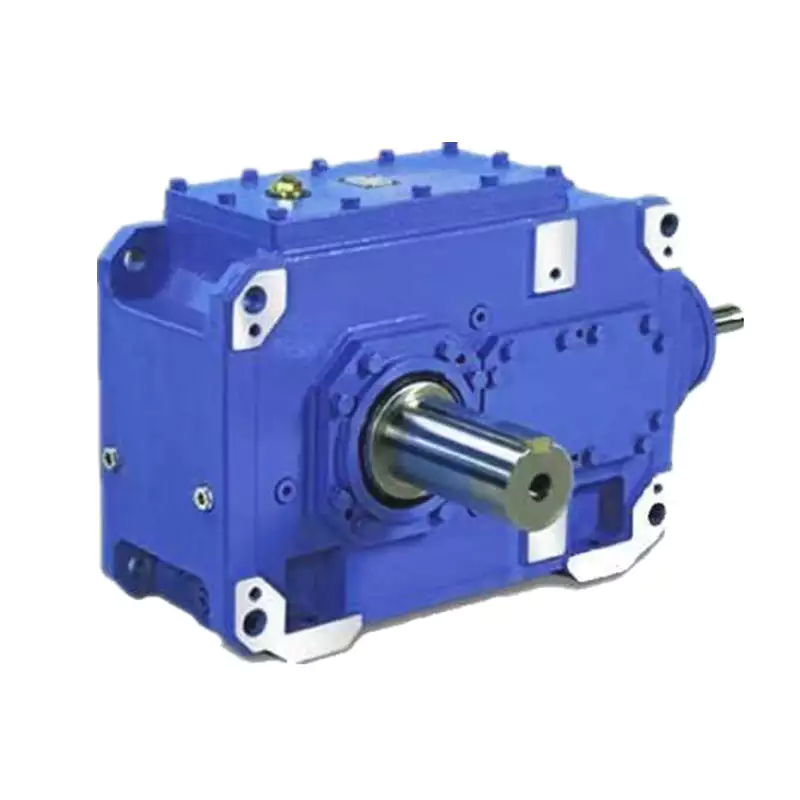
Are there variations in gear reducer designs for specific tasks and applications?
Yes, gear reducer designs vary widely to suit specific tasks and applications across various industries. Manufacturers offer a range of gear reducer types and configurations to accommodate different requirements, including:
- Helical Gear Reducers: These are versatile and provide smooth and efficient torque transmission. They are commonly used in applications requiring high precision and moderate speed reduction, such as conveyors, mixers, and agitators.
- Bevel Gear Reducers: These are ideal for transmitting power between intersecting shafts. They are often used in heavy machinery, printing presses, and automotive applications.
- Worm Gear Reducers: These provide compact solutions and are suitable for applications with higher speed reduction requirements, such as conveyor systems, winches, and elevators.
- Planetary Gear Reducers: These offer high torque density and are used in applications demanding precise control, such as robotics, aerospace, and heavy-duty machinery.
- Parallel Shaft Gear Reducers: Commonly used in industrial machinery, these reducers are designed for high torque and reliability.
- Right-Angle Gear Reducers: These are used when space limitations require a change in shaft direction, commonly found in packaging equipment and conveyors.
Each type of gear reducer has unique features and benefits that make it suitable for specific tasks. Manufacturers often provide customization options to tailor gear reducers to the precise requirements of an application, including gear ratios, mounting options, and input/output configurations.
Therefore, the variation in gear reducer designs allows industries to select the most appropriate type based on factors such as torque, speed, space constraints, precision, and environmental conditions.


editor by CX 2024-04-26