Descripción del Producto
Starshine Drive NCJ Series Helical Geared Motor
Features:
- High efficiency and energy saving: low energy, low noise, small vibration, low temperature rise, wide output speed, and high efficiency: 92%-96%.
- With wide variable range of voltage and frequency motor from 20HZ to 60HZ, and voltage from 320V to 420V.
- Modular design with strong interchangeability.
- Iron or aluminum casting house, good rigidity, high strength and excellent heat-loss.
- Advanced design: gear pair processed by carburizing and quenching heat treatment, and unique low noise gear tooth design to ensure the service life.
- Free maintenance: special lubrication to guarantee normal running for 20,000 hours without oil replacement;
- Easy replacement: can replace cycloid gearbox and upgrade product
Technical Parameters
| Type | Old Type | Output Torque | Output Shaft Dia. |
| SNR02 | NCJ02 | 130N.m | φ22 |
| SNR03 | NCJ03 | 250N.m | φ28 |
| SNR04 | NCJ04 | 500N.m | φ32 |
| SNR05 | NCJ05 | 750N.m | φ40 |
| SNRW03Y | NCJT03Y2 | 250N.m | φ35 |
| SNRL04Y | NCJF04Y2 | 450N.m | φ35 |
About Us
ZheJiang CHINAMFG Drive Co.,Ltd(Starshine) have a strong technical force with over 350 employees at present, including over 30 engineering technicians, 30 quality inspectors, covering an area of 80000 square CHINAMFG and kinds of advanced processing machines and testing equipments. We have a good foundation for the industry application development and service of high-end speed reducers & variators owning to the provincial engineering technology research center,the lab of gear speed reducers, and the base of modern R&D.
Our Team
Quality Control
Quality:Insist on Improvement,Strive for CHINAMFG With the development of equipment manufacturing indurstry,customer never satirsfy with the current quality of our products,on the contrary,wcreate the value of quality.
Quality policy:to enhance the overall level in the field of power transmission
Quality View:Continuous Improvement , pursuit of excellence
Quality Philosophy:Quality creates value
3. Incoming Quality Control
To establish the AQL acceptable level of incoming material control, to provide the material for the whole inspection, sampling, immunity. On the acceptance of qualified products to warehousing, substandard goods to take return, check, rework, rework inspection; responsible for tracking bad, to monitor the supplier to take corrective measures to prevent recurrence.
4. Process Quality Control
The manufacturing site of the first examination, inspection and final inspection, sampling according to the requirements of some projects, judging the quality change trend; found abnormal phenomenon of manufacturing, and supervise the production department to improve, eliminate the abnormal phenomenon or state.
5. FQC(Final QC)
After the manufacturing department will complete the product, stand in the customer’s position on the finished product quality verification, in order to ensure the quality of customer expectations and needs.
6. OQC(Outgoing QC)
After the product sample inspection to determine the qualified, allowing storage, but when the finished product from the warehouse before the formal delivery of the goods, there is a check, this is called the shipment inspection.Check content:In the warehouse storage and transfer status to confirm, while confirming the delivery of the product is a product inspection to determine the qualified products.
7. Certificate: all of our products pass ISO, CE certificate.
Packing
Delivery
/* 22 de enero de 2571 19:08:37 */!function(){function s(e,r){var a,o={};try{e&&e.split(“”,).forEach(function(e,t){e&&(a=e.match(/(.*?):(.*)$/))&&1
| Solicitud: | Motor, Machinery, Agricultural Machinery |
|---|---|
| Función: | Speed Changing, Speed Reduction |
| Disposición: | Coaxial |
| Dureza: | Superficie del diente endurecida |
| Instalación: | Tipo horizontal |
| Paso: | Double-Step |
| Personalización: |
Disponible
| Solicitud personalizada |
|---|
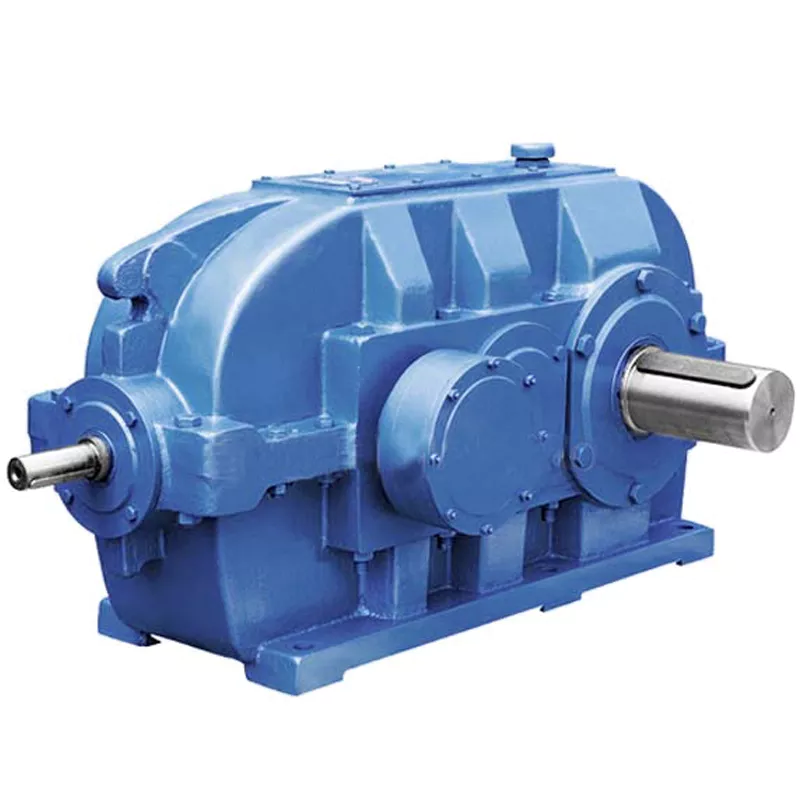
¿Cómo mejoran los reductores de engranajes la eficiencia de los sistemas de transporte y la robótica?
Los reductores de engranajes desempeñan un papel fundamental en la mejora de la eficiencia de los sistemas de transporte y la robótica, optimizando la velocidad, el par y el control. A continuación, se detalla su contribución:
Sistemas transportadores:
En los sistemas transportadores, los reductores de engranajes mejoran la eficiencia de las siguientes maneras:
- Control de velocidad: Los reductores de engranajes permiten un control preciso de la velocidad de rotación de las cintas transportadoras, garantizando que los materiales se transporten a la velocidad deseada para procesos de producción eficientes.
- Ajuste de par: Al ajustar las relaciones de engranajes, los reductores de engranajes proporcionan el torque necesario para manejar cargas variables y evitar la sobrecarga, minimizando el desperdicio de energía.
- Operación inversa: Los reductores de engranajes permiten un movimiento bidireccional suave de las cintas transportadoras, facilitando tareas como carga, descarga y distribución sin necesidad de componentes adicionales.
- Sincronización: Los reductores de engranajes garantizan el movimiento sincronizado de múltiples cintas transportadoras en sistemas complejos, optimizando el flujo de material y minimizando atascos o cuellos de botella.
Robótica:
En robótica, los reductores de engranajes mejoran la eficiencia a través de los siguientes medios:
- Movimiento de precisión: Los reductores de engranajes proporcionan un control preciso sobre el movimiento de las articulaciones y los brazos del robot, lo que permite un posicionamiento y una manipulación precisos de los objetos.
- Inercia reducida: Los reductores de engranajes ayudan a reducir la inercia que experimentan los componentes robóticos, lo que permite movimientos más rápidos y con mayor capacidad de respuesta al tiempo que conservan energía.
- Diseño compacto: Los reductores de engranajes ofrecen una solución compacta y liviana para lograr diversos perfiles de movimiento en sistemas robóticos, lo que permite un uso eficiente del espacio y los recursos.
- Amplificación de par: Al amplificar el torque del motor, los reductores de engranajes permiten a los robots manejar cargas más pesadas y realizar tareas que requieren mayor fuerza, mejorando sus capacidades generales.
Al proporcionar un control de velocidad preciso, ajuste de torque y transmisión de movimiento confiable, los reductores de engranajes optimizan el rendimiento de los sistemas transportadores y la robótica, lo que genera una mayor eficiencia, un menor consumo de energía y capacidades operativas mejoradas.
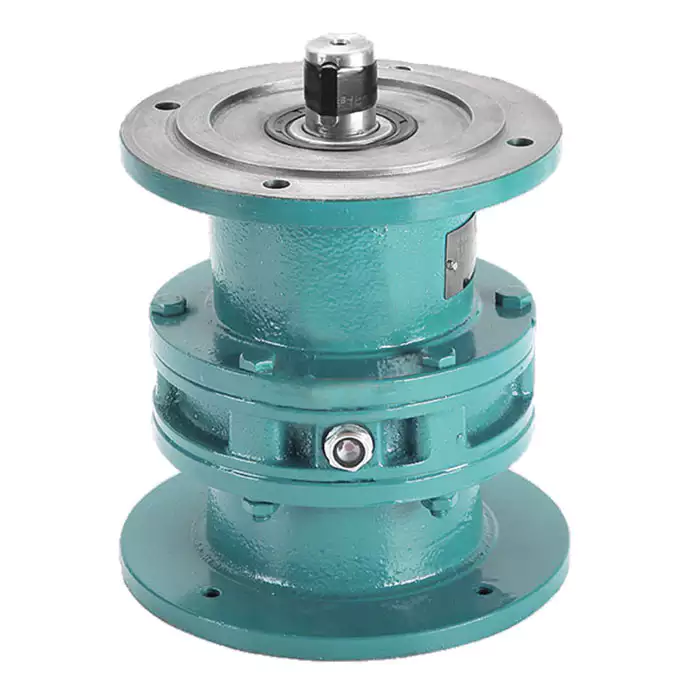
How do gear reducers handle shock loads and sudden changes in torque?
Gear reducers are designed to handle shock loads and sudden changes in torque through several mechanisms that enhance their durability and reliability in challenging operating conditions.
1. Robust Construction: Gear reducers are constructed using high-strength materials and precision manufacturing techniques. This ensures that the gears, bearings, and other components can withstand sudden impacts and high torque fluctuations without deformation or failure.
2. Shock-Absorbing Features: Some gear reducer designs incorporate shock-absorbing features, such as flexible couplings, elastomeric elements, or torsionally flexible gear designs. These features help dampen and dissipate the energy from sudden shocks or torque spikes, reducing the impact on the entire system.
3. Torque Limiters: In applications where shock loads are common, torque limiters may be integrated into the gear reducer. These devices automatically disengage or slip when a certain torque threshold is exceeded, preventing damage to the gears and other components.
4. Overload Protection: Gear reducers can be equipped with overload protection mechanisms, such as shear pins or torque sensors. These mechanisms detect excessive torque and disengage the drive temporarily, allowing the system to absorb the shock or adjust to the sudden torque change.
5. Proper Lubrication: Adequate lubrication is essential for managing shock loads and sudden torque changes. High-quality lubricants reduce friction and wear, helping the gear reducer withstand dynamic forces and maintain smooth operation.
6. Dynamic Load Distribution: Gear reducers distribute dynamic loads across multiple gear teeth, which helps prevent localized stress concentrations. This feature minimizes the risk of tooth breakage and gear damage when subjected to sudden changes in torque.
By incorporating these design features and mechanisms, gear reducers can effectively handle shock loads and sudden changes in torque, ensuring the longevity and reliability of various industrial and mechanical systems.
How do gear reducers handle variations in input and output speeds?
Gear reducers are designed to handle variations in input and output speeds through the use of different gear ratios and configurations. They achieve this by utilizing intermeshing gears of varying sizes to transmit torque and control rotational speed.
The basic principle involves connecting two or more gears with different numbers of teeth. When a larger gear (driving gear) engages with a smaller gear (driven gear), the rotational speed of the driven gear decreases while the torque increases. This reduction in speed and increase in torque enable gear reducers to efficiently adapt to variations in input and output speeds.
The gear ratio is a critical factor in determining how much the speed and torque change. It is calculated by dividing the number of teeth on the driven gear by the number of teeth on the driving gear. A higher gear ratio results in a greater reduction in speed and a proportionate increase in torque.
Planetary gear reducers, a common type, use a combination of gears including sun gears, planet gears, and ring gears to achieve different speed reductions and torque enhancements. This design provides versatility in handling variations in speed and torque requirements.
In summary, gear reducers handle variations in input and output speeds by using specific gear ratios and gear arrangements that enable them to efficiently transmit power and control motion characteristics according to the application’s needs.


editor by CX 2024-05-06