Descripción del Producto
Low Speed High Torque Cycloidal Pin Wheel Gear Factory Sell Speed Reducer
Model:10CBX-RVC
More Code And Specification:
| E series | C series | ||||
| Code | Outline dimension | General model | Code | Outline dimension | The original code |
| 120 | Φ122 | 6E | 10C | Φ145 | 150 |
| 150 | Φ145 | 20E | 27C | Φ181 | 180 |
| 190 | Φ190 | 40E | 50C | Φ222 | 220 |
| 220 | Φ222 | 80E | 100C | Φ250 | 250 |
| 250 | Φ244 | 110E | 200C | Φ345 | 350 |
| 280 | Φ280 | 160E | 320C | Φ440 | 440 |
| 320 | Φ325 | 320E | 500C | Φ520 | 520 |
| 370 | Φ370 | 450E | |||
Gear ratio And Specification
| E Series | C Series | ||
| Code | Relación de reducción | New code | Monomer reduction ratio |
| 120 | 43,53.5,59,79,103 | 10CBX | 27.00 |
| 150 | 81,105,121,141,161 | 27CBX | 36.57 |
| 190 | 81,105,121,153 | 50CBX | 32.54 |
| 220 | 81,101,121,153 | 100CBX | 36.75 |
| 250 | 81,111,161,175.28 | 200CBX | 34.86 |
| 280 | 81,101,129,145,171 | 320CBX | 35.61 |
| 320 | 81,101,118.5,129,141,171,185 | 500CBX | 37.34 |
| 370 | 81,101,118.5,129,154.8,171,192.4 | ||
| Note 1: E series,such as by the shell(pin shell)output,the corresponding reduction ratio by 1 | |||
| Note 2: C series gear ratio refers to the motor installed in the casing of the reduction ratio,if installed on the output flange side,the corresponding reduction ratio by 1 | |||
Reducer type code
REV: main bearing built-in E type
RVC: hollow type
REA: with input flange E type
RCA: with input flange hollow type
Solicitud:
Company Information
FAQ
Q: What’re your main products?
A: We currently produce Brushed Dc Motors, Brushed Dc Gear Motors, Planetary Dc Gear Motors, Brushless Dc Motors, Stepper motors, Ac Motors and High Precision Planetary Gear Box etc. You can check the specifications for above motors on our website and you can email us to recommend needed motors per your specification too.
Q: How to select a suitable motor?
A:If you have motor pictures or drawings to show us, or you have detailed specs like voltage, speed, torque, motor size, working mode of the motor, needed lifetime and noise level etc, please do not hesitate to let us know, then we can recommend suitable motor per your request accordingly.
Q: Do you have a customized service for your standard motors?
A: Yes, we can customize per your request for the voltage, speed, torque and shaft size/shape. If you need additional wires/cables soldered on the terminal or need to add connectors, or capacitors or EMC we can make it too.
Q: Do you have an individual design service for motors?
A: Yes, we would like to design motors individually for our customers, but it may need some mold developing cost and design charge.
Q: What’s your lead time?
A: Generally speaking, our regular standard product will need 15-30days, a bit longer for customized products. But we are very flexible on the lead time, it will depend on the specific orders.
Please contact us if you have detailed requests, thank you ! /* 10 de marzo de 2571 17:59:20 */!function(){function s(e,r){var a,o={};try{e&&e.split(“,”).forEach(function(e,t){e&&(a=e.match(/(.*?):(.*)$/))&&1
| Solicitud: | Machinery, Robotic |
|---|---|
| Dureza: | Superficie del diente endurecida |
| Instalación: | Vertical Type |
| Disposición: | Coaxial |
| Gear Shape: | Cylindrical Gear |
| Paso: | Double-Step |
| Personalización: |
Disponible
| Solicitud personalizada |
|---|
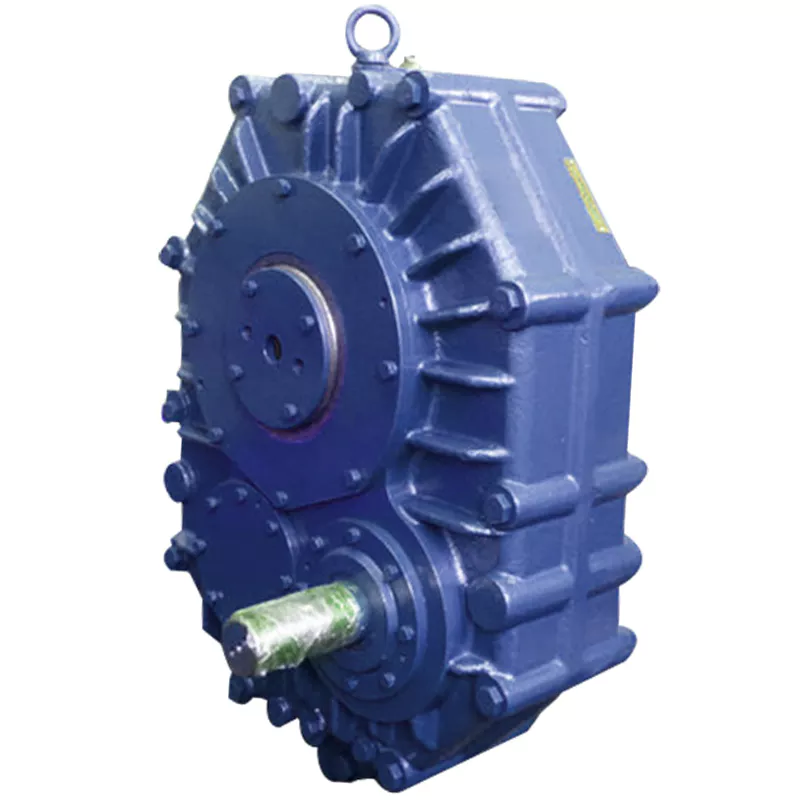
Are there any disadvantages or limitations to using gear reducer systems?
While gear reducer systems offer numerous advantages, they also come with certain disadvantages and limitations that should be considered during the selection and implementation process:
1. Size and Weight: Gear reducers can be bulky and heavy, especially for applications requiring high gear ratios. This can impact the overall size and weight of the machinery or equipment, which may be a concern in space-constrained environments.
2. Efficiency Loss: Despite their high efficiency, gear reducers can experience energy losses due to friction between gear teeth and other components. This can lead to a reduction in overall system efficiency, particularly in cases where multiple gear stages are used.
3. Cost: The design, manufacturing, and assembly of gear reducers can involve complex processes and precision machining, which can contribute to higher initial costs compared to other power transmission solutions.
4. Maintenance: Gear reducer systems require regular maintenance, including lubrication, inspection, and potential gear replacement over time. Maintenance activities can lead to downtime and associated costs in industrial settings.
5. Noise and Vibration: Gear reducers can generate noise and vibrations, especially at high speeds or when operating under heavy loads. Additional measures may be needed to mitigate noise and vibration issues.
6. Limited Gear Ratios: While gear reducers offer a wide range of gear ratios, there may be limitations in achieving extremely high or low ratios in certain designs.
7. Temperature Sensitivity: Extreme temperatures can affect the performance of gear reducer systems, particularly if inadequate lubrication or cooling is provided.
8. Shock Loads: While gear reducers are designed to handle shock loads to some extent, severe shock loads or abrupt changes in torque can still lead to potential damage or premature wear.
Despite these limitations, gear reducer systems remain widely used and versatile components in various industries, and their disadvantages can often be mitigated through proper design, selection, and maintenance practices.
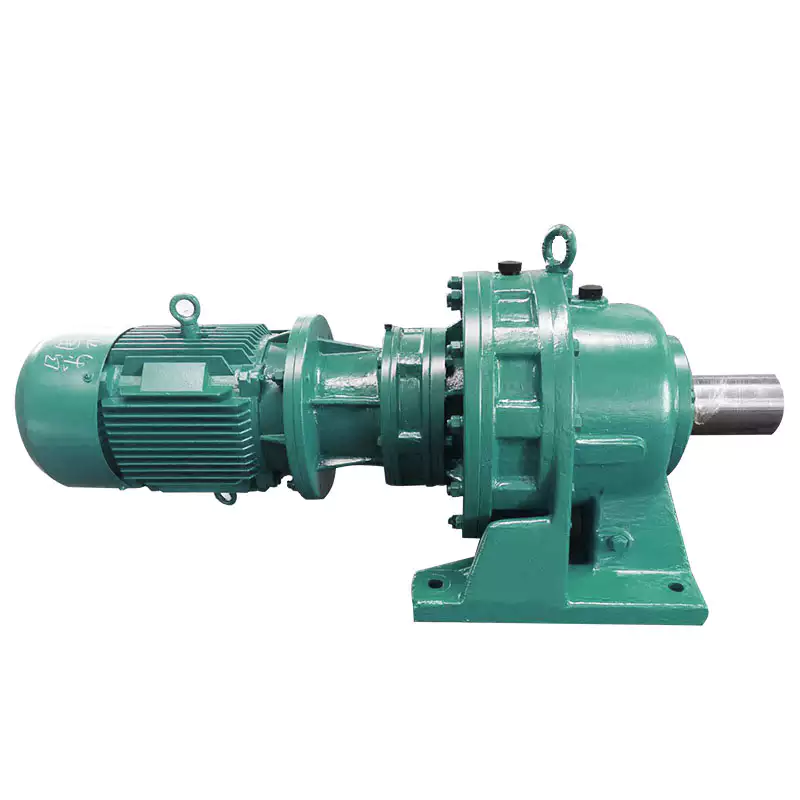
¿Qué papel juegan las relaciones de transmisión en la optimización del rendimiento de los reductores de engranajes?
Las relaciones de transmisión desempeñan un papel crucial en la optimización del rendimiento de los reductores, ya que determinan la relación entre las velocidades de entrada y salida y los pares. Una relación de transmisión es la relación del número de dientes entre dos engranajes engranados e influye directamente en la ventaja mecánica y la eficiencia del reductor.
1. Conversión de velocidad y par: Las relaciones de transmisión permiten a los reductores convertir la velocidad de rotación y el par según las necesidades de una aplicación específica. Al seleccionar las relaciones de transmisión adecuadas, los reductores pueden reducir la velocidad y aumentar el par (reducción de velocidad) o aumentar la velocidad y disminuir el par (aumento de velocidad).
2. Ventaja mecánica: Los reductores de engranajes aprovechan las relaciones de transmisión para proporcionar una ventaja mecánica. En configuraciones de reducción de velocidad, una relación de transmisión más alta genera una mayor ventaja mecánica, lo que permite que el eje de salida proporcione un mayor par a menor velocidad. Esto resulta beneficioso para aplicaciones que requieren mayor fuerza o par, como maquinaria pesada o sistemas de transporte.
3. Eficiencia: Unas relaciones de transmisión óptimas contribuyen a una mayor eficiencia en los reductores. Al distribuir la carga entre varios dientes, los reductores con relaciones de transmisión adecuadas minimizan la tensión y el desgaste en cada diente, lo que se traduce en una mayor eficiencia general y una mayor vida útil.
4. Igualación de velocidad: Las relaciones de transmisión permiten que los reductores de engranajes adapten las velocidades de rotación de los ejes de entrada y salida. Esto es crucial en aplicaciones que requieren una sincronización precisa de la velocidad, como en cintas transportadoras, robótica y procesos de fabricación.
Al seleccionar las relaciones de transmisión para un reductor, es importante considerar los requisitos específicos de la aplicación, como la velocidad, el par, la eficiencia y la ventaja mecánica deseados. Unas relaciones de transmisión bien seleccionadas mejoran el rendimiento general y la fiabilidad de los reductores en una amplia gama de sistemas industriales y mecánicos.
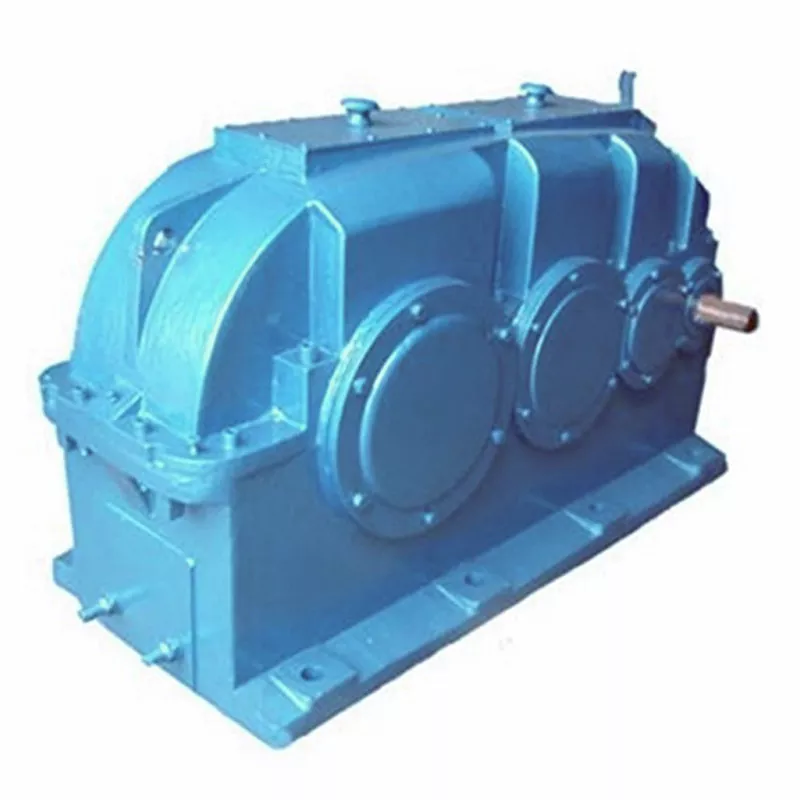
How do gear reducers contribute to speed reduction and torque increase?
Gear reducers play a crucial role in mechanical systems by achieving speed reduction and torque increase through the principle of gear ratios. Here’s how they work:
Gear reducers consist of multiple gears with different sizes, known as gear pairs. These gears are meshed together, and their teeth interlock to transmit motion and power. The gear ratio is determined by the ratio of the number of teeth on the input gear (driver) to the number of teeth on the output gear (driven).
Speed Reduction: When a larger gear (output gear) is driven by a smaller gear (input gear), the output gear rotates at a slower speed than the input gear. This reduction in speed is proportional to the gear ratio. As a result, gear reducers are used to slow down the rotational speed of the output shaft compared to the input shaft.
Torque Increase: The interlocking teeth of gears create a mechanical advantage that allows gear reducers to increase torque output. When the input gear applies a force (torque) to the teeth, it is transmitted to the output gear with greater force due to the leverage provided by the larger diameter of the output gear. The torque increase is inversely proportional to the gear ratio and is essential for applications requiring high torque at lower speeds.
By selecting appropriate gear ratios and arranging gear pairs, gear reducers can achieve various speed reduction and torque multiplication factors, making them essential components in machinery and equipment where precise control of speed and torque is necessary.


editor by CX 2024-02-09