Description du produit
Product Description:
Planetar gearbox is a kind of reducer with wide versatility. The inner gear adopts low carbon alloy steel carburizing quenching and grinding or nitriding process. Planetary gearbox has the characteristics of small structure size, large output torque, high speed ratio, high efficiency, safe and reliable performance, etc. The inner gear of the planetary gearbox can be divided into spur gear and helical gear.
Technical parameter:
| Section number | single section | ||||||||
| Reduction ratio | i | 3 | 4 | 5 | 6 | 7 | 8 | 9 | 10 |
| Rated output torque (Ta) | Nm | 55 | 50 | 60 | 55 | 50 | 45 | 40 | 40 |
| Emergency stop torque (Tzwor*) | Nm | Three times the rated output torque | |||||||
| Rated input speed (n) | rpm | 5000 | |||||||
| Maximum input speed (na) | rpm | 1000o | |||||||
| Ultra-precision backlash (PO) | arcmin | – | |||||||
| Precision backlash (P1) | arcmin | ≤3 | |||||||
| Standard backlash (P2) | arcmin | ≤5 | |||||||
| Torsional rigidity | Nm/arcmin | 7 | |||||||
| Allowable radial force | N | 1530 | |||||||
| allowable axial force | N | 765 | |||||||
| service life | hr | 20000 | |||||||
| effectiveness (n) | % | ≥97% | |||||||
| weight | kg | 1.3 | |||||||
| Operating temperature | ºC | -10°ºC~+90°ºC | |||||||
| lubricating | Synthetic grease | ||||||||
| Protection class | IP64 | ||||||||
| Installation direction | any direction | ||||||||
| Noise value(n1=3000rpm,no load) | dB(A) | ≤58 | |||||||
| Moment of inertia (J) | kg-cm’ | 0.16 0.14 0.13 | |||||||
Picture:
Rear Reducer features:
1. High-quality aluminum alloy, light in weight and non-rusting.
2. Large in output torque.
3. Smooth running and low noise,durable in dreadful conditions.
4. High radiation efficiency.
5. Good-looking appearance, durable in service life and small volume.
6. Suitable for omnibearing installation.
Company Information:
HangZhou ChangLong Motor Co.,Ltd
( original HangZhou LINNAN Special Motor Factory)
With 20 years’ hard working on developing , designing and manufacturing the high-speed electrical spindle, we have got our new GDZ-series electrical spindle, which is well recognized by clients for its great and stable quality after being put large quantities to the market. We provide quality guarantee and after-sales service for all of our products with the free manual work and the cost price for the materials or fittings.
FAQ :
How about the warrantly about your company?
bearings=half a year, other parts a year
Which kinds of bearing you are using?
It will according to your order. We have different price range for you with different bearing.
Do you have other spare parts for spindle motor, just like gripper, VFD, collet ?
We have all kits.And we can let engineers help you to program them.
Can I visit your factory?
Yes, welcome to our factory.
Do you have installation page?
Yes,we have.
Can you show me the inspection report ?
Yes We will send you inspection report of spindle after you send me full money before despatch.
The reasen is that I’m not sure which spindle will be sent to you.Every spindle have it’s inspection report .And they are different in details.Only if you pay the money,we can decide which spindle to deliver you.
We also have spindle motor matching inverter(VFD), collet , gripper etc.
If you need other kinds of parts, please don’t hesitate to contact us.
| Application: | Motor, Electric Cars, Motorcycle, Machinery, Marine, Toy, Agricultural Machinery |
|---|---|
| Fonction: | Distribution Power, Change Drive Torque, Speed Changing, Speed Reduction |
| Mise en page: | Cycloidal |
| Dureté: | Surface dentaire durcie |
| Étape: | Double-Step |
| Taper: | Planetary Gear Box |
| Personnalisation : |
Disponible
| Demande personnalisée |
|---|
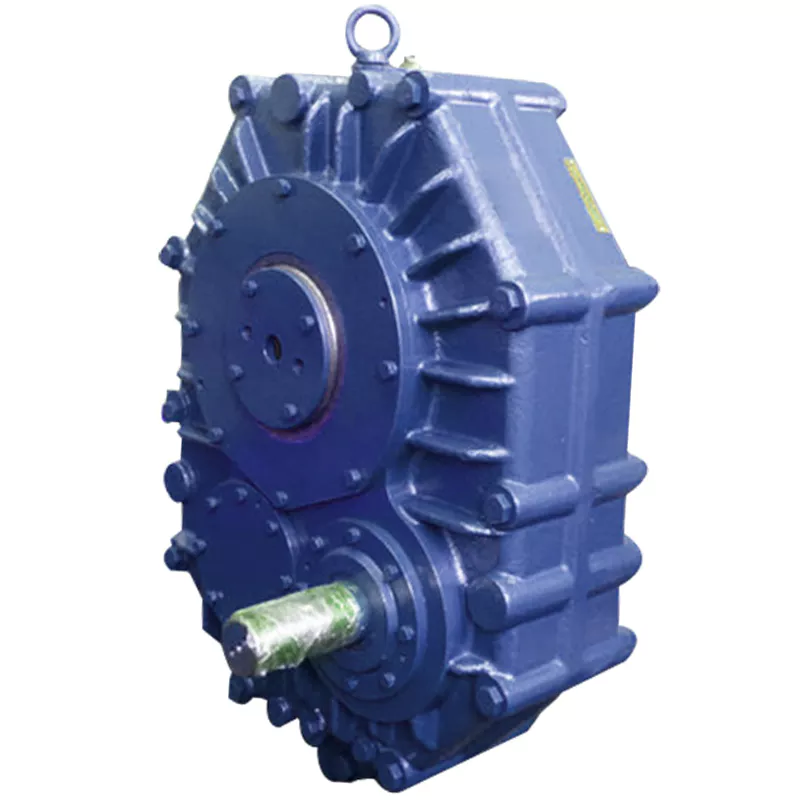
L'utilisation de systèmes de réducteurs de vitesse présente-t-elle des inconvénients ou des limitations ?
Bien que les systèmes de réducteurs de vitesse offrent de nombreux avantages, ils présentent également certains inconvénients et limitations qui doivent être pris en compte lors du processus de sélection et de mise en œuvre :
1. Taille et poids : Les réducteurs de vitesse peuvent être volumineux et lourds, notamment pour les applications nécessitant des rapports de réduction élevés. Cela peut impacter la taille et le poids globaux de la machine ou de l'équipement, ce qui peut s'avérer problématique dans les environnements où l'espace est limité.
2. Perte d'efficacité : Malgré leur rendement élevé, les réducteurs à engrenages peuvent subir des pertes d'énergie dues au frottement entre les dents des engrenages et d'autres composants. Cela peut entraîner une réduction du rendement global du système, notamment lorsque plusieurs étages d'engrenages sont utilisés.
3. Coût : La conception, la fabrication et l'assemblage des réducteurs d'engrenages peuvent impliquer des processus complexes et un usinage de précision, ce qui peut contribuer à des coûts initiaux plus élevés par rapport à d'autres solutions de transmission de puissance.
4. Maintenance : Les systèmes de réduction par engrenages nécessitent un entretien régulier, comprenant la lubrification, l'inspection et, le cas échéant, le remplacement des engrenages. Ces opérations de maintenance peuvent engendrer des temps d'arrêt et des coûts supplémentaires en milieu industriel.
5. Bruit et vibrations : Les réducteurs de vitesse peuvent générer du bruit et des vibrations, notamment à haute vitesse ou sous fortes charges. Des mesures supplémentaires peuvent être nécessaires pour atténuer ces problèmes.
6. Rapports de transmission limités : Bien que les réducteurs offrent une large gamme de rapports de transmission, il peut exister des limitations quant à l'obtention de rapports extrêmement élevés ou faibles dans certaines conceptions.
7. Sensibilité à la température : Les températures extrêmes peuvent affecter les performances des systèmes de réducteurs à engrenages, notamment en cas de lubrification ou de refroidissement insuffisant.
8. Charges de choc : Bien que les réducteurs de vitesse soient conçus pour supporter les chocs dans une certaine mesure, des chocs importants ou des variations brusques de couple peuvent tout de même entraîner des dommages potentiels ou une usure prématurée.
Malgré ces limitations, les systèmes de réducteurs à engrenages restent des composants largement utilisés et polyvalents dans diverses industries, et leurs inconvénients peuvent souvent être atténués par une conception, une sélection et des pratiques d'entretien appropriées.
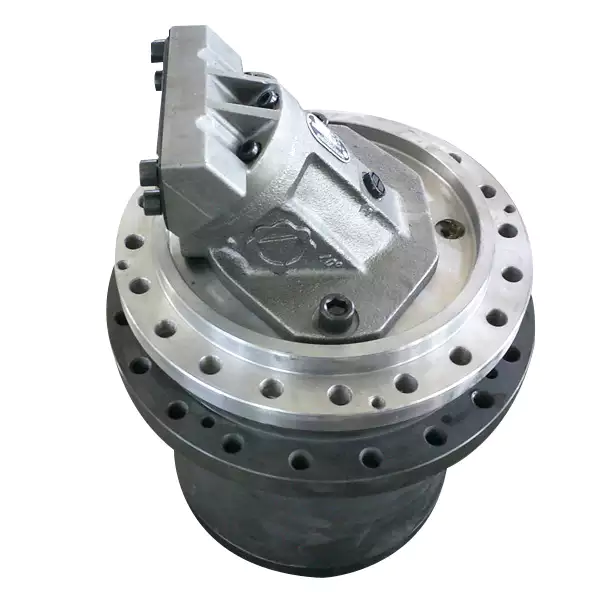
What factors should be considered when selecting the right gear reducer?
Choosing the appropriate gear reducer involves considering several crucial factors to ensure optimal performance and efficiency for your specific application:
- 1. Torque and Power Requirements: Determine the amount of torque and power your machinery needs for its operation.
- 2. Speed Ratio: Calculate the required speed reduction or increase to match the input and output speeds.
- 3. Gear Type: Select the appropriate gear type (helical, bevel, worm, planetary, etc.) based on your application’s torque, precision, and efficiency requirements.
- 4. Mounting Options: Consider the available space and the mounting configuration that suits your machinery.
- 5. Environmental Conditions: Evaluate factors such as temperature, humidity, dust, and corrosive elements that may impact the gear reducer’s performance.
- 6. Efficiency: Assess the gear reducer’s efficiency to minimize power losses and improve overall system performance.
- 7. Backlash: Consider the acceptable level of backlash or play between gear teeth, which can affect precision.
- 8. Maintenance Requirements: Determine the maintenance intervals and procedures necessary for reliable operation.
- 9. Noise and Vibration: Evaluate noise and vibration levels to ensure they meet your machinery’s requirements.
- 10. Cost: Compare the initial cost and long-term value of different gear reducer options.
By carefully assessing these factors and consulting with gear reducer manufacturers, engineers and industry professionals can make informed decisions to select the right gear reducer for their specific application, optimizing performance, longevity, and cost-effectiveness.
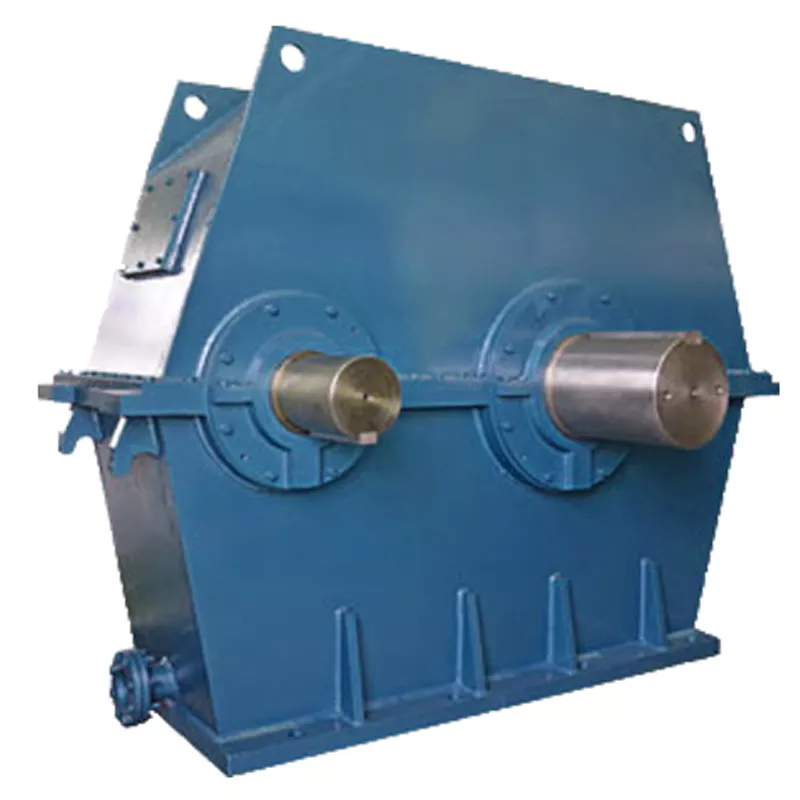
Function of Gear Reducers in Mechanical Systems
A gear reducer, also known as a gear reduction unit or gearbox, is a mechanical device designed to reduce the speed of an input shaft while increasing its torque output. It accomplishes this through the use of a set of interlocking gears with different sizes.
The primary function of a gear reducer in mechanical systems is to:
- Speed Reduction: The gear reducer takes the high-speed rotation of the input shaft and transmits it to the output shaft through a set of gears. The gears are configured in such a way that the output gear has a larger diameter than the input gear. As a result, the output shaft rotates at a lower speed than the input shaft, but with increased torque.
- Torque Increase: Due to the size difference between the input and output gears, the torque applied to the output shaft is greater than that of the input shaft. This torque multiplication allows the system to handle heavier loads and perform tasks requiring higher force.
Gear reducers are widely used in various industries and applications where it’s necessary to adapt the speed and torque characteristics of a power source to meet the requirements of the driven equipment. They can be found in machinery such as conveyor systems, industrial machinery, vehicles, and more.


editor by CX 2023-11-02