Description du produit
Low Speed High Torque Cycloidal Pin Wheel Gear Factory Sell Speed Reducer
Model:10CBX-RVC
More Code And Specification:
| E series | C series | ||||
| Code | Outline dimension | General model | Code | Outline dimension | The original code |
| 120 | Φ122 | 6E | 10C | Φ145 | 150 |
| 150 | Φ145 | 20E | 27C | Φ181 | 180 |
| 190 | Φ190 | 40E | 50C | Φ222 | 220 |
| 220 | Φ222 | 80E | 100C | Φ250 | 250 |
| 250 | Φ244 | 110E | 200C | Φ345 | 350 |
| 280 | Φ280 | 160E | 320C | Φ440 | 440 |
| 320 | Φ325 | 320E | 500C | Φ520 | 520 |
| 370 | Φ370 | 450E | |||
Gear ratio And Specification
| E Series | C Series | ||
| Code | Taux de réduction | New code | Monomer reduction ratio |
| 120 | 43,53.5,59,79,103 | 10CBX | 27.00 |
| 150 | 81,105,121,141,161 | 27CBX | 36.57 |
| 190 | 81,105,121,153 | 50CBX | 32.54 |
| 220 | 81,101,121,153 | 100CBX | 36.75 |
| 250 | 81,111,161,175.28 | 200CBX | 34.86 |
| 280 | 81,101,129,145,171 | 320CBX | 35.61 |
| 320 | 81,101,118.5,129,141,171,185 | 500CBX | 37.34 |
| 370 | 81,101,118.5,129,154.8,171,192.4 | ||
| Note 1: E series,such as by the shell(pin shell)output,the corresponding reduction ratio by 1 | |||
| Note 2: C series gear ratio refers to the motor installed in the casing of the reduction ratio,if installed on the output flange side,the corresponding reduction ratio by 1 | |||
Reducer type code
REV: main bearing built-in E type
RVC: hollow type
REA: with input flange E type
RCA: with input flange hollow type
Application:
Company Information
FAQ
Q: What’re your main products?
A: We currently produce Brushed Dc Motors, Brushed Dc Gear Motors, Planetary Dc Gear Motors, Brushless Dc Motors, Stepper motors, Ac Motors and High Precision Planetary Gear Box etc. You can check the specifications for above motors on our website and you can email us to recommend needed motors per your specification too.
Q: How to select a suitable motor?
A:If you have motor pictures or drawings to show us, or you have detailed specs like voltage, speed, torque, motor size, working mode of the motor, needed lifetime and noise level etc, please do not hesitate to let us know, then we can recommend suitable motor per your request accordingly.
Q: Do you have a customized service for your standard motors?
A: Yes, we can customize per your request for the voltage, speed, torque and shaft size/shape. If you need additional wires/cables soldered on the terminal or need to add connectors, or capacitors or EMC we can make it too.
Q: Do you have an individual design service for motors?
A: Yes, we would like to design motors individually for our customers, but it may need some mold developing cost and design charge.
Q: What’s your lead time?
A: Generally speaking, our regular standard product will need 15-30days, a bit longer for customized products. But we are very flexible on the lead time, it will depend on the specific orders.
Please contact us if you have detailed requests, thank you ! /* 10 mars 2571 17:59:20 */!function(){function s(e,r){var a,o={};try{e&&e.split(“,”).forEach(function(e,t){e&&(a=e.match(/(.*?):(.*)$/))&&1
| Application: | Machinery, Robotic |
|---|---|
| Dureté: | Surface dentaire durcie |
| Installation: | Type vertical |
| Mise en page: | Coaxial |
| Gear Shape: | Cylindrical Gear |
| Étape: | Double-Step |
| Personnalisation : |
Disponible
| Demande personnalisée |
|---|
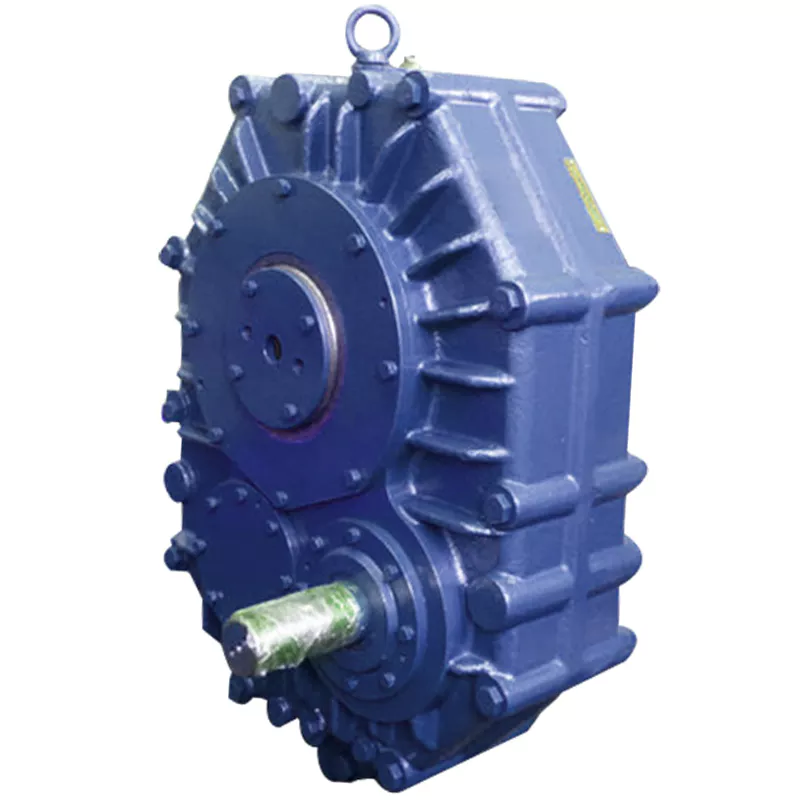
L'utilisation de systèmes de réducteurs de vitesse présente-t-elle des inconvénients ou des limitations ?
Bien que les systèmes de réducteurs de vitesse offrent de nombreux avantages, ils présentent également certains inconvénients et limitations qui doivent être pris en compte lors du processus de sélection et de mise en œuvre :
1. Taille et poids : Les réducteurs de vitesse peuvent être volumineux et lourds, notamment pour les applications nécessitant des rapports de réduction élevés. Cela peut impacter la taille et le poids globaux de la machine ou de l'équipement, ce qui peut s'avérer problématique dans les environnements où l'espace est limité.
2. Perte d'efficacité : Malgré leur rendement élevé, les réducteurs à engrenages peuvent subir des pertes d'énergie dues au frottement entre les dents des engrenages et d'autres composants. Cela peut entraîner une réduction du rendement global du système, notamment lorsque plusieurs étages d'engrenages sont utilisés.
3. Coût : La conception, la fabrication et l'assemblage des réducteurs d'engrenages peuvent impliquer des processus complexes et un usinage de précision, ce qui peut contribuer à des coûts initiaux plus élevés par rapport à d'autres solutions de transmission de puissance.
4. Maintenance : Les systèmes de réduction par engrenages nécessitent un entretien régulier, comprenant la lubrification, l'inspection et, le cas échéant, le remplacement des engrenages. Ces opérations de maintenance peuvent engendrer des temps d'arrêt et des coûts supplémentaires en milieu industriel.
5. Bruit et vibrations : Les réducteurs de vitesse peuvent générer du bruit et des vibrations, notamment à haute vitesse ou sous fortes charges. Des mesures supplémentaires peuvent être nécessaires pour atténuer ces problèmes.
6. Rapports de transmission limités : Bien que les réducteurs offrent une large gamme de rapports de transmission, il peut exister des limitations quant à l'obtention de rapports extrêmement élevés ou faibles dans certaines conceptions.
7. Sensibilité à la température : Les températures extrêmes peuvent affecter les performances des systèmes de réducteurs à engrenages, notamment en cas de lubrification ou de refroidissement insuffisant.
8. Charges de choc : Bien que les réducteurs de vitesse soient conçus pour supporter les chocs dans une certaine mesure, des chocs importants ou des variations brusques de couple peuvent tout de même entraîner des dommages potentiels ou une usure prématurée.
Malgré ces limitations, les systèmes de réducteurs à engrenages restent des composants largement utilisés et polyvalents dans diverses industries, et leurs inconvénients peuvent souvent être atténués par une conception, une sélection et des pratiques d'entretien appropriées.
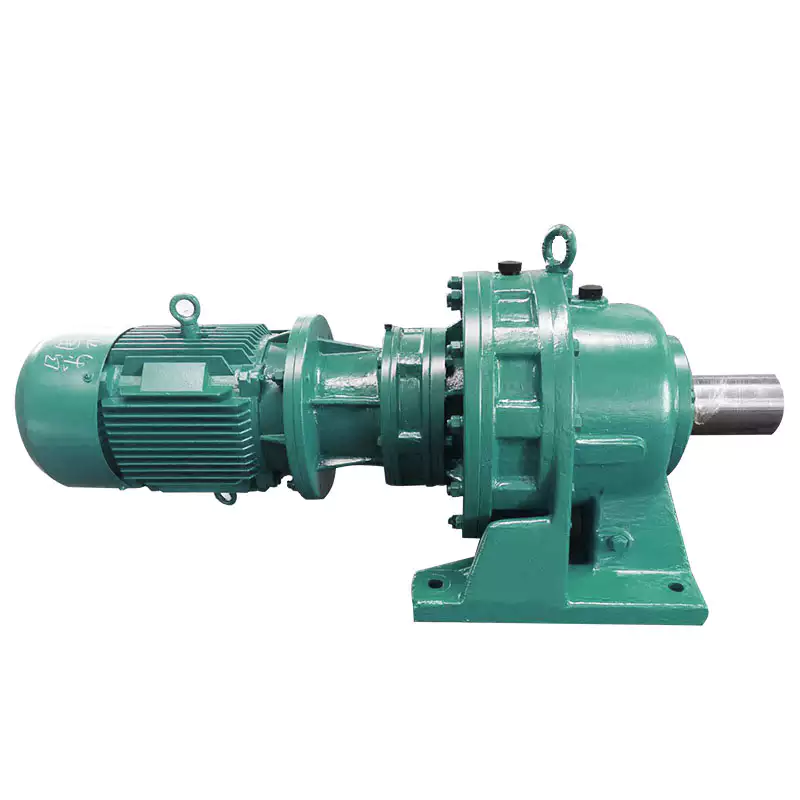
What role do gear ratios play in optimizing the performance of gear reducers?
Gear ratios play a crucial role in optimizing the performance of gear reducers by determining the relationship between input and output speeds and torques. A gear ratio is the ratio of the number of teeth between two meshing gears, and it directly influences the mechanical advantage and efficiency of the gear reducer.
1. Speed and Torque Conversion: Gear ratios allow gear reducers to convert rotational speed and torque according to the needs of a specific application. By selecting appropriate gear ratios, gear reducers can either reduce speed while increasing torque (speed reduction) or increase speed while decreasing torque (speed increase).
2. Mechanical Advantage: Gear reducers leverage gear ratios to provide mechanical advantage. In speed reduction configurations, a higher gear ratio results in a greater mechanical advantage, allowing the output shaft to deliver higher torque at a lower speed. This is beneficial for applications requiring increased force or torque, such as heavy machinery or conveyor systems.
3. Efficiency: Optimal gear ratios contribute to higher efficiency in gear reducers. By distributing the load across multiple gear teeth, gear reducers with suitable gear ratios minimize stress and wear on individual gear teeth, leading to improved overall efficiency and prolonged lifespan.
4. Speed Matching: Gear ratios enable gear reducers to match the rotational speeds of input and output shafts. This is crucial in applications where precise speed synchronization is required, such as in conveyors, robotics, and manufacturing processes.
When selecting gear ratios for a gear reducer, it’s important to consider the specific requirements of the application, including desired speed, torque, efficiency, and mechanical advantage. Properly chosen gear ratios enhance the overall performance and reliability of gear reducers in a wide range of industrial and mechanical systems.
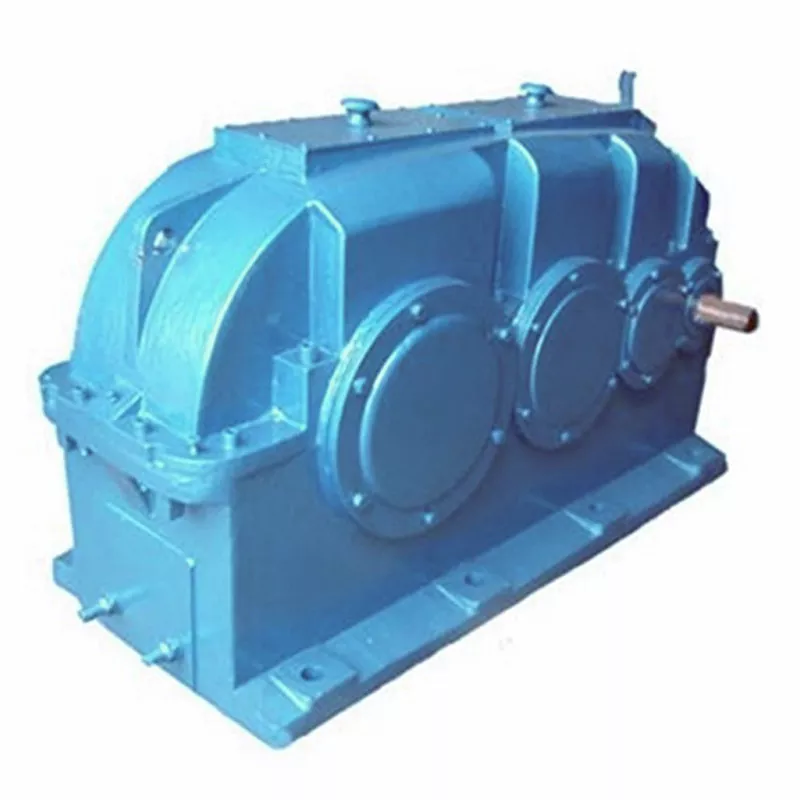
How do gear reducers contribute to speed reduction and torque increase?
Gear reducers play a crucial role in mechanical systems by achieving speed reduction and torque increase through the principle of gear ratios. Here’s how they work:
Gear reducers consist of multiple gears with different sizes, known as gear pairs. These gears are meshed together, and their teeth interlock to transmit motion and power. The gear ratio is determined by the ratio of the number of teeth on the input gear (driver) to the number of teeth on the output gear (driven).
Speed Reduction: When a larger gear (output gear) is driven by a smaller gear (input gear), the output gear rotates at a slower speed than the input gear. This reduction in speed is proportional to the gear ratio. As a result, gear reducers are used to slow down the rotational speed of the output shaft compared to the input shaft.
Torque Increase: The interlocking teeth of gears create a mechanical advantage that allows gear reducers to increase torque output. When the input gear applies a force (torque) to the teeth, it is transmitted to the output gear with greater force due to the leverage provided by the larger diameter of the output gear. The torque increase is inversely proportional to the gear ratio and is essential for applications requiring high torque at lower speeds.
By selecting appropriate gear ratios and arranging gear pairs, gear reducers can achieve various speed reduction and torque multiplication factors, making them essential components in machinery and equipment where precise control of speed and torque is necessary.


editor by CX 2024-02-09