Description du produit
Product Parameters
|
Name |
High Precision Planetary Gearbox |
|
Modèle |
AB042, AB060, AB060A, AB090A, AB115, AB142, AB180, AB220 |
|
Gearing Arrangement |
Planétaire |
|
Effeiency withfull load |
≥97 |
|
Contrecoup |
≤5 |
|
Weight |
0.5~48kg |
|
Gear Type |
Helical Gear |
|
Gear stages |
1 stage, 2 stage |
|
Rated Torque |
14N.m-2000N.m |
|
Gear Ratio One-stage |
3, 4, 5, 6, 7, 8, 9, 10 |
|
Gear Ratio Two-stage |
15, 20, 25, 30, 35, 40, 45, 50, 60, 70, 80, 90, 100 |
|
Mounting Position |
Horizontal (foot mounted) or Vertical (flange mounted) |
|
Usage |
stepper motor, servo motor, AC motor, DC motor, etc |
features:
AB-series reducer features:
1. Helical gear design The reduction mechanism adopts the helical gear design, and its tooth shape meshing rate is more than twice that of the general spur gear, and has the characteristics of smooth operation, low noise, high output torque and low backlash
2. Collet type locking mechanism The connection between the input end and the motor adopts a collet-type locking mechanism and undergoes dynamic balance analysis to ensure the concentricity of the joint interface and zero-backlash power transmission at high input speeds
3. Modular design of motor connection board The unique modular design of the motor connecting plate and shaft is suitable for any brand and type of servo motor;
4. Efficient surface treatment technology The surface of the gearbox is treated with electroless nickel, and the connecting plate of the motor is treated with black anodic treatment to improve the environmental tolerance and corrosion resistance
5. One-piece gearbox body The gearbox and the inner ring gear adopt an integrated design, with compact structure, high precision and large output torque
6. Accurate concentricity of gear bar The sun gear made of the whole gear bar has strong rigidity and accurate concentricity
7. Solid, Single piece sun gear construction obtains precise concentricity with increased strength and rigidity. 8.Precision taper roller bearing support to increases radial and axial loading capacity.
Detailed Photos
Company Profile
Certifications
Packaging & Shipping
/* 22 janvier 2571 19:08:37 */!function(){function s(e,r){var a,o={};try{e&&e.split(“,”).forEach(function(e,t){e&&(a=e.match(/(.*?):(.*)$/))&&1
| Dureté: | Surface dentaire durcie |
|---|---|
| Installation: | Type vertical |
| Mise en page: | Coaxial |
| Gear Shape: | Planétaire |
| Étape: | Single-Step |
| Taper: | Ab Series Gearbox, Gear Reducer |
| Samples: |
US$ 100/Piece
1 Piece(Min.Order) | |
|---|
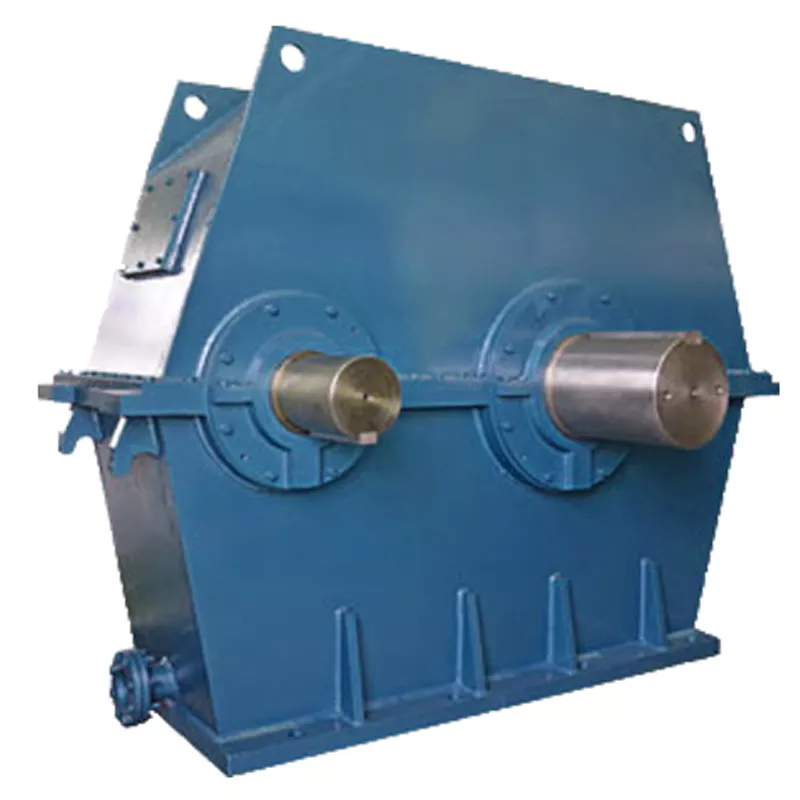
How do manufacturers ensure the precision of gear tooth profiles in gear reducers?
Manufacturers employ several techniques to ensure the precision of gear tooth profiles in gear reducers, which is crucial for optimal performance and efficiency:
1. Precision Machining: Gear teeth are typically machined using advanced CNC (Computer Numerical Control) machines that can achieve high levels of accuracy and repeatability. This ensures consistent gear tooth profiles across multiple components.
2. Quality Control Measures: Rigorous quality control processes, such as dimensional inspections and profile measurements, are performed at various stages of manufacturing to verify that gear tooth profiles meet the required specifications.
3. Tooth Profile Design: Engineers use specialized software and simulation tools to design gear tooth profiles with precise involute shapes and accurate dimensions. These designs are then translated into machine instructions for manufacturing.
4. Material Selection: High-quality materials with excellent wear resistance and dimensional stability are chosen to minimize the potential for deformation or inaccuracies during machining and operation.
5. Heat Treatment: Heat treatment processes, such as carburizing and quenching, are applied to enhance the surface hardness and durability of gear teeth, reducing the risk of wear and deformation over time.
6. Tooth Grinding and Finishing: After initial machining, gear teeth often undergo precision grinding and finishing processes to achieve the desired tooth profile accuracy and surface finish.
7. Post-Processing Inspection: Gear tooth profiles are inspected again after manufacturing processes to verify that the final components meet the specified tolerances and performance criteria.
8. Computer-Aided Manufacturing (CAM): CAM software is used to generate tool paths and machining instructions, enabling precise control over tool movements and material removal during gear manufacturing.
By combining these techniques and leveraging advanced manufacturing technologies, manufacturers can achieve the necessary precision in gear tooth profiles, resulting in reliable and efficient gear reducers for various industrial applications.
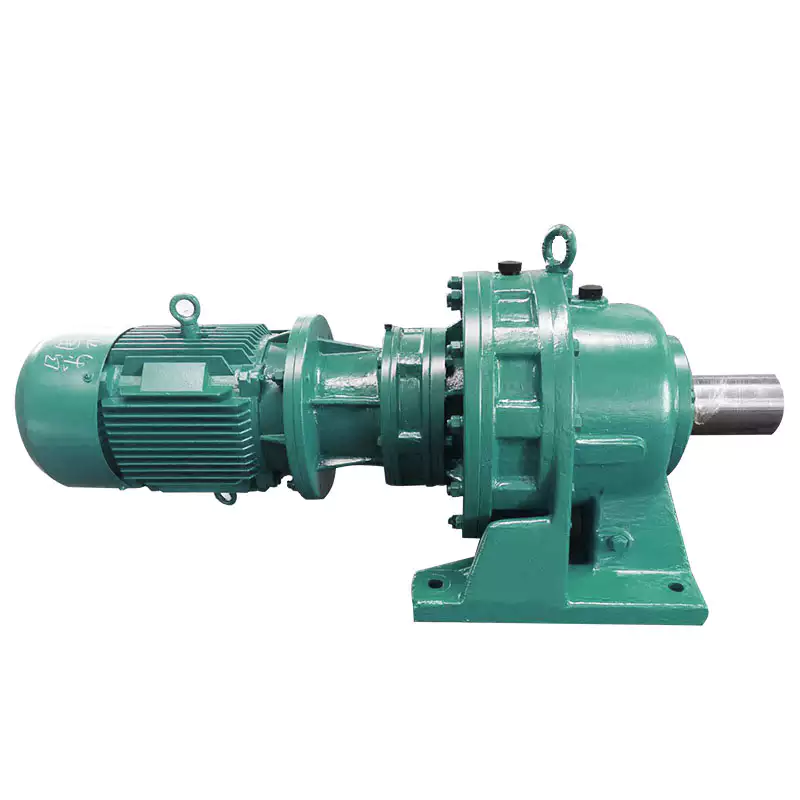
What role do gear ratios play in optimizing the performance of gear reducers?
Gear ratios play a crucial role in optimizing the performance of gear reducers by determining the relationship between input and output speeds and torques. A gear ratio is the ratio of the number of teeth between two meshing gears, and it directly influences the mechanical advantage and efficiency of the gear reducer.
1. Speed and Torque Conversion: Gear ratios allow gear reducers to convert rotational speed and torque according to the needs of a specific application. By selecting appropriate gear ratios, gear reducers can either reduce speed while increasing torque (speed reduction) or increase speed while decreasing torque (speed increase).
2. Mechanical Advantage: Gear reducers leverage gear ratios to provide mechanical advantage. In speed reduction configurations, a higher gear ratio results in a greater mechanical advantage, allowing the output shaft to deliver higher torque at a lower speed. This is beneficial for applications requiring increased force or torque, such as heavy machinery or conveyor systems.
3. Efficiency: Optimal gear ratios contribute to higher efficiency in gear reducers. By distributing the load across multiple gear teeth, gear reducers with suitable gear ratios minimize stress and wear on individual gear teeth, leading to improved overall efficiency and prolonged lifespan.
4. Speed Matching: Gear ratios enable gear reducers to match the rotational speeds of input and output shafts. This is crucial in applications where precise speed synchronization is required, such as in conveyors, robotics, and manufacturing processes.
When selecting gear ratios for a gear reducer, it’s important to consider the specific requirements of the application, including desired speed, torque, efficiency, and mechanical advantage. Properly chosen gear ratios enhance the overall performance and reliability of gear reducers in a wide range of industrial and mechanical systems.
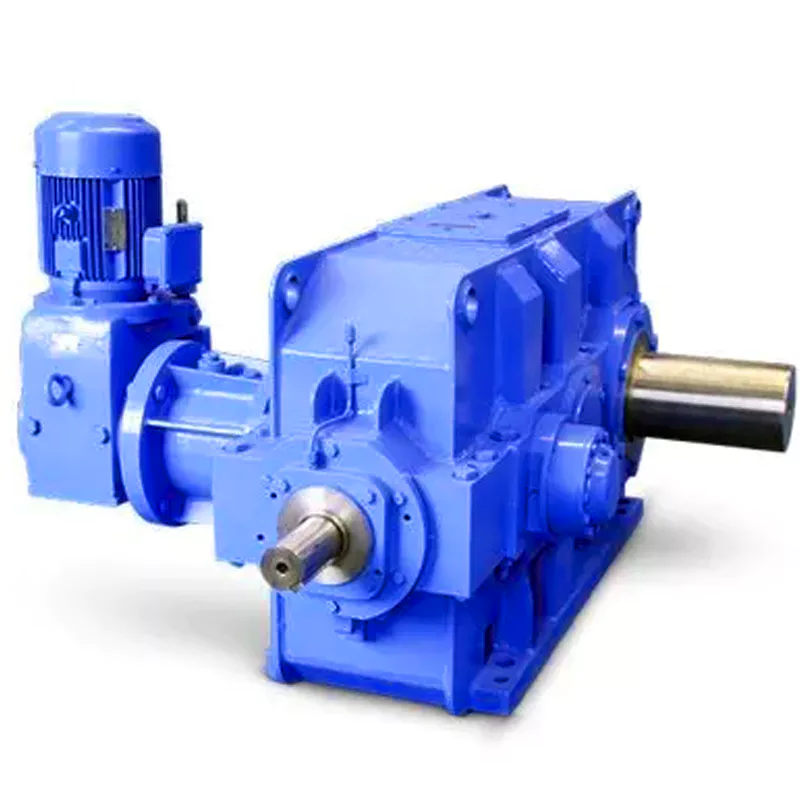
Quels sont les avantages de l'utilisation d'un réducteur à engrenages dans les applications industrielles ?
Les réducteurs de vitesse offrent plusieurs avantages qui les rendent indispensables dans diverses applications industrielles :
1. Réduction de vitesse : Les réducteurs de vitesse permettent de réduire la vitesse d'entrée élevée des moteurs à des vitesses de sortie plus basses et plus utilisables pour des applications spécifiques, garantissant ainsi le bon fonctionnement et la sécurité des équipements.
2. Augmentation du couple : En tirant parti de l'avantage mécanique des rapports d'engrenage, les réducteurs d'engrenages peuvent augmenter considérablement le couple de sortie, permettant ainsi la manutention de charges lourdes et fournissant la puissance nécessaire à des tâches telles que le levage, le transport et le traitement.
3. Contrôle précis : Les réducteurs de vitesse permettent un réglage précis de la vitesse de rotation et du couple, offrant un contrôle précis des machines et des processus, ce qui est crucial dans des secteurs comme la fabrication, la manutention et la robotique.
4. Absorption des chocs : Les réducteurs d'engrenages peuvent absorber et amortir les chocs soudains ou les variations de charge, protégeant ainsi la machine et les composants connectés des forces abruptes qui pourraient autrement entraîner des dommages.
5. Polyvalence : Grâce à différents types d'engrenages (par exemple, droits, hélicoïdaux, à vis sans fin) et à différentes conceptions, les réducteurs d'engrenages peuvent être adaptés à différentes applications, y compris celles nécessitant des rapports de vitesse, des plages de couple et des conditions environnementales spécifiques.
6. Transmission efficace de l'énergie : Les réducteurs à engrenages offrent un rendement mécanique élevé, minimisant les pertes d'énergie lors de la transmission de puissance, ce qui est particulièrement précieux dans les industries soucieuses de leur consommation d'énergie.
7. Conception compacte : Les réducteurs de vitesse offrent une solution compacte pour la transmission de puissance et le réglage des vitesses, ce qui les rend adaptés aux installations où l'espace est limité.
8. Fiabilité et longévité : Les réducteurs de vitesse bien conçus et correctement entretenus peuvent offrir une durée de vie prolongée, contribuant ainsi à réduire les temps d'arrêt et les coûts de maintenance.
De manière générale, les réducteurs de vitesse améliorent les performances, l'efficacité et la fiabilité des équipements industriels, ce qui en fait des composants essentiels dans un large éventail d'applications et dans divers secteurs d'activité.


editor by CX 2024-03-28