Description du produit
BWD Series Horitzonal Cycloidal Gear Reducer
< ABOUT TILI
Technical data
| Product Name | BWD Series Horitzonal Cycloidal Gear Reducer |
| Power | 0.18KW~90KW |
| Torque | 120Nm~30000Nm |
| Running direction | Forward and reverse |
| Gear material | Cast iron |
| Noise test | Below 65dB |
| Brand of bearings | C&U bearing, ZWZ, LYC, HRB, CHINAMFG , etc |
| Brand of oil seal | NAK or other brand |
| Temp. rise (MAX) | 40ºC |
| Temp. rise (Oil)(MAX | 50ºC |
| Vibration | ≤20µm |
| Housing hardness | HBS190-240 |
| Lubricating oil | GB L-CKC220-460, Shell Omala220-460 |
| Heat treatment | Carburizing, Quenching etc |
| Efficacité | 90% (depends on the transmission stage) |
| Installation type | Foot plate horizontal installation, flange type vertical installation; |
| Input method | Flange input(AM), shaft input(AD), inline AC motor input, or AQA servo motor |
Installation Instructions
Company Profile
< WORKSHOP
< QUALITY CONTROL
Certifications
Packaging & Shipping
FAQ
Q 1: Are you a trading company or a manufacturer?
A: We are a professional manufacturer specializing in manufacturing various series of reducer.
Q 2:Can you do OEM?
A:Yes, we can. We can do OEM for all the customers .if you want to order NON-STANDERD speed reducers,pls provide Drafts, Dimensions, Pictures and Samples if possible.
Q 3: How long is your warranty?
A: Our Warranty is 12 months under normal circumstances.
Q 4: Do you have inspection procedures for reducer?
A:100% self-inspection before packing.
Q 5: Can I have a visit to your factory before the order?
A: Sure, welcome to visit our factory.
Q 6:How to choose a gearbox? What if I don’t know which gear reducer I need?
A:You can refer to our catalogue to choose the gearbox or we can help to choose when you provide,the technical information of required output torque, output speed and motor parameter etc. Don’t worry, Send as much information as you can, our team will help you find the right 1 you are looking for.
Q 7: What information shall we give before placing a purchase order?
A:a) Type of the gearbox, Size , Transmission Ratio, input and output type, input flange, mounting position, motor information and shaft deflection etc. b)Housing color.c) Purchase quantity. d) Other special requirements
Q 8:What is the payment term?
A:You can pay via T/T(30% in advance as deposit before production +70% before delivery
/* 22 janvier 2571 19:08:37 */!function(){function s(e,r){var a,o={};try{e&&e.split(“,”).forEach(function(e,t){e&&(a=e.match(/(.*?):(.*)$/))&&1
| Application: | Motor, Machinery, Agricultural Machinery |
|---|---|
| Fonction: | Distribution Power, Change Drive Torque, Speed Changing, Speed Reduction |
| Mise en page: | Cycloidal |
| Personnalisation : |
Disponible
| Demande personnalisée |
|---|
.shipping-cost-tm .tm-status-off{background: none;padding:0;color: #1470cc}
|
Frais d'expédition :
Frais de transport estimés par unité. |
concernant les frais de livraison et le délai de livraison estimé. |
|---|
| Mode de paiement: |
|
|---|---|
|
Paiement initial Paiement intégral |
| Devise: | US$ |
|---|
| Retours et remboursements : | Vous pouvez demander un remboursement jusqu'à 30 jours après la réception des produits. |
|---|
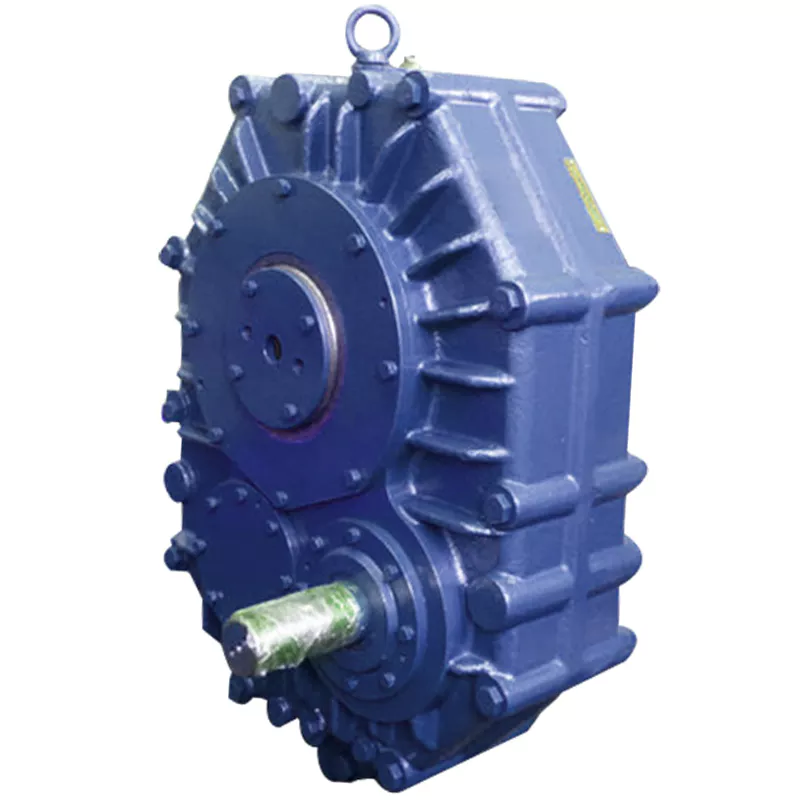
L'utilisation de systèmes de réducteurs de vitesse présente-t-elle des inconvénients ou des limitations ?
Bien que les systèmes de réducteurs de vitesse offrent de nombreux avantages, ils présentent également certains inconvénients et limitations qui doivent être pris en compte lors du processus de sélection et de mise en œuvre :
1. Taille et poids : Les réducteurs de vitesse peuvent être volumineux et lourds, notamment pour les applications nécessitant des rapports de réduction élevés. Cela peut impacter la taille et le poids globaux de la machine ou de l'équipement, ce qui peut s'avérer problématique dans les environnements où l'espace est limité.
2. Perte d'efficacité : Malgré leur rendement élevé, les réducteurs à engrenages peuvent subir des pertes d'énergie dues au frottement entre les dents des engrenages et d'autres composants. Cela peut entraîner une réduction du rendement global du système, notamment lorsque plusieurs étages d'engrenages sont utilisés.
3. Coût : La conception, la fabrication et l'assemblage des réducteurs d'engrenages peuvent impliquer des processus complexes et un usinage de précision, ce qui peut contribuer à des coûts initiaux plus élevés par rapport à d'autres solutions de transmission de puissance.
4. Maintenance : Les systèmes de réduction par engrenages nécessitent un entretien régulier, comprenant la lubrification, l'inspection et, le cas échéant, le remplacement des engrenages. Ces opérations de maintenance peuvent engendrer des temps d'arrêt et des coûts supplémentaires en milieu industriel.
5. Bruit et vibrations : Les réducteurs de vitesse peuvent générer du bruit et des vibrations, notamment à haute vitesse ou sous fortes charges. Des mesures supplémentaires peuvent être nécessaires pour atténuer ces problèmes.
6. Rapports de transmission limités : Bien que les réducteurs offrent une large gamme de rapports de transmission, il peut exister des limitations quant à l'obtention de rapports extrêmement élevés ou faibles dans certaines conceptions.
7. Sensibilité à la température : Les températures extrêmes peuvent affecter les performances des systèmes de réducteurs à engrenages, notamment en cas de lubrification ou de refroidissement insuffisant.
8. Charges de choc : Bien que les réducteurs de vitesse soient conçus pour supporter les chocs dans une certaine mesure, des chocs importants ou des variations brusques de couple peuvent tout de même entraîner des dommages potentiels ou une usure prématurée.
Malgré ces limitations, les systèmes de réducteurs à engrenages restent des composants largement utilisés et polyvalents dans diverses industries, et leurs inconvénients peuvent souvent être atténués par une conception, une sélection et des pratiques d'entretien appropriées.
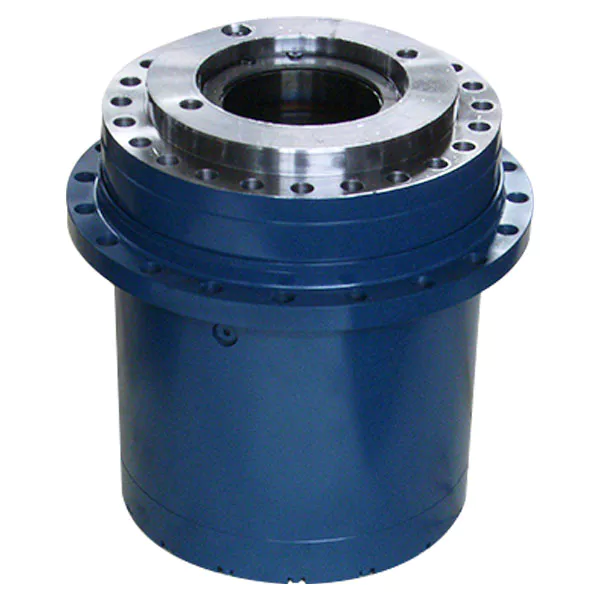
How do gear reducers ensure efficient power transmission and motion control?
Gear reducers play a vital role in ensuring efficient power transmission and precise motion control in various industrial applications. They achieve this through the following mechanisms:
- 1. Speed Reduction/Increase: Gear reducers allow you to adjust the speed between the input and output shafts. Speed reduction is essential when the output speed needs to be lower than the input speed, while speed increase is used when the opposite is required.
- 2. Torque Amplification: By altering the gear ratio, gear reducers can amplify torque from the input to the output shaft. This enables machinery to handle higher loads and provide the necessary force for various tasks.
- 3. Gear Train Efficiency: Well-designed gear trains within reducers minimize power losses during transmission. Helical and spur gears, for example, offer high efficiency by distributing load and reducing friction.
- 4. Precision Motion Control: Gear reducers provide precise control over rotational motion. This is crucial in applications where accurate positioning, synchronization, or timing is required, such as in robotics, CNC machines, and conveyor systems.
- 5. Backlash Reduction: Some gear reducers are designed to minimize backlash, which is the play between gear teeth. This reduction in play ensures smoother operation, improved accuracy, and better control.
- 6. Load Distribution: Gear reducers distribute the load evenly among multiple gear teeth, reducing wear and extending the lifespan of the components.
- 7. Shock Absorption: In applications where sudden starts, stops, or changes in direction occur, gear reducers help absorb and dampen shocks, protecting the machinery and ensuring reliable operation.
- 8. Compact Design: Gear reducers provide a compact solution for achieving specific speed and torque requirements, allowing for space-saving integration into machinery.
By combining these principles, gear reducers facilitate the efficient and controlled transfer of power, enabling machinery to perform tasks accurately, reliably, and with the required force, making them essential components in a wide range of industries.
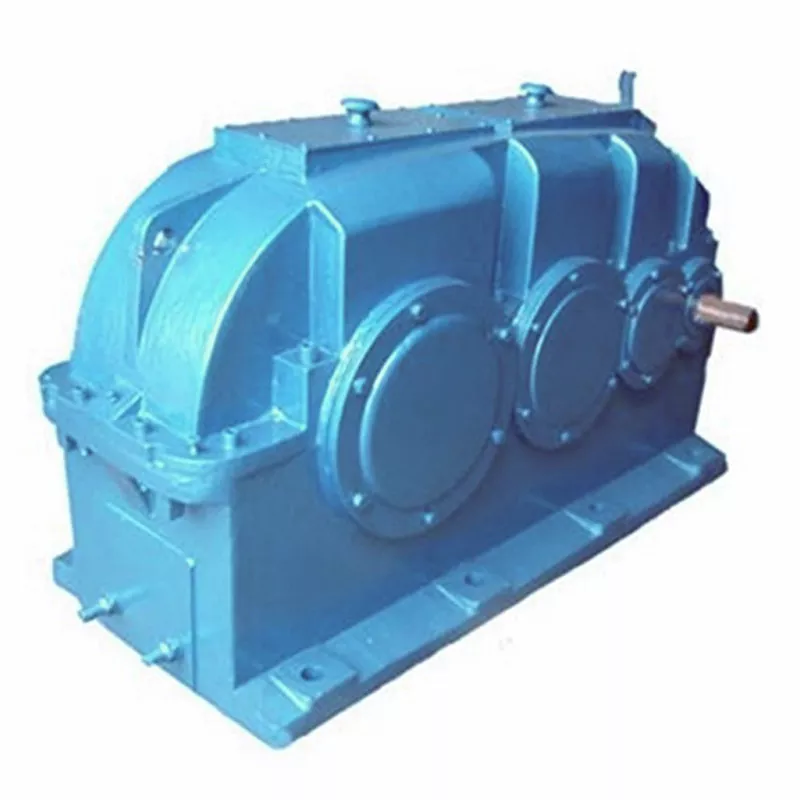
How do gear reducers contribute to speed reduction and torque increase?
Gear reducers play a crucial role in mechanical systems by achieving speed reduction and torque increase through the principle of gear ratios. Here’s how they work:
Gear reducers consist of multiple gears with different sizes, known as gear pairs. These gears are meshed together, and their teeth interlock to transmit motion and power. The gear ratio is determined by the ratio of the number of teeth on the input gear (driver) to the number of teeth on the output gear (driven).
Speed Reduction: When a larger gear (output gear) is driven by a smaller gear (input gear), the output gear rotates at a slower speed than the input gear. This reduction in speed is proportional to the gear ratio. As a result, gear reducers are used to slow down the rotational speed of the output shaft compared to the input shaft.
Torque Increase: The interlocking teeth of gears create a mechanical advantage that allows gear reducers to increase torque output. When the input gear applies a force (torque) to the teeth, it is transmitted to the output gear with greater force due to the leverage provided by the larger diameter of the output gear. The torque increase is inversely proportional to the gear ratio and is essential for applications requiring high torque at lower speeds.
By selecting appropriate gear ratios and arranging gear pairs, gear reducers can achieve various speed reduction and torque multiplication factors, making them essential components in machinery and equipment where precise control of speed and torque is necessary.


editor by CX 2024-05-07