Description du produit
Description du produit
DESCRIPTION:
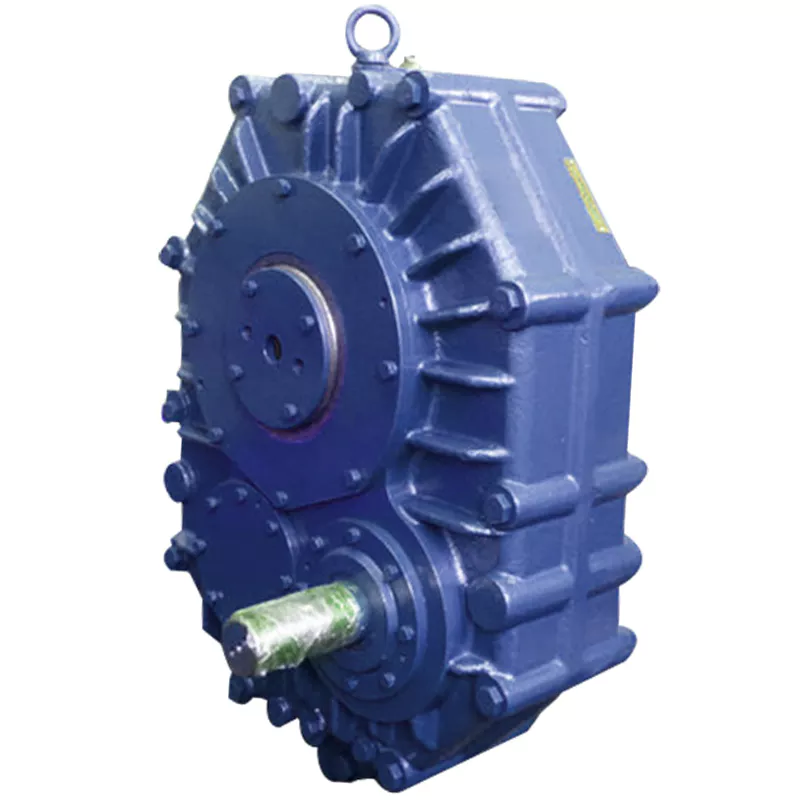
Gear reducers are enclosed helical gears with hollow inputs.
The gear is mounted directly on the input shaft of the gear and receives support from a motor mounting bracket mounted on the machine housing.
No additional parts are required to transfer torque from the reducer to the machine.
It can be mounted in vertical, horizontal or inclined position.
Shaft-mounted gear reducers typically have 5:1 7:1 10:1 reduction ratios and output speeds ranging from 1 to 300 rpm.
M4 series gear reducer can be installed directly on screw conveyors and feeders with a XUH seal installed on the output shaft of the gearbox.
Ensure that cement, and fly ash powder will not get into the gearbox and extend the service life of the gearbox.
More suitable for bulk materials, grain and aggregate handling industries
WORKING PRINCIPLE:
M4 series gearboxes come in 5 sizes (M41 / M43 / M45 / M47 / M49).
Nominal gear ratios are in accordance with Ra 10 CHINAMFG 2017 (5, 6, 7, 10). Cylindrical gears with helicoidal teeth.
M4 series gearboxes can be mounted directly on screws: in this case, the XUH type output shaft seal is usually installed.
M4 series gearboxes are supplied with grease for use at ambient temperatures (0°C – 40°C).
PROPERTIES:
– Helical gearbox
– Nominal torque that can be transferred to the output shaft: up to 1500 Nm.
– Installed power at the input up to 30 kW.
– Operation at ambient temperature (0°C – 40°C).
– DIN 5482 involute spline output shafts
– Flange mounting on motor and output side
– Precision-machined cylindrical bevel gears with teeth.
– Flange mounting on motor and output side
BENEFITS:
– Easy installation
– Quick maintenance
– Low installation costs
Services
Pre-sales Commitment
1. For user inquiries, quick response, warm reception, and answer all questions.
2. Provide detailed design information free of charge within 24 hours.
Commitment in Sales
1. All ex-factory products meet the quality standards specified in the contract. All products are tested according to customer requirements before delivery.
2. After the contract is signed, the customers are welcome to the site of our company for supervision.
After-sales Commitment
1. We provide technical support for customers. If necessary, the product can be debugged on-site, and relevant operators can be trained to solve user problems.
2. 24 hours to solve the problems for customers. Product use a day, a day of service.
3. Set up a high-quality service team, and set up product files for regular return visits.
| Application: | Machinery |
|---|---|
| Dureté: | Surface dentaire durcie |
| Installation: | Type vertical |
| Mise en page: | Coaxial |
| Gear Shape: | Conical – Cylindrical Gear |
| Étape: | Four-Step |
| Samples: |
US$ 100/Piece
1 Piece(Min.Order) | |
|---|
| Personnalisation : |
Disponible
| Demande personnalisée |
|---|
L'utilisation de systèmes de réducteurs de vitesse présente-t-elle des inconvénients ou des limitations ?
Bien que les systèmes de réducteurs de vitesse offrent de nombreux avantages, ils présentent également certains inconvénients et limitations qui doivent être pris en compte lors du processus de sélection et de mise en œuvre :
1. Taille et poids : Les réducteurs de vitesse peuvent être volumineux et lourds, notamment pour les applications nécessitant des rapports de réduction élevés. Cela peut impacter la taille et le poids globaux de la machine ou de l'équipement, ce qui peut s'avérer problématique dans les environnements où l'espace est limité.
2. Perte d'efficacité : Malgré leur rendement élevé, les réducteurs à engrenages peuvent subir des pertes d'énergie dues au frottement entre les dents des engrenages et d'autres composants. Cela peut entraîner une réduction du rendement global du système, notamment lorsque plusieurs étages d'engrenages sont utilisés.
3. Coût : La conception, la fabrication et l'assemblage des réducteurs d'engrenages peuvent impliquer des processus complexes et un usinage de précision, ce qui peut contribuer à des coûts initiaux plus élevés par rapport à d'autres solutions de transmission de puissance.
4. Maintenance : Les systèmes de réduction par engrenages nécessitent un entretien régulier, comprenant la lubrification, l'inspection et, le cas échéant, le remplacement des engrenages. Ces opérations de maintenance peuvent engendrer des temps d'arrêt et des coûts supplémentaires en milieu industriel.
5. Bruit et vibrations : Les réducteurs de vitesse peuvent générer du bruit et des vibrations, notamment à haute vitesse ou sous fortes charges. Des mesures supplémentaires peuvent être nécessaires pour atténuer ces problèmes.
6. Rapports de transmission limités : Bien que les réducteurs offrent une large gamme de rapports de transmission, il peut exister des limitations quant à l'obtention de rapports extrêmement élevés ou faibles dans certaines conceptions.
7. Sensibilité à la température : Les températures extrêmes peuvent affecter les performances des systèmes de réducteurs à engrenages, notamment en cas de lubrification ou de refroidissement insuffisant.
8. Charges de choc : Bien que les réducteurs de vitesse soient conçus pour supporter les chocs dans une certaine mesure, des chocs importants ou des variations brusques de couple peuvent tout de même entraîner des dommages potentiels ou une usure prématurée.
Malgré ces limitations, les systèmes de réducteurs à engrenages restent des composants largement utilisés et polyvalents dans diverses industries, et leurs inconvénients peuvent souvent être atténués par une conception, une sélection et des pratiques d'entretien appropriées.
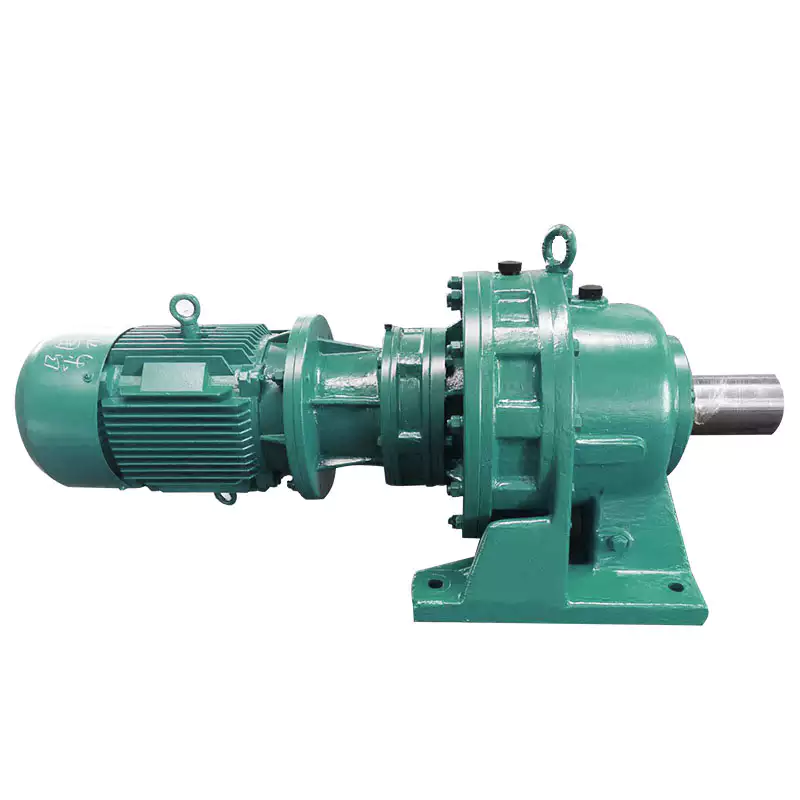
What role do gear ratios play in optimizing the performance of gear reducers?
Gear ratios play a crucial role in optimizing the performance of gear reducers by determining the relationship between input and output speeds and torques. A gear ratio is the ratio of the number of teeth between two meshing gears, and it directly influences the mechanical advantage and efficiency of the gear reducer.
1. Speed and Torque Conversion: Gear ratios allow gear reducers to convert rotational speed and torque according to the needs of a specific application. By selecting appropriate gear ratios, gear reducers can either reduce speed while increasing torque (speed reduction) or increase speed while decreasing torque (speed increase).
2. Mechanical Advantage: Gear reducers leverage gear ratios to provide mechanical advantage. In speed reduction configurations, a higher gear ratio results in a greater mechanical advantage, allowing the output shaft to deliver higher torque at a lower speed. This is beneficial for applications requiring increased force or torque, such as heavy machinery or conveyor systems.
3. Efficiency: Optimal gear ratios contribute to higher efficiency in gear reducers. By distributing the load across multiple gear teeth, gear reducers with suitable gear ratios minimize stress and wear on individual gear teeth, leading to improved overall efficiency and prolonged lifespan.
4. Speed Matching: Gear ratios enable gear reducers to match the rotational speeds of input and output shafts. This is crucial in applications where precise speed synchronization is required, such as in conveyors, robotics, and manufacturing processes.
When selecting gear ratios for a gear reducer, it’s important to consider the specific requirements of the application, including desired speed, torque, efficiency, and mechanical advantage. Properly chosen gear ratios enhance the overall performance and reliability of gear reducers in a wide range of industrial and mechanical systems.
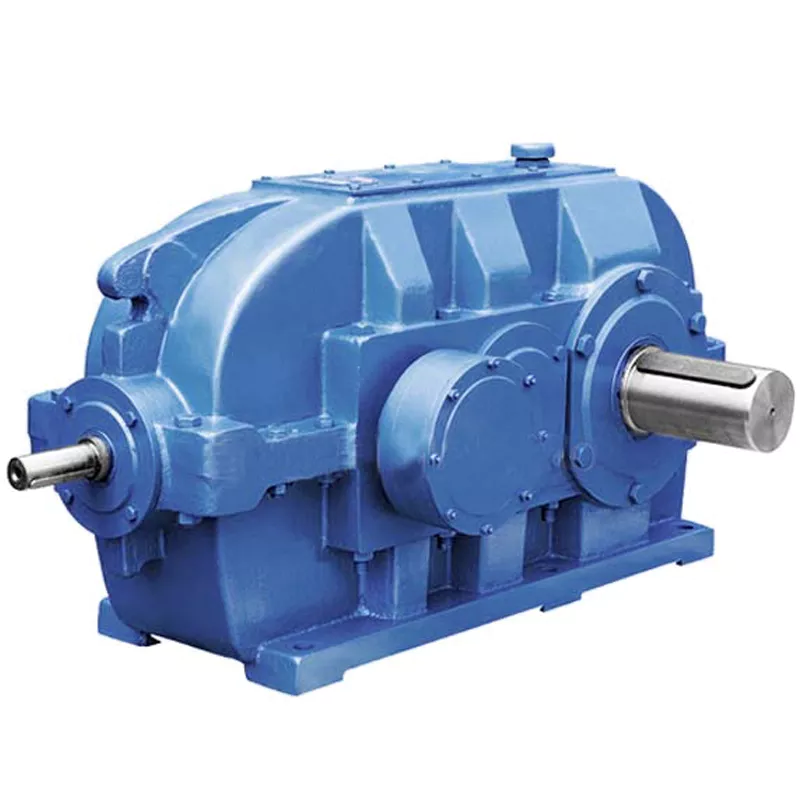
How do gear reducers handle variations in input and output speeds?
Gear reducers are designed to handle variations in input and output speeds through the use of different gear ratios and configurations. They achieve this by utilizing intermeshing gears of varying sizes to transmit torque and control rotational speed.
The basic principle involves connecting two or more gears with different numbers of teeth. When a larger gear (driving gear) engages with a smaller gear (driven gear), the rotational speed of the driven gear decreases while the torque increases. This reduction in speed and increase in torque enable gear reducers to efficiently adapt to variations in input and output speeds.
The gear ratio is a critical factor in determining how much the speed and torque change. It is calculated by dividing the number of teeth on the driven gear by the number of teeth on the driving gear. A higher gear ratio results in a greater reduction in speed and a proportionate increase in torque.
Planetary gear reducers, a common type, use a combination of gears including sun gears, planet gears, and ring gears to achieve different speed reductions and torque enhancements. This design provides versatility in handling variations in speed and torque requirements.
In summary, gear reducers handle variations in input and output speeds by using specific gear ratios and gear arrangements that enable them to efficiently transmit power and control motion characteristics according to the application’s needs.


editor by CX 2023-11-15