Description du produit
Description du produit
suspended cranes inline helical gearbox
SGR helical geared motor body use the high degree of modularity cast iron, the gear and the axis use the high quality alloy steel in order to the precision forging, the helical gearbox though the strict heat treament procedure, guarantees helical gearbox‘s intensity and the rigidity. inline helical gearbox configure motor with flange or foot ,
helical gearbox design use modular compose with other reducers and variator, get a large reduce ratio drive and variation. Therefore inline helical gearbox manufacturer SGR ‘s helical gear motor applied to many industrial area, such as Metallurgical, mines, lifting, transportation, petrochemical, construction, textile, pharmaceutical, food, environmental, light electric, plastic machine, paper, parking equipment etc.
You can download inline helical gearbox catalogue from right button
Données techniques :
| Modèle | Shaft Dia. | Center Height | Output Flange Dia. | Power | Rapport | Permitted Torque | Weight |
| Solid (mm) | (mm) | (mm) | (kw) | (Nm) | (KGS) | ||
| R37 | 25k6 | 90h13 | 120/160 | 0.12~0.75 | 5~136 | 150 | 10 |
| R47 | 30k6 | 115h13 | 160/200 | 0.25~2.2 | 5~173 | 300 | 15 |
| R57 | 35k6 | 115h13 | 200/250 | 1.18~5.5 | 5~173 | 400 | 21 |
| R67 | 35k6 | 130h13 | 200/250 | 0.37~7.5 | 5~170 | 500 | 27 |
| R77 | 40k6 | 140h13 | 250/300 | 0.55~11 | 5~192 | 750 | 35 |
| R87 | 50k6 | 180h13 | 300/350 | 0.75~18.5 | 5~192 | 1250 | 65 |
| R97 | 60m6 | 225h13 | 350/450 | 1.5~30 | 5~197 | 2400 | 120 |
| R107 | 70m6 | 250h13 | 350/450 | 2.2~45 | 5~197 | 3600 | 165 |
| R137 | 90m6 | 315h13 | 450/550 | 4~55 | 5~197 | 6600 | 255 |
| R147 | 110m6 | 355h13 | 450/550 | 7.5~90 | 5~195 | 10700 | 370 |
| R167 | 120m6 | 425h13 | 550/660 | 11~132 | 8~186 | 14800 | 700 |
| R187 | 160m6 | 510h13 | 660/770 | 15~160 | 8~186 | 28000 | 1500 |
| Remark: the weight without oil and motor, shaft and flange input add 10%. | |||||||
Caractéristiques:
| Key Features: (5 points)*1* |
|
Photos de production :
Packing Pictures :
Factory
———————————————————————————————————————————————
FAQ :
1. Êtes-vous une usine ou un commerçant ?
Nous sommes une usine professionnelle forte de 20 ans d'expérience et spécialisée dans la transmission par engrenages.
2.MOQ :
Notre quantité minimale de commande est de 1 pièce. Cependant, des frais de traitement de $150 sont appliqués pour toute commande inférieure à $3000.00.
3. Garantie
Notre garantie est de 12 mois.
4. Modalités de paiement
100% T/T à l'avance et LC à vue.
5. Acceptez-vous les personnalisations ?
YES.SGR dispose d'une solide équipe de R&D et peut fournir un service personnalisable selon vos besoins.
6. Emballage
Généralement, nous utilisons des caisses en contreplaqué standard pour l'exportation afin d'organiser l'expédition.
7. Délai de livraison
En temps normal, le délai de livraison est de 30 jours après réception de l'acompte.
8. Quels types de certifications utilisez-vous ?
Certifications DNV-ISO9001:2008, SGS, CE, etc., et brevets pour les nouveaux produits.
9. Quels types d'inspections effectuez-vous avant l'expédition ?
Nous effectuons des tests de température, de bruit et d'étanchéité à l'huile, ainsi qu'une mise en service avant l'expédition.
10. Comment résolvez-vous les problèmes de production ?
Généralement, nous n'avons pas besoin que le client nous renvoie la marchandise. Les frais étant très élevés, en cas de problème, nous demandons d'abord des photos des pièces endommagées. Ces photos nous permettent d'identifier la cause du défaut. Notre garantie est de 12 mois ; pendant cette période, nous assurons la réparation.
| Application: | Motor, Machinery |
|---|---|
| Fonction: | Distribution Power, Change Drive Torque, Speed Reduction |
| Mise en page: | Coaxial |
| Dureté: | Surface dentaire durcie |
| Installation: | Horizontal Type |
| Étape: | Single-Step |
| Samples: |
US$ 200/Piece
1 Piece(Min.Order) | |
|---|
| Personnalisation : |
Disponible
| Demande personnalisée |
|---|
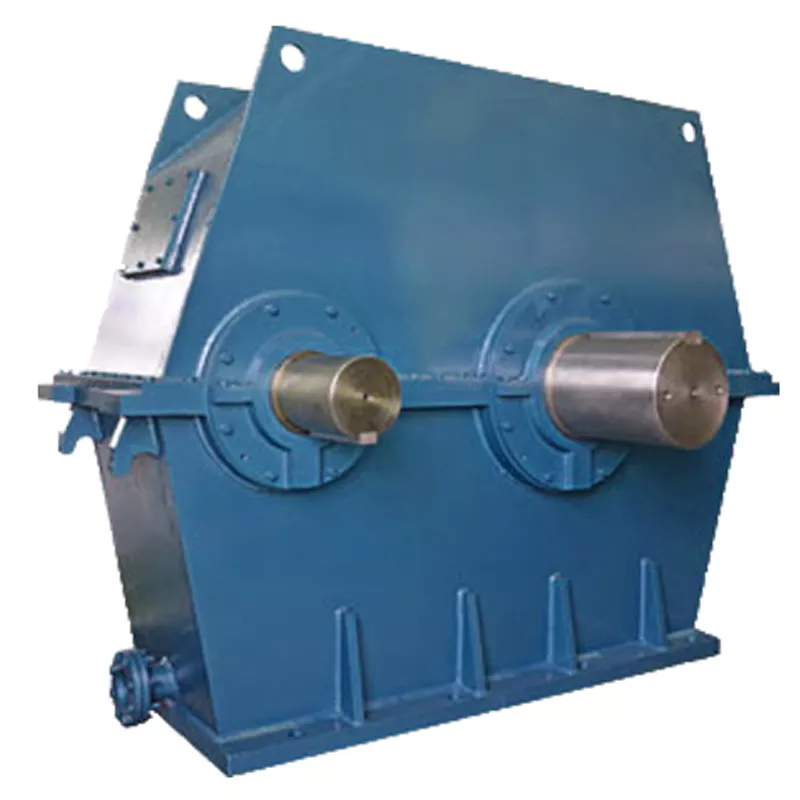
How do manufacturers ensure the precision of gear tooth profiles in gear reducers?
Manufacturers employ several techniques to ensure the precision of gear tooth profiles in gear reducers, which is crucial for optimal performance and efficiency:
1. Precision Machining: Gear teeth are typically machined using advanced CNC (Computer Numerical Control) machines that can achieve high levels of accuracy and repeatability. This ensures consistent gear tooth profiles across multiple components.
2. Quality Control Measures: Rigorous quality control processes, such as dimensional inspections and profile measurements, are performed at various stages of manufacturing to verify that gear tooth profiles meet the required specifications.
3. Tooth Profile Design: Engineers use specialized software and simulation tools to design gear tooth profiles with precise involute shapes and accurate dimensions. These designs are then translated into machine instructions for manufacturing.
4. Material Selection: High-quality materials with excellent wear resistance and dimensional stability are chosen to minimize the potential for deformation or inaccuracies during machining and operation.
5. Heat Treatment: Heat treatment processes, such as carburizing and quenching, are applied to enhance the surface hardness and durability of gear teeth, reducing the risk of wear and deformation over time.
6. Tooth Grinding and Finishing: After initial machining, gear teeth often undergo precision grinding and finishing processes to achieve the desired tooth profile accuracy and surface finish.
7. Post-Processing Inspection: Gear tooth profiles are inspected again after manufacturing processes to verify that the final components meet the specified tolerances and performance criteria.
8. Computer-Aided Manufacturing (CAM): CAM software is used to generate tool paths and machining instructions, enabling precise control over tool movements and material removal during gear manufacturing.
By combining these techniques and leveraging advanced manufacturing technologies, manufacturers can achieve the necessary precision in gear tooth profiles, resulting in reliable and efficient gear reducers for various industrial applications.
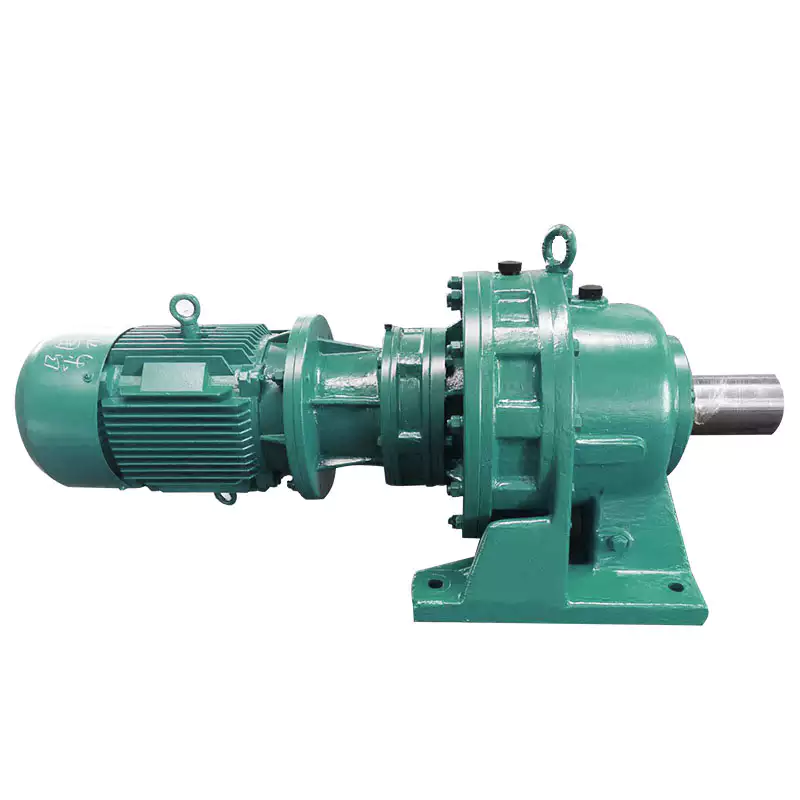
What role do gear ratios play in optimizing the performance of gear reducers?
Gear ratios play a crucial role in optimizing the performance of gear reducers by determining the relationship between input and output speeds and torques. A gear ratio is the ratio of the number of teeth between two meshing gears, and it directly influences the mechanical advantage and efficiency of the gear reducer.
1. Speed and Torque Conversion: Gear ratios allow gear reducers to convert rotational speed and torque according to the needs of a specific application. By selecting appropriate gear ratios, gear reducers can either reduce speed while increasing torque (speed reduction) or increase speed while decreasing torque (speed increase).
2. Mechanical Advantage: Gear reducers leverage gear ratios to provide mechanical advantage. In speed reduction configurations, a higher gear ratio results in a greater mechanical advantage, allowing the output shaft to deliver higher torque at a lower speed. This is beneficial for applications requiring increased force or torque, such as heavy machinery or conveyor systems.
3. Efficiency: Optimal gear ratios contribute to higher efficiency in gear reducers. By distributing the load across multiple gear teeth, gear reducers with suitable gear ratios minimize stress and wear on individual gear teeth, leading to improved overall efficiency and prolonged lifespan.
4. Speed Matching: Gear ratios enable gear reducers to match the rotational speeds of input and output shafts. This is crucial in applications where precise speed synchronization is required, such as in conveyors, robotics, and manufacturing processes.
When selecting gear ratios for a gear reducer, it’s important to consider the specific requirements of the application, including desired speed, torque, efficiency, and mechanical advantage. Properly chosen gear ratios enhance the overall performance and reliability of gear reducers in a wide range of industrial and mechanical systems.
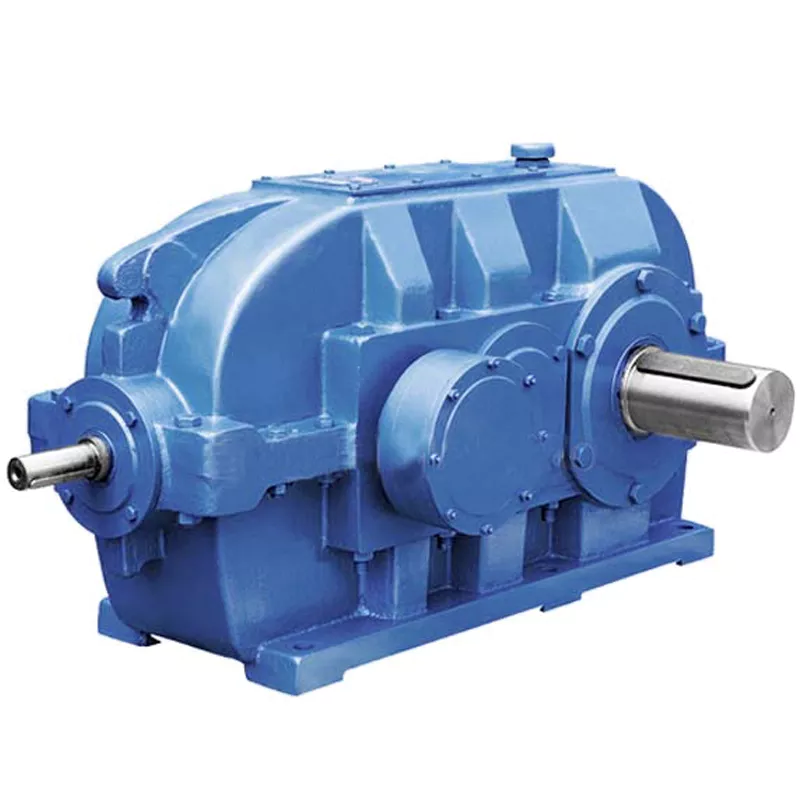
How do gear reducers handle variations in input and output speeds?
Gear reducers are designed to handle variations in input and output speeds through the use of different gear ratios and configurations. They achieve this by utilizing intermeshing gears of varying sizes to transmit torque and control rotational speed.
The basic principle involves connecting two or more gears with different numbers of teeth. When a larger gear (driving gear) engages with a smaller gear (driven gear), the rotational speed of the driven gear decreases while the torque increases. This reduction in speed and increase in torque enable gear reducers to efficiently adapt to variations in input and output speeds.
The gear ratio is a critical factor in determining how much the speed and torque change. It is calculated by dividing the number of teeth on the driven gear by the number of teeth on the driving gear. A higher gear ratio results in a greater reduction in speed and a proportionate increase in torque.
Planetary gear reducers, a common type, use a combination of gears including sun gears, planet gears, and ring gears to achieve different speed reductions and torque enhancements. This design provides versatility in handling variations in speed and torque requirements.
In summary, gear reducers handle variations in input and output speeds by using specific gear ratios and gear arrangements that enable them to efficiently transmit power and control motion characteristics according to the application’s needs.


editor by CX 2023-09-26