Description du produit
R series Helical Geared Motor Characteristics
1. Features:
1. High efficiency: 92%-97%;
2. Compact structure: Small offset output, two stage and three stage are in the same box.
3. High precision: the gear is made of high-quality alloy steel forging, carbonitriding and hardening treatment, grinding process to ensure high precision and stable running.
4. High interchangeability: highly modular, serial design, strong versatility and interchangeability.
2. Technical parameters
| Rapport | 3.41-289.74 |
| Input power | 0.12-160KW |
| Output torque | 61-23200N.m |
| vitesse de sortie | 5-415rpm |
| Mounting type | Foot mounted, flange mounted, foot and flange mounted, single-stage foot mounted, CHINAMFG flange mounted, Flange-mounted with extended bearing hub |
| Input Method | Flange input(AM), shaft input(AD), inline AC motor input, or AQA servo motor |
| Brake Release | HF-manual release(lock in the brake release position), HR-manual release(autom-atic braking position) |
| Thermistor | TF(Thermistor protection PTC thermisto) TH(Thermistor protection Bimetal swotch) |
| Mounting Position | M1, M2, M3, M4, M5, M6 |
| Type | R17-R167 |
| Output shaft dis. | 20mm, 25mm, 30mm, 35mm, 40mm, 50mm, 60mm, 70mm, 90mm, 110mm, 120mm |
| Housing material | HT200 high-strength cast iron from R37,47,57,67,77,87 |
| Housing material | HT250 High strength cast iron from R97 107,137,147,157,167,187 |
| Heat treatment technology | carbonitriding and hardening treatment |
| Efficacité | 92%-97% |
| Lubrifiant | VG220 |
| Protection Class | IP55, F class |
Starshine Drive
ZheJiang CHINAMFG Drive Co.,Ltd,the predecessor was a state-owned military mould enterprise, was established in 1965. CHINAMFG specializes in the complete power transmission solution for high-end equipment manufacturing industries based on the aim of “Platform Product, Application Design and Professional Service”.
Starshine have a strong technical force with over 350 employees at present, including over 30 engineering technicians, 30 quality inspectors, covering an area of 80000 square CHINAMFG and kinds of advanced processing machines and testing equipments. We have a good foundation for the industry application development and service of high-end speed reducers & variators owning to the provincial engineering technology research center,the lab of gear speed reducers, and the base of modern R&D.
Our Team
Quality Control
Quality:Insist on Improvement,Strive for Excellence With the development of equipment manufacturing indurstry,customer never satirsfy with the current quality of our products,on the contrary,wcreate the value of quality.
Quality policy:to enhance the overall level in the field of power transmission
Quality View:Continuous Improvement , pursuit of excellence
Quality Philosophy:Quality creates value
3. Incoming Quality Control
To establish the AQL acceptable level of incoming material control, to provide the material for the whole inspection, sampling, immunity. On the acceptance of qualified products to warehousing, substandard goods to take return, check, rework, rework inspection; responsible for tracking bad, to monitor the supplier to take corrective
measures to prevent recurrence.
4. Process Quality Control
The manufacturing site of the first examination, inspection and final inspection, sampling according to the requirements of some projects, judging the quality change trend;
found abnormal phenomenon of manufacturing, and supervise the production department to improve, eliminate the abnormal phenomenon or state.
5. FQC(Final QC)
After the manufacturing department will complete the product, stand in the customer’s position on the finished product quality verification, in order to ensure the quality of
customer expectations and needs.
6. OQC(Outgoing QC)
After the product sample inspection to determine the qualified, allowing storage, but when the finished product from the warehouse before the formal delivery of the goods, there is a check, this is called the shipment inspection.Check content:In the warehouse storage and transfer status to confirm, while confirming the delivery of the
product is a product inspection to determine the qualified products.
7. Certification.
Emballage
Delivery
/* 22 janvier 2571 19:08:37 */!function(){function s(e,r){var a,o={};try{e&&e.split(“,”).forEach(function(e,t){e&&(a=e.match(/(.*?):(.*)$/))&&1
| Application: | Motor, Agricultural Machinery, Ceramic |
|---|---|
| Dureté: | Surface dentaire durcie |
| Installation: | Vertical or Horizontal |
| Mise en page: | Coaxial |
| Gear Shape: | Helical Gear |
| Étape: | Double or Three Steps |
| Personnalisation : |
Disponible
| Demande personnalisée |
|---|
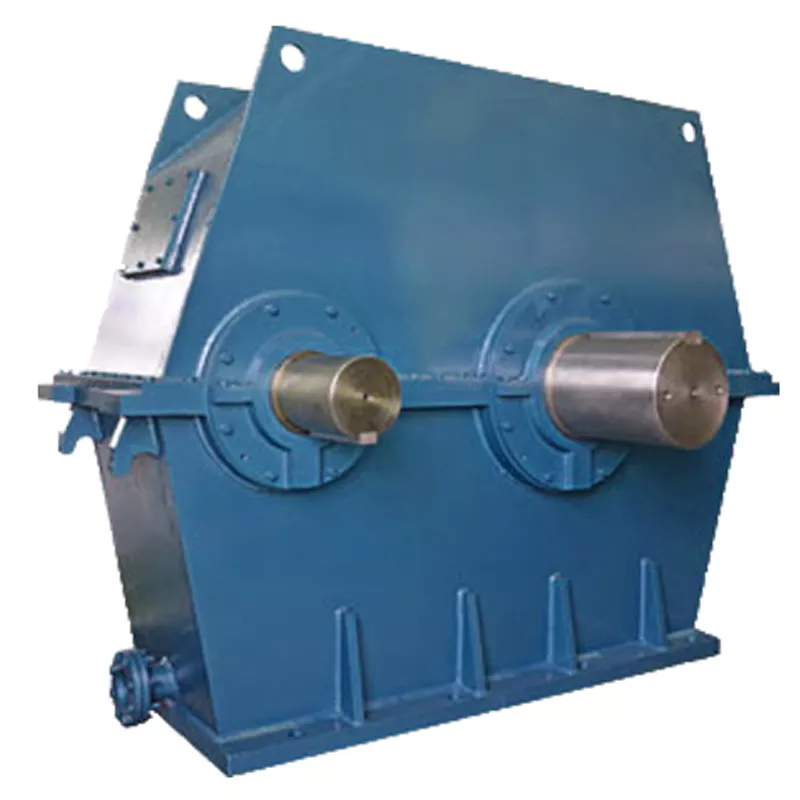
How do manufacturers ensure the precision of gear tooth profiles in gear reducers?
Manufacturers employ several techniques to ensure the precision of gear tooth profiles in gear reducers, which is crucial for optimal performance and efficiency:
1. Precision Machining: Gear teeth are typically machined using advanced CNC (Computer Numerical Control) machines that can achieve high levels of accuracy and repeatability. This ensures consistent gear tooth profiles across multiple components.
2. Quality Control Measures: Rigorous quality control processes, such as dimensional inspections and profile measurements, are performed at various stages of manufacturing to verify that gear tooth profiles meet the required specifications.
3. Tooth Profile Design: Engineers use specialized software and simulation tools to design gear tooth profiles with precise involute shapes and accurate dimensions. These designs are then translated into machine instructions for manufacturing.
4. Material Selection: High-quality materials with excellent wear resistance and dimensional stability are chosen to minimize the potential for deformation or inaccuracies during machining and operation.
5. Heat Treatment: Heat treatment processes, such as carburizing and quenching, are applied to enhance the surface hardness and durability of gear teeth, reducing the risk of wear and deformation over time.
6. Tooth Grinding and Finishing: After initial machining, gear teeth often undergo precision grinding and finishing processes to achieve the desired tooth profile accuracy and surface finish.
7. Post-Processing Inspection: Gear tooth profiles are inspected again after manufacturing processes to verify that the final components meet the specified tolerances and performance criteria.
8. Computer-Aided Manufacturing (CAM): CAM software is used to generate tool paths and machining instructions, enabling precise control over tool movements and material removal during gear manufacturing.
By combining these techniques and leveraging advanced manufacturing technologies, manufacturers can achieve the necessary precision in gear tooth profiles, resulting in reliable and efficient gear reducers for various industrial applications.
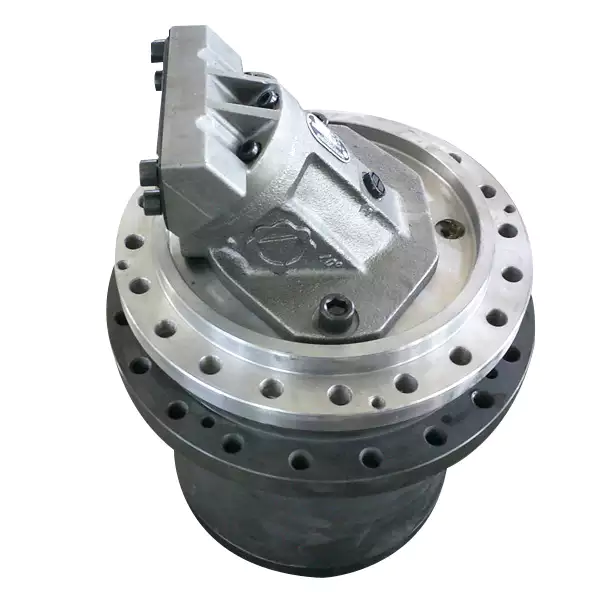
What factors should be considered when selecting the right gear reducer?
Choosing the appropriate gear reducer involves considering several crucial factors to ensure optimal performance and efficiency for your specific application:
- 1. Torque and Power Requirements: Determine the amount of torque and power your machinery needs for its operation.
- 2. Speed Ratio: Calculate the required speed reduction or increase to match the input and output speeds.
- 3. Gear Type: Select the appropriate gear type (helical, bevel, worm, planetary, etc.) based on your application’s torque, precision, and efficiency requirements.
- 4. Mounting Options: Consider the available space and the mounting configuration that suits your machinery.
- 5. Environmental Conditions: Evaluate factors such as temperature, humidity, dust, and corrosive elements that may impact the gear reducer’s performance.
- 6. Efficiency: Assess the gear reducer’s efficiency to minimize power losses and improve overall system performance.
- 7. Backlash: Consider the acceptable level of backlash or play between gear teeth, which can affect precision.
- 8. Maintenance Requirements: Determine the maintenance intervals and procedures necessary for reliable operation.
- 9. Noise and Vibration: Evaluate noise and vibration levels to ensure they meet your machinery’s requirements.
- 10. Cost: Compare the initial cost and long-term value of different gear reducer options.
By carefully assessing these factors and consulting with gear reducer manufacturers, engineers and industry professionals can make informed decisions to select the right gear reducer for their specific application, optimizing performance, longevity, and cost-effectiveness.
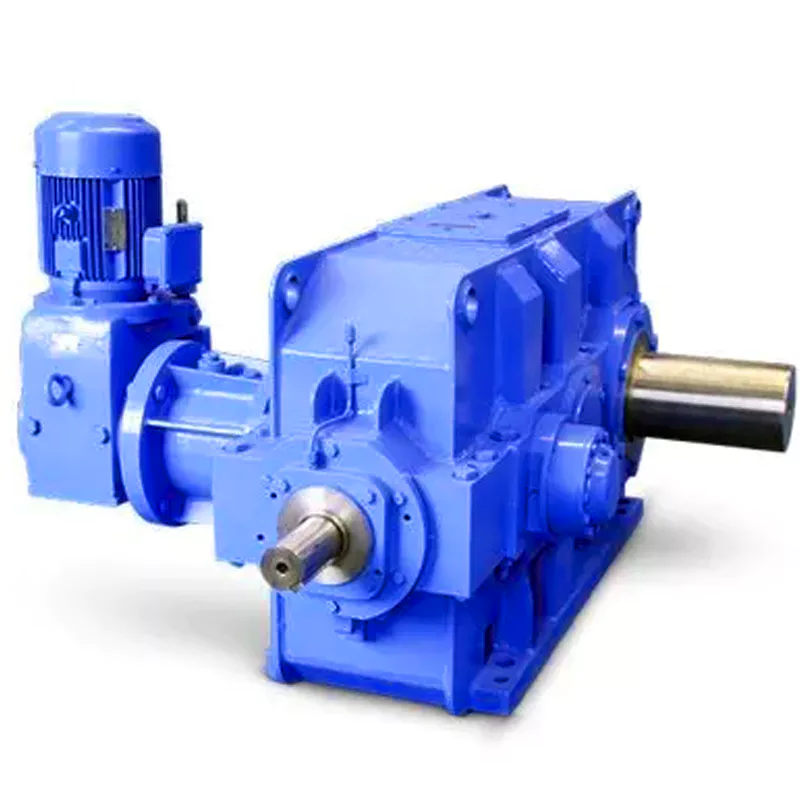
Quels sont les avantages de l'utilisation d'un réducteur à engrenages dans les applications industrielles ?
Les réducteurs de vitesse offrent plusieurs avantages qui les rendent indispensables dans diverses applications industrielles :
1. Réduction de vitesse : Les réducteurs de vitesse permettent de réduire la vitesse d'entrée élevée des moteurs à des vitesses de sortie plus basses et plus utilisables pour des applications spécifiques, garantissant ainsi le bon fonctionnement et la sécurité des équipements.
2. Augmentation du couple : En tirant parti de l'avantage mécanique des rapports d'engrenage, les réducteurs d'engrenages peuvent augmenter considérablement le couple de sortie, permettant ainsi la manutention de charges lourdes et fournissant la puissance nécessaire à des tâches telles que le levage, le transport et le traitement.
3. Contrôle précis : Les réducteurs de vitesse permettent un réglage précis de la vitesse de rotation et du couple, offrant un contrôle précis des machines et des processus, ce qui est crucial dans des secteurs comme la fabrication, la manutention et la robotique.
4. Absorption des chocs : Les réducteurs d'engrenages peuvent absorber et amortir les chocs soudains ou les variations de charge, protégeant ainsi la machine et les composants connectés des forces abruptes qui pourraient autrement entraîner des dommages.
5. Polyvalence : Grâce à différents types d'engrenages (par exemple, droits, hélicoïdaux, à vis sans fin) et à différentes conceptions, les réducteurs d'engrenages peuvent être adaptés à différentes applications, y compris celles nécessitant des rapports de vitesse, des plages de couple et des conditions environnementales spécifiques.
6. Transmission efficace de l'énergie : Les réducteurs à engrenages offrent un rendement mécanique élevé, minimisant les pertes d'énergie lors de la transmission de puissance, ce qui est particulièrement précieux dans les industries soucieuses de leur consommation d'énergie.
7. Conception compacte : Les réducteurs de vitesse offrent une solution compacte pour la transmission de puissance et le réglage des vitesses, ce qui les rend adaptés aux installations où l'espace est limité.
8. Fiabilité et longévité : Les réducteurs de vitesse bien conçus et correctement entretenus peuvent offrir une durée de vie prolongée, contribuant ainsi à réduire les temps d'arrêt et les coûts de maintenance.
De manière générale, les réducteurs de vitesse améliorent les performances, l'efficacité et la fiabilité des équipements industriels, ce qui en fait des composants essentiels dans un large éventail d'applications et dans divers secteurs d'activité.


editor by CX 2024-03-28