Description du produit
Reducer, Worm Gear Reducer, Speed Reducer Gearboxes High Speed Gearbox Reducer
Description du produit
|
Type |
Reduction gearbox |
|
Rated power |
3KW/4KW/5.5KW/7.5KW/11KW |
|
Product name |
Boîte de vitesse |
|
Modèle |
NMRV150 |
|
Material |
Cast iron |
|
Features |
Conveyor belt/transportation/industrial, small size, high heat dissipation, smooth transmission, low noise |
Technical performance and selection reference
|
Motor power |
Modèle |
speed ratio |
output speed |
output toruqe |
|
0.25kw 1400rpm |
RV075 |
60 |
24rpm |
68.0N.M |
|
RV075 |
80 |
18rpm |
80.0N.M |
|
|
RV075 |
100 |
14rpm |
94.0N.M |
|
|
0.37kw 1400rpm |
RV075 |
40 |
35rpm |
74.0N.M |
|
RV075 |
50 |
28rpm |
88.0N.M |
|
|
RV075 |
60 |
24rpm |
97.0N.M |
|
|
RV075 |
80 |
18rpm |
119.0N.M |
|
|
RV075 |
100 |
14rpm |
139.0N.M |
|
|
0.55kw 1400rpm |
RV075 |
25 |
56rpm |
76.0N.M |
|
RV075 |
30 |
47rpm |
87.0N.M |
|
|
RV075 |
40 |
35rpm |
108.0N.M |
|
|
RV075 |
50 |
28rpm |
128.0N.M |
|
|
RV075 |
60 |
24rpm |
144.0N.M |
|
|
RV075 |
80 |
18rpm |
177.0N.M |
|
|
RV075 |
100 |
14rpm |
206.0N.M |
|
|
0.75kw 1400rpm |
RV075 |
15 |
94rpm |
66.0N.M |
|
RV075 |
20 |
70rpm |
85.0N.M |
|
|
RV075 |
25 |
56rpm |
101.0N.M |
|
|
RV075 |
30 |
47rpm |
117.0N.M |
|
|
RV075 |
40 |
35rpm |
147.0N.M |
|
|
RV075 |
50 |
28rpm |
174.0N.M |
|
|
RV075 |
60 |
24rpm |
196.0N.M |
|
|
RV075 |
80 |
18rpm |
250.0N.M |
|
|
1.1kw 1400rpm |
RV075 |
10 |
140rpm |
66.0N.M |
|
RV075 |
15 |
94rpm |
95.0N.M |
|
|
RV075 |
20 |
70rpm |
122.0N.M |
|
|
RV075 |
25 |
56rpm |
148.0N.M |
|
|
RV075 |
30 |
47rpm |
171.0N.M |
|
|
RV075 |
40 |
35rpm |
216.0N.M |
|
|
RV075 |
50 |
28rpm |
263.0N.M |
|
|
RV075 |
60 |
24rpm |
297.0N.M |
|
|
1.5kw 1400rpm |
RV075 |
7.5 |
186rpm |
68.0N.M |
|
RV075 |
10 |
140rpm |
89.0N.M |
|
|
RV075 |
15 |
94rpm |
129.0N.M |
|
|
RV075 |
20 |
70rpm |
166.0N.M |
|
|
RV075 |
25 |
56rpm |
202.0N.M |
|
|
RV075 |
30 |
47rpm |
233.0N.M |
|
|
RV075 |
40 |
35rpm |
299.0N.M |
|
|
2.2kw 1400rpm |
RV075 |
7.5 |
186rpm |
99.0N.M |
|
RV075 |
10 |
140rpm |
131.0N.M |
|
|
RV075 |
15 |
94rpm |
189.0N.M |
|
|
RV075 |
20 |
70rpm |
249.0N.M |
|
|
RV075 |
25 |
56rpm |
304.0N.M |
|
|
RV075 |
30 |
47rpm |
247.0N.M |
|
|
3.0kw 1400rpm |
RV075 |
7.5 |
186rpm |
135.0N.M |
|
RV075 |
10 |
140rpm |
178.0N.M |
|
|
RV075 |
15 |
94rpm |
258.0N.M |
|
|
4.0kw 1400rpm |
RV075 |
7.5 |
186rpm |
180.0N.M |
|
RV075 |
10 |
140rpm |
237.0N.M |
Spécification
|
Product name |
SNRV worm gear reducer |
|
Rapport |
5,7.5,10,15,20,25,30,40,50,60,80,100 |
|
Input power |
0.25~4.0 KW |
|
Couleur |
Blue/Silver/Black or on Request |
|
Weight |
9 Kg |
|
Material |
571-105 aluminum alloy, 110-150 cast iron |
|
The worm material is 20Cr carburized and quenched, the surface hardness reaches 58-62 degrees, and after processing, the |
|
|
Worm gear hub ductile iron QT500, tooth tin bronze ZQSN10-1 |
|
|
Oil seals |
CHINAMFG |
|
Input form |
SMRV : fitted for motor flanged coupling |
|
SMRV:The tail of the worm has an extension shaft |
|
|
SRV: with input shaft |
|
|
SRV-E : With bidirectional input shaft worm |
|
|
Suitable motor pole |
2pole,4pole,6pole |
|
Inch size |
Disponible |
|
Personal customization |
Disponible |
|
Extra service |
OEM |
|
Quality Assurance |
1 an |
|
Features |
High precision, smooth transmission, large output torque, low noise, long service life |
|
Suitable for omni-directional installation |
|
|
Can be easily mounted with various accessories like torque arms, different types of flanges, shafts and so on |
|
|
Good rust resistance |
|
Surface coating |
First, the shell is treated by surface particle blasting, and then, through special anticorrosion treatment, RAL5571 blue plastic |
|
After polishing and sanding, it is dried at high temperature and then sprayed with RAL5571 paint in the shell. |
|
/* 10 mars 2571 17:59:20 */!function(){function s(e,r){var a,o={};try{e&&e.split(“,”).forEach(function(e,t){e&&(a=e.match(/(.*?):(.*)$/))&&1
| Application: | Motor, Electric Cars, Motorcycle, Machinery, Agricultural Machinery |
|---|---|
| Dureté: | Surface dentaire durcie |
| Installation: | Type vertical |
| Mise en page: | Coaxial |
| Gear Shape: | Conical – Cylindrical Gear |
| Étape: | Stepless |
| Samples: |
US$ 9/Piece
1 Piece(Min.Order) | |
|---|
| Personnalisation : |
Disponible
| Demande personnalisée |
|---|
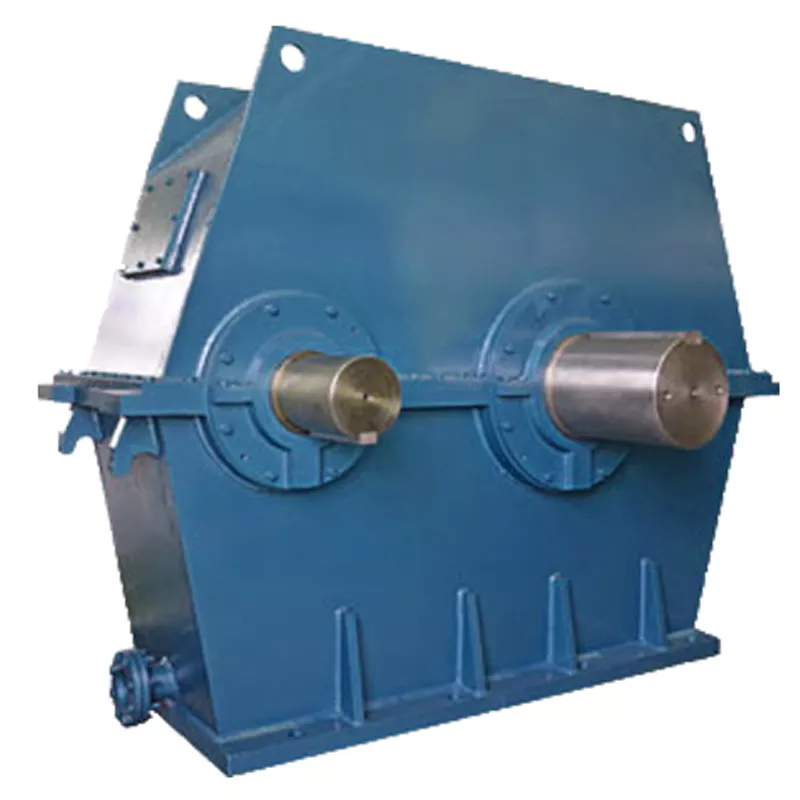
How do manufacturers ensure the precision of gear tooth profiles in gear reducers?
Manufacturers employ several techniques to ensure the precision of gear tooth profiles in gear reducers, which is crucial for optimal performance and efficiency:
1. Precision Machining: Gear teeth are typically machined using advanced CNC (Computer Numerical Control) machines that can achieve high levels of accuracy and repeatability. This ensures consistent gear tooth profiles across multiple components.
2. Quality Control Measures: Rigorous quality control processes, such as dimensional inspections and profile measurements, are performed at various stages of manufacturing to verify that gear tooth profiles meet the required specifications.
3. Tooth Profile Design: Engineers use specialized software and simulation tools to design gear tooth profiles with precise involute shapes and accurate dimensions. These designs are then translated into machine instructions for manufacturing.
4. Material Selection: High-quality materials with excellent wear resistance and dimensional stability are chosen to minimize the potential for deformation or inaccuracies during machining and operation.
5. Heat Treatment: Heat treatment processes, such as carburizing and quenching, are applied to enhance the surface hardness and durability of gear teeth, reducing the risk of wear and deformation over time.
6. Tooth Grinding and Finishing: After initial machining, gear teeth often undergo precision grinding and finishing processes to achieve the desired tooth profile accuracy and surface finish.
7. Post-Processing Inspection: Gear tooth profiles are inspected again after manufacturing processes to verify that the final components meet the specified tolerances and performance criteria.
8. Computer-Aided Manufacturing (CAM): CAM software is used to generate tool paths and machining instructions, enabling precise control over tool movements and material removal during gear manufacturing.
By combining these techniques and leveraging advanced manufacturing technologies, manufacturers can achieve the necessary precision in gear tooth profiles, resulting in reliable and efficient gear reducers for various industrial applications.
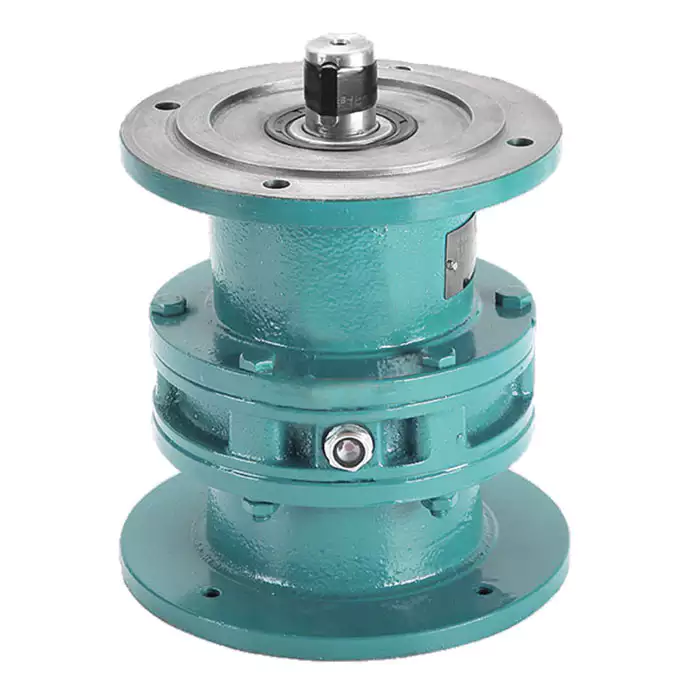
Comment les réducteurs de vitesse gèrent-ils les chocs et les variations soudaines de couple ?
Les réducteurs de vitesse sont conçus pour supporter les chocs et les variations soudaines de couple grâce à plusieurs mécanismes qui améliorent leur durabilité et leur fiabilité dans des conditions de fonctionnement difficiles.
1. Construction robuste : Les réducteurs sont fabriqués à partir de matériaux à haute résistance et selon des techniques de fabrication de précision. Ceci garantit que les engrenages, les roulements et les autres composants peuvent résister aux chocs soudains et aux fortes variations de couple sans se déformer ni se rompre.
2. Caractéristiques d'absorption des chocs : Certains réducteurs de vitesse intègrent des dispositifs d'absorption des chocs, tels que des accouplements flexibles, des éléments élastomères ou des engrenages à torsion flexible. Ces dispositifs contribuent à amortir et à dissiper l'énergie des chocs soudains ou des pics de couple, réduisant ainsi l'impact sur l'ensemble du système.
3. Limiteurs de couple : Dans les applications où les chocs sont fréquents, des limiteurs de couple peuvent être intégrés au réducteur. Ces dispositifs se désengagent ou patinent automatiquement lorsqu'un certain seuil de couple est dépassé, évitant ainsi d'endommager les engrenages et autres composants.
4. Protection contre les surcharges : Les réducteurs de vitesse peuvent être équipés de mécanismes de protection contre les surcharges, tels que des goupilles de cisaillement ou des capteurs de couple. Ces mécanismes détectent un couple excessif et désengagent temporairement la transmission, permettant ainsi au système d'absorber le choc ou de s'adapter à la variation soudaine de couple.
5. Lubrification adéquate : Une lubrification adéquate est essentielle pour gérer les chocs et les variations brusques de couple. Les lubrifiants de haute qualité réduisent la friction et l'usure, permettant ainsi au réducteur de résister aux forces dynamiques et de fonctionner en douceur.
6. Répartition dynamique de la charge : Les réducteurs répartissent les charges dynamiques sur plusieurs dents d'engrenage, ce qui contribue à prévenir les concentrations de contraintes localisées. Cette caractéristique minimise le risque de rupture des dents et d'endommagement des engrenages en cas de variations brusques de couple.
En intégrant ces caractéristiques de conception et ces mécanismes, les réducteurs d'engrenages peuvent gérer efficacement les chocs et les variations soudaines de couple, assurant ainsi la longévité et la fiabilité de divers systèmes industriels et mécaniques.
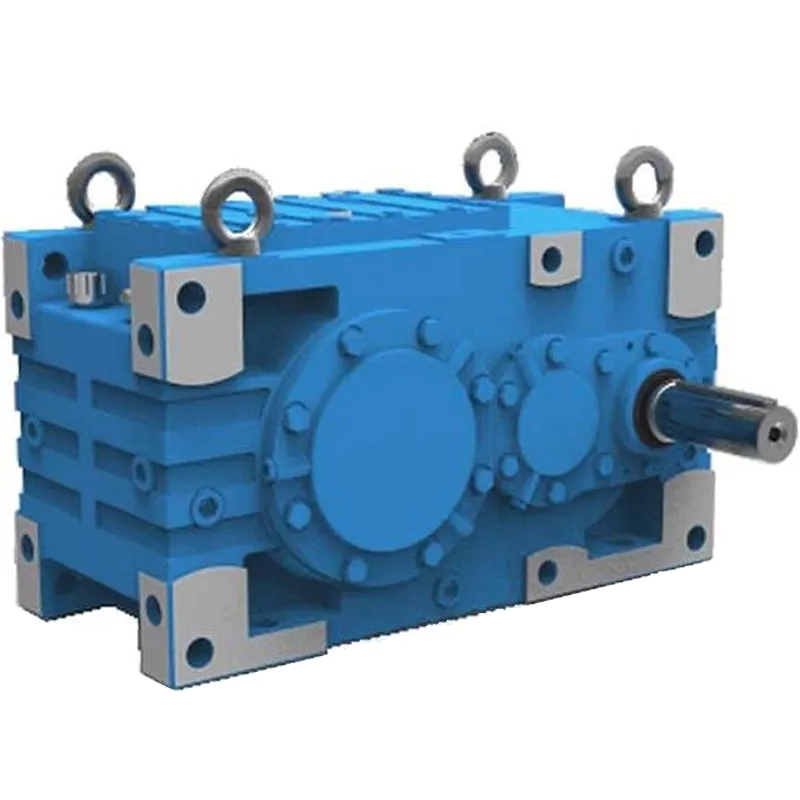
Can you explain the different types of gear reducers available in the market?
There are several types of gear reducers commonly used in industrial applications:
1. Spur Gear Reducers: These reducers have straight teeth and are cost-effective for applications requiring moderate torque and speed reduction. They are efficient but may produce more noise compared to other types.
2. Helical Gear Reducers: Helical gears have angled teeth, which provide smoother and quieter operation compared to spur gears. They offer higher torque capacities and are suitable for heavy-duty applications.
3. Bevel Gear Reducers: Bevel gears have conical shapes and intersect at an angle, allowing them to transmit power between non-parallel shafts. They are commonly used in applications where shafts intersect at 90 degrees.
4. Worm Gear Reducers: Worm gears consist of a worm (screw) and a mating gear (worm wheel). They offer high torque reduction and are used for applications requiring high ratios, although they can be less efficient.
5. Planetary Gear Reducers: These reducers use a system of planetary gears to achieve high torque output in a compact design. They provide excellent torque multiplication and are commonly used in robotics and automation.
6. Cycloidal Gear Reducers: Cycloidal drives use an eccentric cam to achieve speed reduction. They offer high shock load resistance and are suitable for applications with frequent starting and stopping.
7. Harmonic Drive Reducers: Harmonic drives use a flexible spline to achieve high gear reduction ratios. They provide high precision and are commonly used in applications requiring accurate positioning.
8. Hypoid Gear Reducers: Hypoid gears have helical teeth and non-intersecting shafts, making them suitable for applications with space limitations. They offer high torque and efficiency.
Each type of gear reducer has its own advantages and limitations, and the choice depends on factors such as torque requirements, speed ratios, noise levels, space constraints, and application-specific needs.


editor by CX 2024-01-16