उत्पाद वर्णन
उत्पाद वर्णन
उत्पाद पैरामीटर
| Parameters | Unit | Level | कमी अनुपात | Flange Size Specification | |||||
| 042 | 060 | 090 | 120 | 160 | 200 | ||||
| Rated Output Torque T2n | N.m | 1 | 3 | 14 | 20 | 75 | 120 | 340 | 950 |
| 4 | 12 | 31 | 85 | 215 | 364 | 1050 | |||
| 5 | 14 | 39 | 100 | 230 | 423 | 1140 | |||
| 6 | 12 | 25 | 85 | 230 | 358 | 950 | |||
| 7 | 12 | 25 | 80 | 160 | 358 | 850 | |||
| 8 | 10 | 25 | 85 | 140 | 320 | 780 | |||
| 10 | 9 | 15 | 50 | 110 | 210 | 630 | |||
| 2 | 12 | 14 | 31 | 85 | 215 | 423 | 588 | ||
| 16 | 12 | 31 | 85 | 215 | 364 | 588 | |||
| 20 | 14 | 39 | 100 | 230 | 423 | 1050 | |||
| 25 | 14 | 39 | 100 | 230 | 423 | 1200 | |||
| 28 | 12 | 31 | 85 | 215 | 364 | 1200 | |||
| 30 | 14 | 20 | 75 | 120 | 423 | 1200 | |||
| 35 | 14 | 39 | 100 | 230 | 423 | 1200 | |||
| 40 | 12 | 31 | 85 | 215 | 364 | 1200 | |||
| 50 | 14 | 39 | 100 | 230 | 423 | 1200 | |||
| 70 | 12 | 25 | 80 | 160 | 358 | 1100 | |||
| 80 | 12 | 25 | 80 | 160 | 358 | 780 | |||
| 100 | 9 | 15 | 50 | 110 | 210 | 520 | |||
| 3 | 120 | 14 | 31 | 85 | 215 | 423 | 1200 | ||
| 150 | 14 | 39 | 100 | 230 | 423 | 1200 | |||
| 200 | 14 | 39 | 100 | 230 | 423 | 1200 | |||
| 250 | 14 | 39 | 100 | 230 | 423 | 1200 | |||
| 280 | 12 | 31 | 85 | 215 | 364 | 1200 | |||
| 350 | 14 | 39 | 100 | 230 | 423 | 1200 | |||
| 400 | 12 | 31 | 85 | 215 | 364 | 1200 | |||
| 500 | 14 | 39 | 100 | 230 | 423 | 1200 | |||
| 700 | 12 | 25 | 80 | 160 | 358 | 1100 | |||
| 1000 | 9 | 15 | 50 | 110 | 210 | 520 | |||
| Maximum Output Torque T2b | N.m | 1,2,3 | 3~1000 | 3 Times of Rated Output Torque | |||||
| Rated Input Speed N1n | rpm | 1,2,3 | 3~1000 | 4000 | 4000 | 3000 | 3000 | 3000 | 2500 |
| Maximum Input Speed N1b | rpm | 1,2,3 | 3~1000 | 8000 | 8000 | 6000 | 6000 | 5000 | 4000 |
| Standard Backlash P2 | arcmin | 1 | 3~1000 | ≤8 | ≤8 | ≤8 | ≤8 | ≤10 | ≤10 |
| arcmin | 2 | 3~1000 | ≤10 | ≤10 | ≤10 | ≤10 | ≤12 | ≤12 | |
| arcmin | 3 | 3~1000 | ≤15 | ≤15 | ≤15 | ≤15 | ≤15 | ≤15 | |
| Torsional Rigidity | Nm/arcmin | 1,2,3 | 3~1000 | 0.8 | 3.7 | 14 | 25 | 25 | 50 |
| Allowable Radial Force F2rb2 | N | 1,2,3 | 3~1000 | 300 | 520 | 1550 | 2600 | 6700 | 12400 |
| Allowable Axial Force F2ab2 | N | 1,2,3 | 3~1000 | 150 | 480 | 1500 | 2350 | 3350 | 6200 |
| Moment of Inertia J1 | kg.cm2 | 1 | 3~10 | 0.16 | 0.25 | 1.2 | 4.5 | 22 | 45 |
| 2 | 12~100 | 0.16 | 0.15 | 0.65 | 2 | 18 | 44 | ||
| 3 | 120~1000 | 0.1 | 0.12 | 0.55 | 1.5 | 16 | 22 | ||
| Service Life | hr | 1,2,3 | 3~1000 | 20000 | |||||
| Efficiency η | % | 1 | 3~10 | 97% | |||||
| 2 | 12~100 | 94% | |||||||
| 3 | 120~1000 | 91% | |||||||
| Noise Level | dB | 1,2,3 | 3~1000 | ≤58 | ≤60 | ≤65 | ≤68 | ≤72 | ≤75 |
| परिचालन तापमान | ºC | 1,2,3 | 3~1000 | -10~+90 | |||||
| Protection Class | IP | 1,2,3 | 3~1000 | आईपी65 | |||||
| Weights | kg | 1 | 3~10 | 0.7 | 1.1 | 2.7 | 6.4 | 24.4 | 45 |
| 2 | 12~100 | 1.0 | 1.3 | 3.4 | 8.1 | 26 | 53 | ||
| 3 | 120~1000 | 1.9 | 2.6 | 5.5 | 10.8 | 31 | 61 | ||
अक्सर पूछे जाने वाले प्रश्न
Q: How to select a gearbox?
A: Firstly, determine the torque and speed requirements for your application. Consider the load characteristics, operating environment, and duty cycle. Then, choose the appropriate gearbox type, such as planetary, worm, or helical, based on the specific needs of your system. Ensure compatibility with the motor and other mechanical components in your setup. Lastly, consider factors like efficiency, backlash, and size to make an informed selection.
Q: What type of motor can be paired with a gearbox?
A: Gearboxes can be paired with various types of motors, including servo motors, stepper motors, and brushed or brushless DC motors. The choice depends on the specific application requirements, such as speed, torque, and precision. Ensure compatibility between the gearbox and motor specifications for seamless integration.
Q: Does a gearbox require maintenance, and how is it maintained?
A: Gearboxes typically require minimal maintenance. Regularly check for signs of wear, lubricate as per the manufacturer’s recommendations, and replace lubricants at specified intervals. Performing routine inspections can help identify issues early and extend the lifespan of the gearbox.
Q: What is the lifespan of a gearbox?
A: The lifespan of a gearbox depends on factors such as load conditions, operating environment, and maintenance practices. A well-maintained gearbox can last for several years. Regularly monitor its condition and address any issues promptly to ensure a longer operational life.
Q: What is the slowest speed a gearbox can achieve?
A: Gearboxes are capable of achieving very slow speeds, depending on their design and gear ratio. Some gearboxes are specifically designed for low-speed applications, and the choice should align with the specific speed requirements of your system.
Q: What is the maximum reduction ratio of a gearbox?
A: The maximum reduction ratio of a gearbox depends on its design and configuration. Gearboxes can achieve various reduction ratios, and it’s important to choose 1 that meets the torque and speed requirements of your application. Consult the gearbox specifications or contact the manufacturer for detailed information on available reduction ratios.
/* March 10, 2571 17:59:20 */!function(){function s(e,r){var a,o={};try{e&&e.split(“,”).forEach(function(e,t){e&&(a=e.match(/(.*?):(.*)$/))&&1
| आवेदन पत्र: | Motor, Electric Cars, Machinery, Agricultural Machinery, Gearbox |
|---|---|
| कठोरता: | कठोर दांत की सतह |
| स्थापना: | Vertical Type |
| अनुकूलन: |
उपलब्ध
| अनुकूलित अनुरोध |
|---|
.shipping-cost-tm .tm-status-off{पृष्ठभूमि: कोई नहीं;padding:0;रंग: #1470cc}
| शिपिंग लागत:
प्रति इकाई अनुमानित भाड़ा. |
शिपिंग लागत और अनुमानित डिलीवरी समय के बारे में। |
|---|
| भुगतान विधि: |
|
|---|---|
|
प्रारंभिक भुगतान पूर्ण भुगतान |
| मुद्रा: | यूएस1टीपी4टी |
|---|
| वापसी और धनवापसी: | आप उत्पाद प्राप्त होने के 30 दिन बाद तक धन वापसी के लिए आवेदन कर सकते हैं। |
|---|
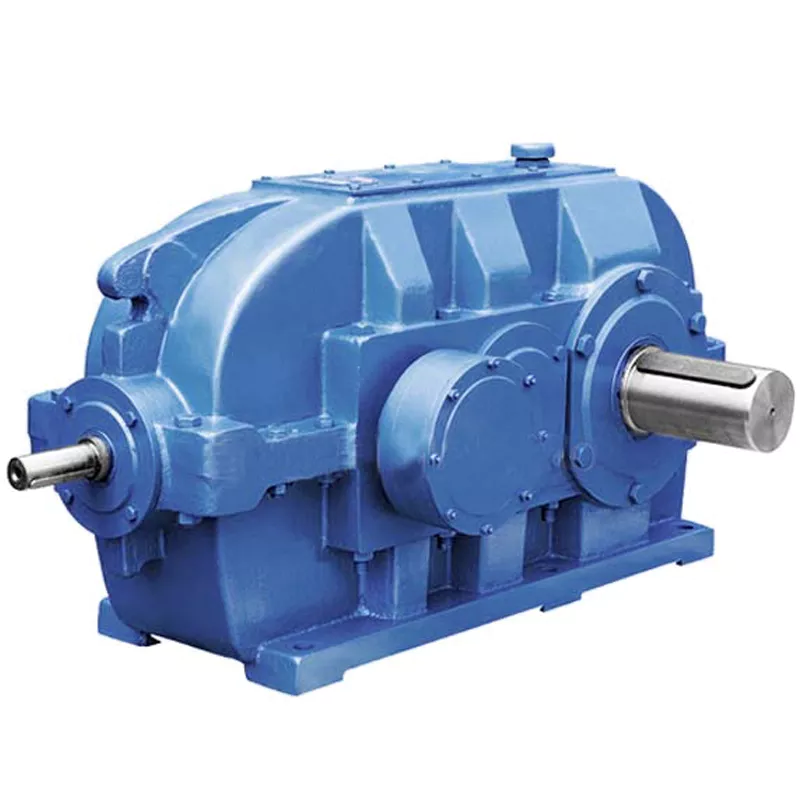
How do gear reducers enhance the efficiency of conveyor systems and robotics?
Gear reducers play a significant role in improving the efficiency of both conveyor systems and robotics by optimizing speed, torque, and control. Here’s how they contribute:
Conveyor Systems:
In conveyor systems, gear reducers enhance efficiency in the following ways:
- Speed Control: Gear reducers allow precise control over the rotational speed of conveyor belts, ensuring that materials are transported at the desired speed for efficient production processes.
- Torque Adjustment: By adjusting gear ratios, gear reducers provide the necessary torque to handle varying loads and prevent overloading, minimizing energy wastage.
- Reverse Operation: Gear reducers enable smooth bidirectional movement of conveyor belts, facilitating tasks such as loading, unloading, and distribution without the need for additional components.
- Synchronization: Gear reducers ensure synchronized movement of multiple conveyor belts in complex systems, optimizing material flow and minimizing jams or bottlenecks.
Robotics:
In robotics, gear reducers enhance efficiency through the following means:
- Precision Movement: Gear reducers provide precise control over the movement of robot joints and arms, enabling accurate positioning and manipulation of objects.
- Reduced Inertia: Gear reducers help reduce the inertia experienced by robotic components, allowing for quicker and more responsive movements while conserving energy.
- Compact Design: Gear reducers offer a compact and lightweight solution for achieving various motion profiles in robotic systems, allowing for efficient use of space and resources.
- Torque Amplification: By amplifying torque from the motor, gear reducers enable robots to handle heavier loads and perform tasks that require greater force, enhancing their overall capabilities.
By providing precise speed control, torque adjustment, and reliable motion transmission, gear reducers optimize the performance of conveyor systems and robotics, leading to improved efficiency, reduced energy consumption, and enhanced operational capabilities.
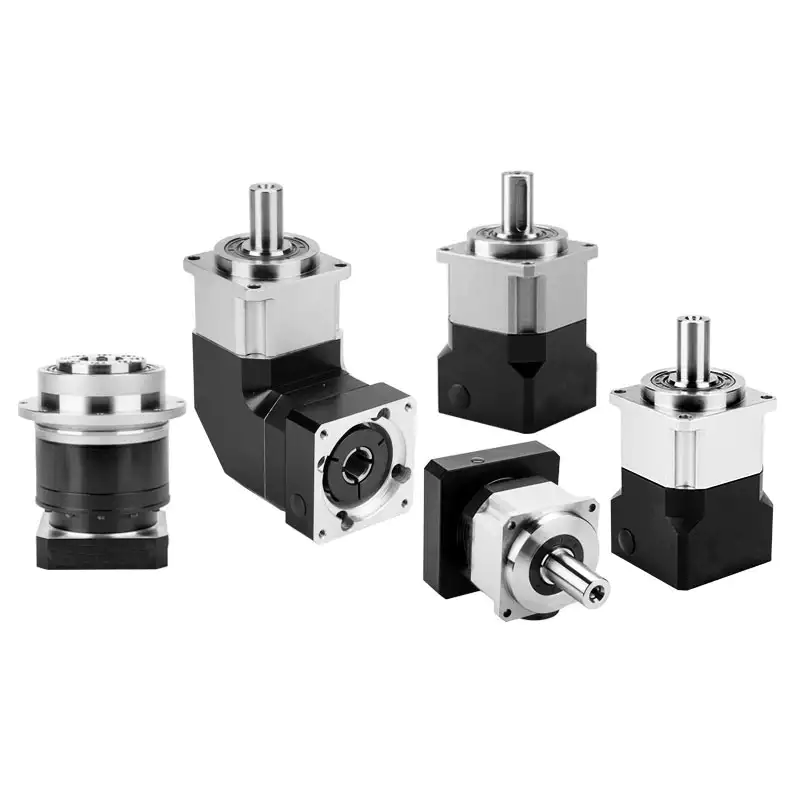
Can gear reducers be used for both speed reduction and speed increase?
Yes, gear reducers can be utilized for both speed reduction and speed increase, depending on their design and arrangement. The functionality to either decrease or increase rotational speed is achieved by altering the arrangement of gears within the gearbox.
1. Speed Reduction: In speed reduction applications, a gear reducer is designed with gears of different sizes. The input shaft connects to a larger gear, while the output shaft is connected to a smaller gear. As the input shaft rotates, the larger gear turns the smaller gear, resulting in a decrease in output speed compared to the input speed. This configuration provides higher torque output at a lower speed, making it suitable for applications that require increased force or torque.
2. Speed Increase: For speed increase, the gear arrangement is reversed. The input shaft connects to a smaller gear, while the output shaft is connected to a larger gear. As the input shaft rotates, the smaller gear drives the larger gear, resulting in an increase in output speed compared to the input speed. However, the torque output is lower than that of speed reduction configurations.
By choosing the appropriate gear ratios and arrangement, gear reducers can be customized to meet specific speed and torque requirements for various industrial applications. It’s important to select the right type of gear reducer and configure it correctly to achieve the desired speed reduction or speed increase.
How do gear reducers handle variations in input and output speeds?
Gear reducers are designed to handle variations in input and output speeds through the use of different gear ratios and configurations. They achieve this by utilizing intermeshing gears of varying sizes to transmit torque and control rotational speed.
The basic principle involves connecting two or more gears with different numbers of teeth. When a larger gear (driving gear) engages with a smaller gear (driven gear), the rotational speed of the driven gear decreases while the torque increases. This reduction in speed and increase in torque enable gear reducers to efficiently adapt to variations in input and output speeds.
The gear ratio is a critical factor in determining how much the speed and torque change. It is calculated by dividing the number of teeth on the driven gear by the number of teeth on the driving gear. A higher gear ratio results in a greater reduction in speed and a proportionate increase in torque.
Planetary gear reducers, a common type, use a combination of gears including sun gears, planet gears, and ring gears to achieve different speed reductions and torque enhancements. This design provides versatility in handling variations in speed and torque requirements.
In summary, gear reducers handle variations in input and output speeds by using specific gear ratios and gear arrangements that enable them to efficiently transmit power and control motion characteristics according to the application’s needs.


editor by CX 2024-01-08