제품 설명
제품 설명
DESCRIPTION:
Gear reducers are enclosed helical gears with hollow inputs.
The gear is mounted directly on the input shaft of the gear and receives support from a motor mounting bracket mounted on the machine housing.
No additional parts are required to transfer torque from the reducer to the machine.
It can be mounted in vertical, horizontal or inclined position.
Shaft-mounted gear reducers typically have 5:1 7:1 10:1 reduction ratios and output speeds ranging from 1 to 300 rpm.
M4 series gear reducer can be installed directly on screw conveyors and feeders with a XUH seal installed on the output shaft of the gearbox.
Ensure that cement, and fly ash powder will not get into the gearbox and extend the service life of the gearbox.
More suitable for bulk materials, grain and aggregate handling industries
WORKING PRINCIPLE:
M4 series gearboxes come in 5 sizes (M41 / M43 / M45 / M47 / M49).
Nominal gear ratios are in accordance with Ra 10 CHINAMFG 2017 (5, 6, 7, 10). Cylindrical gears with helicoidal teeth.
M4 series gearboxes can be mounted directly on screws: in this case, the XUH type output shaft seal is usually installed.
M4 series gearboxes are supplied with grease for use at ambient temperatures (0°C – 40°C).
PROPERTIES:
– Helical gearbox
– Nominal torque that can be transferred to the output shaft: up to 1500 Nm.
– Installed power at the input up to 30 kW.
– Operation at ambient temperature (0°C – 40°C).
– DIN 5482 involute spline output shafts
– Flange mounting on motor and output side
– Precision-machined cylindrical bevel gears with teeth.
– Flange mounting on motor and output side
BENEFITS:
– Easy installation
– Quick maintenance
– Low installation costs
Services
Pre-sales Commitment
1. For user inquiries, quick response, warm reception, and answer all questions.
2. Provide detailed design information free of charge within 24 hours.
Commitment in Sales
1. All ex-factory products meet the quality standards specified in the contract. All products are tested according to customer requirements before delivery.
2. After the contract is signed, the customers are welcome to the site of our company for supervision.
After-sales Commitment
1. We provide technical support for customers. If necessary, the product can be debugged on-site, and relevant operators can be trained to solve user problems.
2. 24 hours to solve the problems for customers. Product use a day, a day of service.
3. Set up a high-quality service team, and set up product files for regular return visits.
/* March 10, 2571 17:59:20 */!function(){function s(e,r){var a,o={};try{e&&e.split(“,”).forEach(function(e,t){e&&(a=e.match(/(.*?):(.*)$/))&&1
| 애플리케이션: | Machinery |
|---|---|
| 경도: | 경화된 치아 표면 |
| 설치: | 세로형 |
| 공들여 나열한 것: | 같은 축의 |
| Gear Shape: | Conical – Cylindrical Gear |
| 단계: | Four-Step |
| 샘플: |
US$ 100/Piece
1개(최소 주문) | |
|---|
| 사용자 정의: |
사용 가능
| 맞춤형 요청 |
|---|
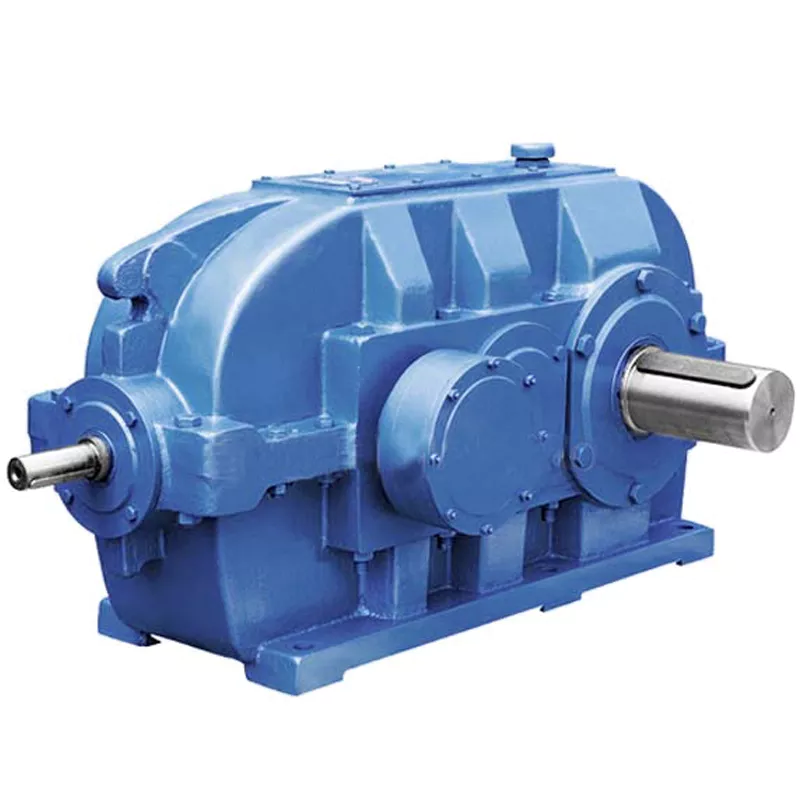
기어 감속기는 어떻게 컨베이어 시스템과 로봇의 효율성을 향상시키나요?
기어 감속기는 속도, 토크 및 제어를 최적화하여 컨베이어 시스템과 로봇의 효율성을 향상시키는 데 중요한 역할을 합니다. 기어 감속기의 역할은 다음과 같습니다.
컨베이어 시스템:
컨베이어 시스템에서 기어 감속기는 다음과 같은 방식으로 효율성을 향상시킵니다.
- 속도 제어: 기어 감속기는 컨베이어 벨트의 회전 속도를 정밀하게 제어하여 효율적인 생산 공정을 위해 재료가 원하는 속도로 운반되도록 보장합니다.
- 토크 조정: 기어비를 조정함으로써, 기어 감속기는 다양한 하중을 처리하고 과부하를 방지하는 데 필요한 토크를 제공하여 에너지 낭비를 최소화합니다.
- 역방향 작업: 기어 감속기는 컨베이어 벨트의 원활한 양방향 이동을 가능하게 하여 추가 구성 요소가 필요 없이 적재, 하역, 유통과 같은 작업을 용이하게 합니다.
- 동기화: 기어 감속기는 복잡한 시스템에서 여러 개의 컨베이어 벨트가 동기화되어 움직이도록 하여 재료 흐름을 최적화하고 막힘이나 병목 현상을 최소화합니다.
로봇공학:
로봇공학에서 기어 감속기는 다음과 같은 수단을 통해 효율성을 향상시킵니다.
- 정밀한 움직임: 기어 감속기는 로봇 관절과 팔의 움직임을 정밀하게 제어하여 물체의 정확한 위치 지정 및 조작을 가능하게 합니다.
- 감소된 관성: 기어 감속기는 로봇 구성 요소가 겪는 관성을 줄이는 데 도움이 되며, 에너지를 보존하는 동시에 더 빠르고 반응성이 뛰어난 움직임을 가능하게 합니다.
- 컴팩트한 디자인: 기어 감속기는 로봇 시스템에서 다양한 동작 프로필을 구현하기 위한 소형 및 경량 솔루션을 제공하여 공간과 리소스를 효율적으로 사용할 수 있습니다.
- 토크 증폭: 기어 감속기는 모터의 토크를 증폭시켜 로봇이 더 무거운 하중을 처리하고 더 큰 힘이 필요한 작업을 수행할 수 있게 하여 전반적인 성능을 향상시킵니다.
기어 감속기는 정밀한 속도 제어, 토크 조정, 안정적인 동작 전달을 제공하여 컨베이어 시스템과 로봇의 성능을 최적화하여 효율성을 높이고, 에너지 소비를 줄이며, 운영 역량을 강화합니다.
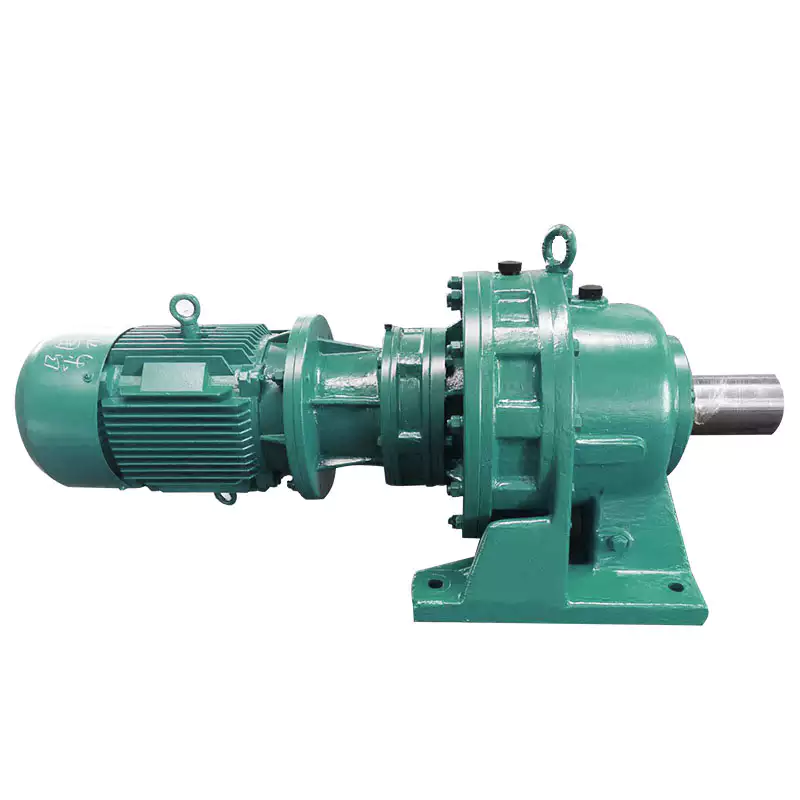
What role do gear ratios play in optimizing the performance of gear reducers?
Gear ratios play a crucial role in optimizing the performance of gear reducers by determining the relationship between input and output speeds and torques. A gear ratio is the ratio of the number of teeth between two meshing gears, and it directly influences the mechanical advantage and efficiency of the gear reducer.
1. Speed and Torque Conversion: Gear ratios allow gear reducers to convert rotational speed and torque according to the needs of a specific application. By selecting appropriate gear ratios, gear reducers can either reduce speed while increasing torque (speed reduction) or increase speed while decreasing torque (speed increase).
2. Mechanical Advantage: Gear reducers leverage gear ratios to provide mechanical advantage. In speed reduction configurations, a higher gear ratio results in a greater mechanical advantage, allowing the output shaft to deliver higher torque at a lower speed. This is beneficial for applications requiring increased force or torque, such as heavy machinery or conveyor systems.
3. Efficiency: Optimal gear ratios contribute to higher efficiency in gear reducers. By distributing the load across multiple gear teeth, gear reducers with suitable gear ratios minimize stress and wear on individual gear teeth, leading to improved overall efficiency and prolonged lifespan.
4. Speed Matching: Gear ratios enable gear reducers to match the rotational speeds of input and output shafts. This is crucial in applications where precise speed synchronization is required, such as in conveyors, robotics, and manufacturing processes.
When selecting gear ratios for a gear reducer, it’s important to consider the specific requirements of the application, including desired speed, torque, efficiency, and mechanical advantage. Properly chosen gear ratios enhance the overall performance and reliability of gear reducers in a wide range of industrial and mechanical systems.
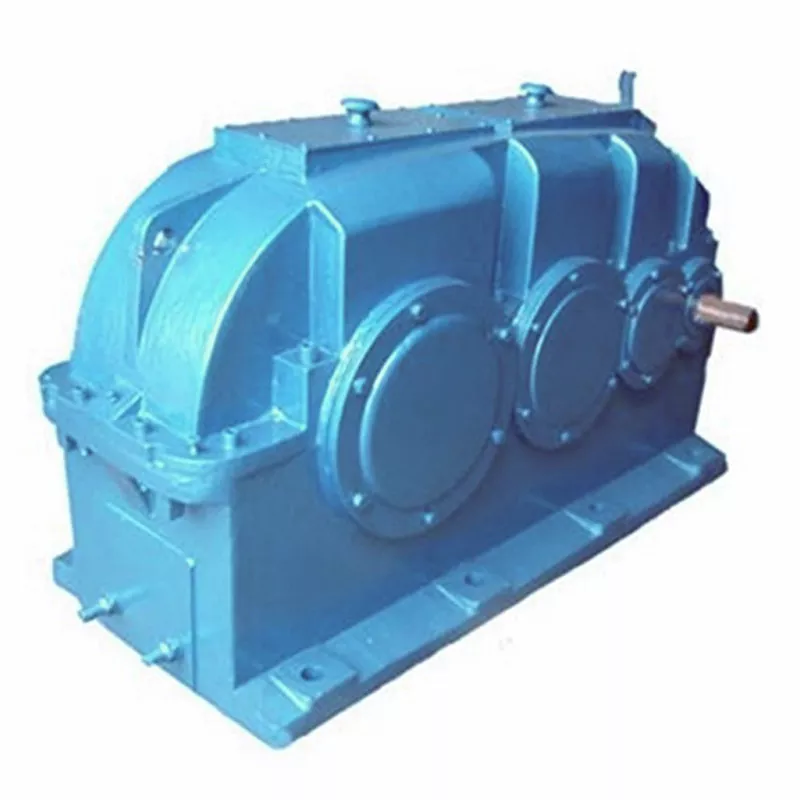
How do gear reducers contribute to speed reduction and torque increase?
Gear reducers play a crucial role in mechanical systems by achieving speed reduction and torque increase through the principle of gear ratios. Here’s how they work:
Gear reducers consist of multiple gears with different sizes, known as gear pairs. These gears are meshed together, and their teeth interlock to transmit motion and power. The gear ratio is determined by the ratio of the number of teeth on the input gear (driver) to the number of teeth on the output gear (driven).
Speed Reduction: When a larger gear (output gear) is driven by a smaller gear (input gear), the output gear rotates at a slower speed than the input gear. This reduction in speed is proportional to the gear ratio. As a result, gear reducers are used to slow down the rotational speed of the output shaft compared to the input shaft.
Torque Increase: The interlocking teeth of gears create a mechanical advantage that allows gear reducers to increase torque output. When the input gear applies a force (torque) to the teeth, it is transmitted to the output gear with greater force due to the leverage provided by the larger diameter of the output gear. The torque increase is inversely proportional to the gear ratio and is essential for applications requiring high torque at lower speeds.
By selecting appropriate gear ratios and arranging gear pairs, gear reducers can achieve various speed reduction and torque multiplication factors, making them essential components in machinery and equipment where precise control of speed and torque is necessary.


editor by CX 2024-01-31