Penerangan Produk
WP series Helical 1 50 ratio speed reducer gearbox Worm Gear Speed Reducer
Components:
1. Housing: Cast Iron
2. Gears: Worm Gears, 1 stage
3. Input Configurations:
Solid Input Shaft
Motor Flange – IEC B5
4. Output Configurations:
Solid Output Shaft
Hollow Output Shaft
Features:
1. Different variants, both input and output shafts can be mounted horizontally or vertically
2. Compact structure
3. Direct drive or indirect drive available
4. Output could be CHINAMFG shaft or hollow hole
Models & Variants:
WPA Series – Lower Input Shaft
WPS Series – Upper Input Shaft
WPDA Series – Lower Input Flange
WPDS Series – Upper Input Flange.
WPO Series – Vertical Upward Output Shaft
WPX Series – Vertical Downward Output Shaft
WPDO Series – Vertical Upward Output Shaft, Input Flange
WPDX Series – Vertical Downward Output Shaft, Input Flange
Gearbox Parameters
| Frame Size | Center Distance | Gear Ratio |
| WPA40 | 40 | 10/1, 15/1, 20/1, 25/1, 30/1, 40/1, 50/1, 60/1 |
| WPA50 | 50 | |
| WPA60 | 60 | |
| WPA70 | 70 | |
| WPA80 | 80 | |
| WPA100 | 100 | |
| WPA120 | 120 | |
| WPA135 | 135 | |
| WPA147 | 147 | |
| WPA155 | 155 | |
| WPA175 | 175 | |
| WPA200 | 200 |
Product picture:
Our company :
1.More than 35 years experience in R&D and manufacturing, export gear motors & industrial gearboxes.
2. Standardization of the gearbox series
3. Strong design capability for large power & customized gearboxes.
4.High quality gearboxes and proven solutions provider.
5.Strict quality control process, stable quality.
6 Less than 2% of the quality complaints.
7.Modular design, short delivery time.
8.Quick response & professional services.
Customer visiting:
Our Services:
| Pre-sale services | 1. Select equipment model. |
| 2.Design and manufacture products according to clients’ special requirement. | |
| 3.Train technical personal for clients | |
| Services during selling | 1.Pre-check and accept products ahead of delivery. |
| 2. Help clients to draft solving plans. | |
| After-sale services | 1.Assist clients to prepare for the first construction scheme. |
| 2. Train the first-line operators. | |
| 3.Take initiative to eliminate the trouble rapidly. | |
| 4. Provide technical exchanging. |
Soalan Lazim:
1.Q:What kinds of gearbox can you produce for us?
A:Main products of our company: UDL series speed variator,RV series worm gear reducer, ATA series shaft mounted gearbox, X,B series gear reducer,
P series planetary gearbox and R, S, K, and F series helical-tooth reducer, more
than 1 hundred models and thousands of specifications
2.Q:Can you make as per custom drawing?
A: Yes, we offer customized service for customers.
3.Q:What is your terms of payment ?
A: 30% Advance payment by T/T after signing the contract.70% before delivery
4.Q:What is your MOQ?
A: 1 Set
If you have any demand for our products please feel free to contact me.
/* March 10, 2571 17:59:20 */!function(){function s(e,r){var a,o={};try{e&&e.split(“,”).forEach(function(e,t){e&&(a=e.match(/(.*?):(.*)$/))&&1
| Permohonan: | Machinery, Agricultural Machinery |
|---|---|
| Function: | Speed Changing, Speed Reduction |
| Susun atur: | Right Angle |
| Kekerasan: | Permukaan Gigi Mengeras |
| Pemasangan: | Jenis Mendatar |
| Langkah: | Satu Langkah |
| Penyesuaian: |
Tersedia
| Permintaan Tersuai |
|---|
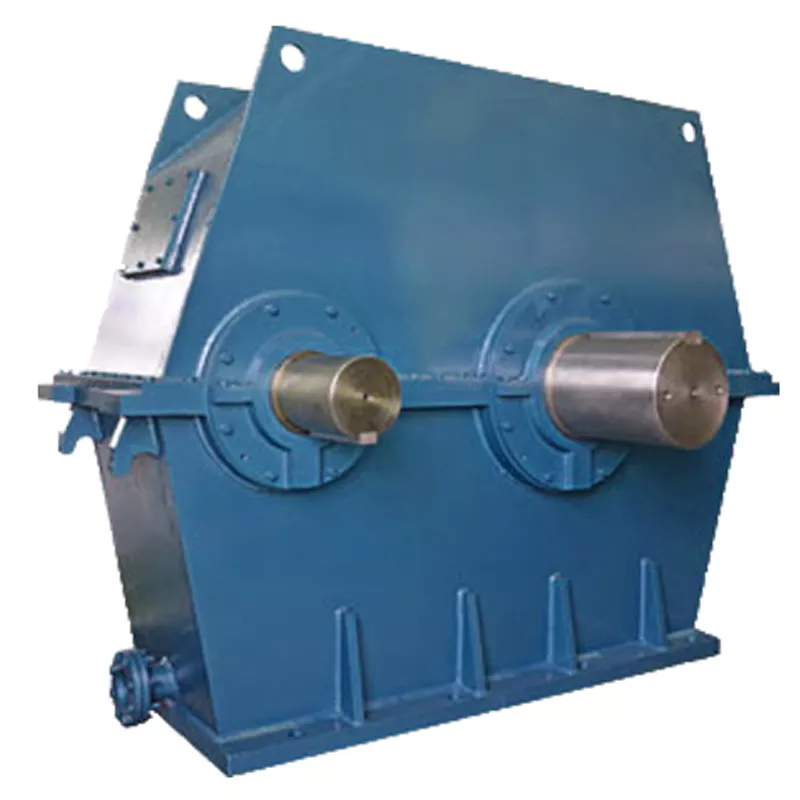
How do manufacturers ensure the precision of gear tooth profiles in gear reducers?
Manufacturers employ several techniques to ensure the precision of gear tooth profiles in gear reducers, which is crucial for optimal performance and efficiency:
1. Precision Machining: Gear teeth are typically machined using advanced CNC (Computer Numerical Control) machines that can achieve high levels of accuracy and repeatability. This ensures consistent gear tooth profiles across multiple components.
2. Quality Control Measures: Rigorous quality control processes, such as dimensional inspections and profile measurements, are performed at various stages of manufacturing to verify that gear tooth profiles meet the required specifications.
3. Tooth Profile Design: Engineers use specialized software and simulation tools to design gear tooth profiles with precise involute shapes and accurate dimensions. These designs are then translated into machine instructions for manufacturing.
4. Material Selection: High-quality materials with excellent wear resistance and dimensional stability are chosen to minimize the potential for deformation or inaccuracies during machining and operation.
5. Heat Treatment: Heat treatment processes, such as carburizing and quenching, are applied to enhance the surface hardness and durability of gear teeth, reducing the risk of wear and deformation over time.
6. Tooth Grinding and Finishing: After initial machining, gear teeth often undergo precision grinding and finishing processes to achieve the desired tooth profile accuracy and surface finish.
7. Post-Processing Inspection: Gear tooth profiles are inspected again after manufacturing processes to verify that the final components meet the specified tolerances and performance criteria.
8. Computer-Aided Manufacturing (CAM): CAM software is used to generate tool paths and machining instructions, enabling precise control over tool movements and material removal during gear manufacturing.
By combining these techniques and leveraging advanced manufacturing technologies, manufacturers can achieve the necessary precision in gear tooth profiles, resulting in reliable and efficient gear reducers for various industrial applications.
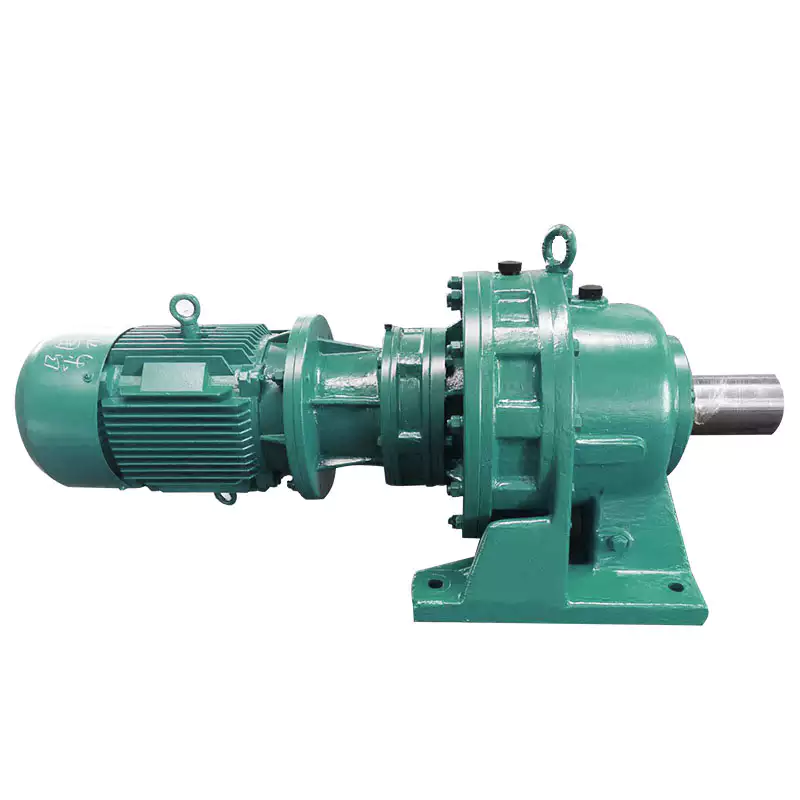
What role do gear ratios play in optimizing the performance of gear reducers?
Gear ratios play a crucial role in optimizing the performance of gear reducers by determining the relationship between input and output speeds and torques. A gear ratio is the ratio of the number of teeth between two meshing gears, and it directly influences the mechanical advantage and efficiency of the gear reducer.
1. Speed and Torque Conversion: Gear ratios allow gear reducers to convert rotational speed and torque according to the needs of a specific application. By selecting appropriate gear ratios, gear reducers can either reduce speed while increasing torque (speed reduction) or increase speed while decreasing torque (speed increase).
2. Mechanical Advantage: Gear reducers leverage gear ratios to provide mechanical advantage. In speed reduction configurations, a higher gear ratio results in a greater mechanical advantage, allowing the output shaft to deliver higher torque at a lower speed. This is beneficial for applications requiring increased force or torque, such as heavy machinery or conveyor systems.
3. Efficiency: Optimal gear ratios contribute to higher efficiency in gear reducers. By distributing the load across multiple gear teeth, gear reducers with suitable gear ratios minimize stress and wear on individual gear teeth, leading to improved overall efficiency and prolonged lifespan.
4. Speed Matching: Gear ratios enable gear reducers to match the rotational speeds of input and output shafts. This is crucial in applications where precise speed synchronization is required, such as in conveyors, robotics, and manufacturing processes.
When selecting gear ratios for a gear reducer, it’s important to consider the specific requirements of the application, including desired speed, torque, efficiency, and mechanical advantage. Properly chosen gear ratios enhance the overall performance and reliability of gear reducers in a wide range of industrial and mechanical systems.
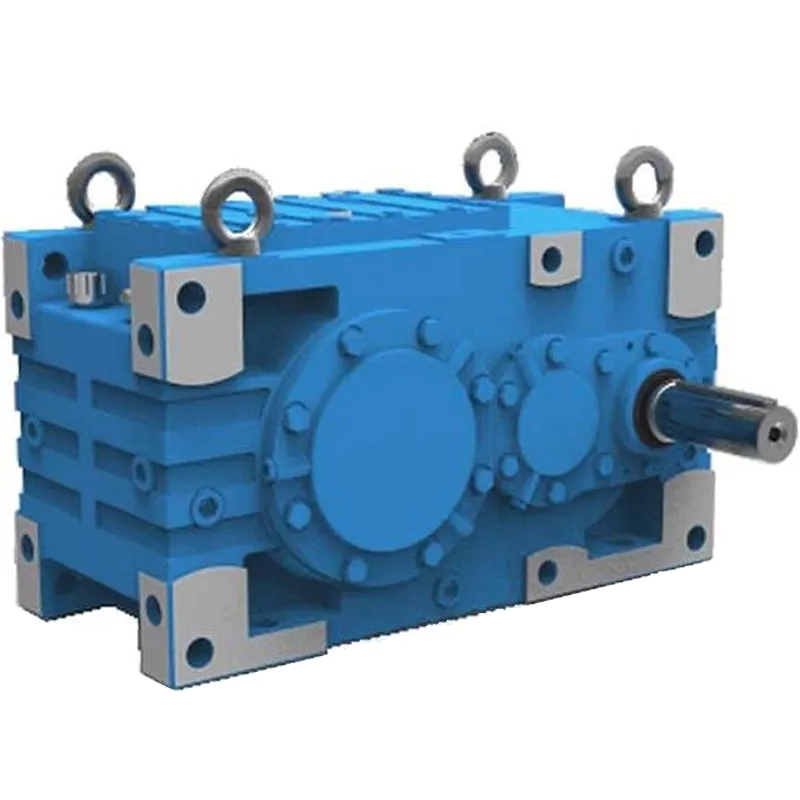
Bolehkah anda menerangkan pelbagai jenis pengurang gear yang terdapat di pasaran?
Terdapat beberapa jenis pengurang gear yang biasa digunakan dalam aplikasi industri:
1. Pengurang Gear Spur: Pengurang ini mempunyai gigi lurus dan kos efektif untuk aplikasi yang memerlukan tork sederhana dan pengurangan kelajuan. Mereka cekap tetapi mungkin menghasilkan lebih banyak bunyi berbanding jenis lain.
2. Pengurang Gear Heliks: Gear heliks mempunyai gigi bersudut, yang memberikan operasi yang lebih lancar dan lebih senyap berbanding dengan gear taji. Ia menawarkan kapasiti tork yang lebih tinggi dan sesuai untuk aplikasi tugas berat.
3. Pengurang Gear Serong: Gear serong mempunyai bentuk kon dan bersilang pada sudut, membolehkan mereka menghantar kuasa antara aci tidak selari. Ia biasanya digunakan dalam aplikasi di mana aci bersilang pada 90 darjah.
4. Pengurang Gear Cacing: Gear cacing terdiri daripada cacing (skru) dan alat mengawan (roda cacing). Ia menawarkan pengurangan tork yang tinggi dan digunakan untuk aplikasi yang memerlukan nisbah tinggi, walaupun ia boleh menjadi kurang cekap.
5. Pengurang Gear Planet: Pengurang ini menggunakan sistem gear planet untuk mencapai output tork yang tinggi dalam reka bentuk yang padat. Ia memberikan pendaraban tork yang sangat baik dan biasanya digunakan dalam robotik dan automasi.
6. Pengurang Gear Sikloid: Pemacu sikloidal menggunakan sesondol sipi untuk mencapai pengurangan kelajuan. Mereka menawarkan rintangan beban kejutan yang tinggi dan sesuai untuk aplikasi dengan permulaan dan berhenti yang kerap.
7. Pengurang Pemacu Harmonik: Pemacu harmonik menggunakan spline yang fleksibel untuk mencapai nisbah pengurangan gear yang tinggi. Ia memberikan ketepatan yang tinggi dan biasanya digunakan dalam aplikasi yang memerlukan kedudukan yang tepat.
8. Pengurang Gear Hypoid: Gear hipoid mempunyai gigi heliks dan aci tidak bersilang, menjadikannya sesuai untuk aplikasi dengan had ruang. Mereka menawarkan tork dan kecekapan yang tinggi.
Setiap jenis pengurang gear mempunyai kelebihan dan batasannya sendiri, dan pilihannya bergantung pada faktor seperti keperluan tork, nisbah kelajuan, tahap hingar, kekangan ruang dan keperluan khusus aplikasi.


editor by CX 2024-02-22