Productomschrijving
NYQ series cooling tower gear reducer especially suitable for cooling towers of central air-conditioning
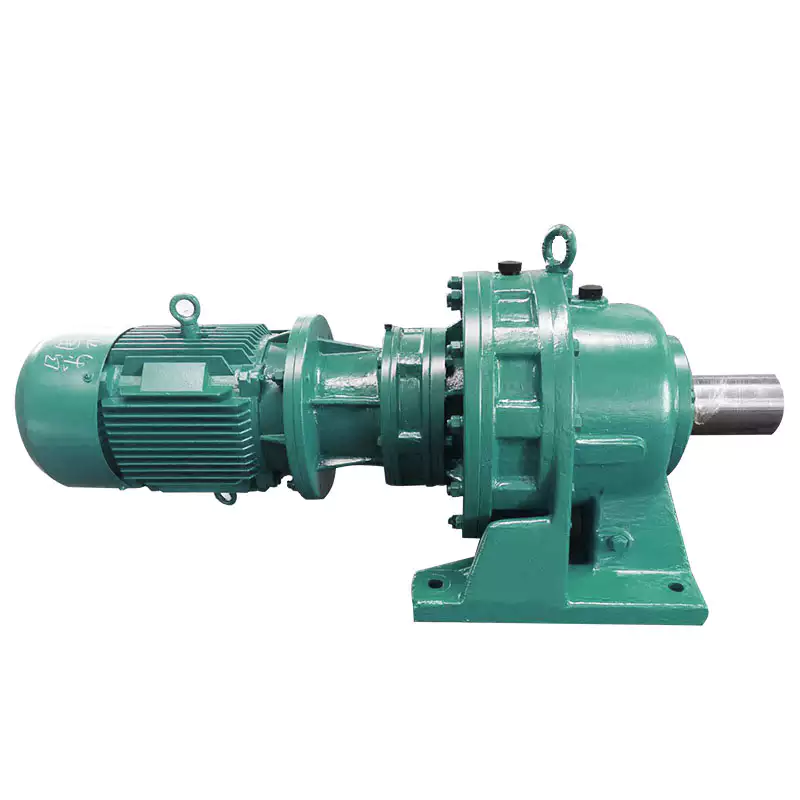
NYQ series cooling tower gear reducer is a patented product, screw drive mode, power range 4KW-22KW, especially suitable for cooling towers and air coolers of central air-conditioning requiring higher fan speed, low noise, maintenance-free, high efficiency, easy to install, spiral gear drive reducer.
MODEL DESCRIPTION
FEATURES
– High operating reliability, no need to adjust the belt tension, completely solve the maintenance work caused by belt slippage
– High transmission efficiency, completely solve the power loss caused by belt slippage, and air output of the fan is guaranteed
– Convenient installation: the gear box is an integrated structure, which makes installation easier and more convenient, reduces installation requirements and reduces installation labor costs.
NYQ SERIES GEAR REDUCER SPECIFICATION
NYQ with model 132 and 160 types, motor is matched with the reducer or we only supply the reducer without motor.
INSTALLATION
NYQ series gear reducer is simpler installation, reliable transmission, more saving overall cost, better efficient cooling effect than traditional transmission method, it is easy installation and maintenance.
Shipment picture
| Cooling Method: | Counter Flow or Cross Flow |
|---|---|
| Ventilation Mode: | Mechanical Ventilation |
| Air Contact Form: | Wet |
| Air Contact Way: | Open |
| Tower Shape: | Square |
| Noise Level: | Ordinary |
| Aanpassing: |
Beschikbaar
| Custo What role do gear ratios play in optimizing the performance of gear reducers?Gear ratios play a crucial role in optimizing the performance of gear reducers by determining the relationship between input and output speeds and torques. A gear ratio is the ratio of the number of teeth between two meshing gears, and it directly influences the mechanical advantage and efficiency of the gear reducer. 1. Speed and Torque Conversion: Gear ratios allow gear reducers to convert rotational speed and torque according to the needs of a specific application. By selecting appropriate gear ratios, gear reducers can either reduce speed while increasing torque (speed reduction) or increase speed while decreasing torque (speed increase). 2. Mechanical Advantage: Gear reducers leverage gear ratios to provide mechanical advantage. In speed reduction configurations, a higher gear ratio results in a greater mechanical advantage, allowing the output shaft to deliver higher torque at a lower speed. This is beneficial for applications requiring increased force or torque, such as heavy machinery or conveyor systems. 3. Efficiency: Optimal gear ratios contribute to higher efficiency in gear reducers. By distributing the load across multiple gear teeth, gear reducers with suitable gear ratios minimize stress and wear on individual gear teeth, leading to improved overall efficiency and prolonged lifespan. 4. Speed Matching: Gear ratios enable gear reducers to match the rotational speeds of input and output shafts. This is crucial in applications where precise speed synchronization is required, such as in conveyors, robotics, and manufacturing processes. When selecting gear ratios for a gear reducer, it’s important to consider the specific requirements of the application, including desired speed, torque, efficiency, and mechanical advantage. Properly chosen gear ratios enhance the overall performance and reliability of gear reducers in a wide range of industrial and mechanical systems. mized Request |
|---|
Kunt u praktijkvoorbeelden geven van producten die gebruikmaken van tandwielkasttechnologie?
Zeker! Tandwielreductortechnologie wordt veel gebruikt in diverse industrieën en producten om de prestaties en efficiëntie te verbeteren. Hier zijn enkele praktijkvoorbeelden:
1. Industriële machines: Tandwielkasten worden veel gebruikt in productieapparatuur, zoals transportsystemen, apparatuur voor materiaalverwerking en assemblagelijnen. Ze helpen bij het regelen van de snelheid en het koppel voor nauwkeurige bewerkingen.
2. Windturbines: Windturbines maken gebruik van tandwielkasten om de lage rotatiesnelheid van de rotor van de windturbine om te zetten in de hogere snelheid die nodig is voor elektriciteitsopwekking. Zo wordt de energieomzetting geoptimaliseerd.
3. Autotransmissies: Auto's maken gebruik van tandwielkasten als onderdeel van hun transmissie om de vermogensoverdracht van de motor naar de wielen te optimaliseren. Hierdoor kan het voertuig efficiënt functioneren bij verschillende snelheden.
4. Robotica: Robotsystemen maken gebruik van tandwielkasten om de beweging en de articulatie van robotarmen te regelen. Hierdoor zijn nauwkeurige en gecontroleerde bewegingen voor diverse toepassingen mogelijk.
5. Drukpersen: Tandwielkasten zijn een integraal onderdeel van drukpersen en zorgen voor een nauwkeurige en gesynchroniseerde beweging van drukplaten, rollen en papierinvoermechanismen.
6. Transportbanden: Transportsystemen in sectoren als mijnbouw, landbouw en logistiek maken gebruik van tandwielkasten om de beweging van materialen langs de transportbanden te regelen.
7. Verpakkingsmachines: Tandwielkasten spelen een cruciale rol in verpakkingsmachines. Ze regelen de snelheid en de beweging van verpakkingsmaterialen, vulmechanismen en afdichtingscomponenten.
8. Kranen en takels: Kranen en hijswerktuigen zijn afhankelijk van tandwielkasten om zware lasten nauwkeurig en gecontroleerd te kunnen tillen. Zo wordt een veilige en efficiënte materiaalbehandeling gegarandeerd.
9. Pompen en compressoren: Tandwielkasten worden in pompen en compressoren gebruikt om de vloeistofstroom en -druk te regelen en zo het energieverbruik in vloeistoftransportsystemen te optimaliseren.
10. Landbouwmachines: Tractoren en andere landbouwmachines maken gebruik van tandwielkasten om de snelheid en het vermogen aan te passen voor verschillende taken, zoals ploegen, planten en oogsten.
Deze voorbeelden illustreren de uiteenlopende toepassingen van tandwielkasttechnologie in diverse industrieën en laten zien welke rol deze technologie speelt bij het verbeteren van de efficiëntie, besturing en prestaties in een breed scala aan producten en systemen.
What industries and machinery commonly utilize gear reducers?
Gear reducers are widely used across various industries and types of machinery for torque reduction and speed control. Some common industries and applications include:
- 1. Manufacturing: Gear reducers are used in manufacturing equipment such as conveyors, mixers, and packaging machines to control speed and transmit power efficiently.
- 2. Automotive: They are utilized in vehicles for applications like power transmission in transmissions and differentials.
- 3. Aerospace: Gear reducers are used in aircraft systems, including landing gear mechanisms and engine accessories.
- 4. Robotics and Automation: They play a crucial role in robotic arms, CNC machines, and automated production lines.
- 5. Mining and Construction: Gear reducers are used in heavy machinery like excavators, bulldozers, and crushers for power transmission and torque multiplication.
- 6. Energy and Power Generation: Wind turbines, hydroelectric generators, and other power generation equipment use gear reducers to convert rotational speed and transmit power.
- 7. Marine and Shipbuilding: They are used in ship propulsion systems, steering mechanisms, and anchor handling equipment.
- 8. Material Handling: Gear reducers are essential in conveyor systems, elevators, and hoists for controlled movement of materials.
- 9. Food and Beverage: They find applications in food processing equipment like mixers, grinders, and packaging machines.
- 10. Paper and Pulp: Gear reducers are used in machinery for pulp processing, paper production, and printing.
These examples represent just a fraction of the industries and machinery that benefit from the use of gear reducers to optimize power transmission and achieve the desired motion characteristics.


editor by CX 2023-08-31