Productomschrijving
Beschrijving
HGB series valve manual device adopts worm gear and worm drive pair.and high performance needle roller bearing is installed at both ends of the worm, with compact structure. At the same time, the requirement of thrust in the process of positive inversion is ensured, Large torque, high mechanical efficiency, small size, easy operation and reliable self locking.
Main Product features:
1.Precision casting aluminum alloy box
2.Specifications are optional.
3.Reliable thrust roller bearing
4.High strength steel input shaft with protection.
5.Stroke:0-90°(±5° degrees adjustable)
6.Built in grease to improve service life.
7.Adjustable mechanical limit.
8.Good seal
Connect With Valve
HGB series valve worm gear box and valve connection using flange connection mode, connection flange size conforms to EN ISO 5210 or DIN 3210 requirements, can also be customized according to customer requirements.
| Model | Connect With Ball Valve | Connect With Butterfly Valve |
| HGB-01 | DN25-40 | DN50-100 |
| HGB-02 | DN50-65 | DN125-DN150 |
| HGB-03 | DN80-100 | DN200-250 |
| HGB-04 | DN125-150 | DN300-DN350 |
1. Question:What is your main products?
Answer:Our main products are Pneumatic Actuators, Electric Actuators, Actuated Valves And Valve actuators Accessories..
2. Question:Are you a trader or manufacturer ?
Answer: We are the pneumatic actuators and electric actuators manufacturer , we have ability to do the customization products with experienced team, And we have own factory and production line.
3. Question:How do your make the quality guarantee for actuators?
Answer:We have our own quality control system for incoming and outgoing of the materials, every product will be under controlled and tested before delivery to our customer , and we also provide 18 months guarantee ,beside we provide technical supporting .
4. Question:When can I receive the Price of valve actuators ?
Answer:We will give the Quotation Within 24 hours after we get your inquiry .Or Your can call or message us if it’s quite urgently.
5. Question:How to order our pneumatic actuators and electric actuators ?
Answer:Please send us your inquiry by Email, , etc. we need to know the following informations before giving the formal Quotation.
1) Product information in details, Quantity, Other requirements
2) Delivery time required
6. Question:How can I get a sample to check your quality?
Answer:Contact with our sales expert to arrange the sample delivery. Please send us the details of the sample before placing the order.
7. Question:Shall we pay the sample cost and transportation cost ?
Answer:We will provide the sample by free of charge. Your will bear the freight cost.
8. Question:How long to prepare the sample ?
Answer:Most of our products are under regular production and some of them we keep in stocks.
9. Question:How to delivery the sample to our place?
Answer:Your can provide your forwarders contacts if any, or we will arrange it for you.
10. Question:What about the delivery date if we place the formal order ?
Answer:Usually it takes 15~20days on the production .We know that on-time delivery is very crucial to our customers to meet dead-lines.
We monitor and expedite our supply chain to ensure that we delivery our products to our customers on-time all the time.
| Sollicitatie: | Motor |
|---|---|
| Function: | Change Drive Direction, Speed Changing |
| Indeling: | Coaxiaal |
| Hardheid: | Soft Tooth Surface |
| Installatie: | Torque Arm Type |
| Stap: | Double-Step |
| Samples: |
US$ 40/Piece
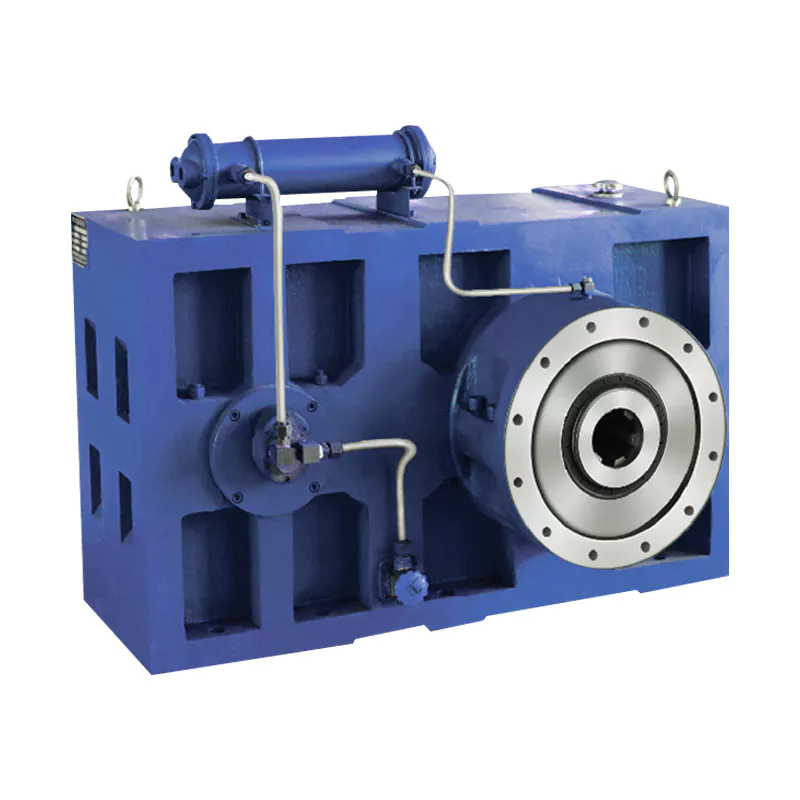
Kunt u praktijkvoorbeelden geven van producten die gebruikmaken van tandwielkasttechnologie?Zeker! Tandwielreductortechnologie wordt veel gebruikt in diverse industrieën en producten om de prestaties en efficiëntie te verbeteren. Hier zijn enkele praktijkvoorbeelden: 1. Industriële machines: Tandwielkasten worden veel gebruikt in productieapparatuur, zoals transportsystemen, apparatuur voor materiaalverwerking en assemblagelijnen. Ze helpen bij het regelen van de snelheid en het koppel voor nauwkeurige bewerkingen. 2. Windturbines: Windturbines maken gebruik van tandwielkasten om de lage rotatiesnelheid van de rotor van de windturbine om te zetten in de hogere snelheid die nodig is voor elektriciteitsopwekking. Zo wordt de energieomzetting geoptimaliseerd. 3. Autotransmissies: Auto's maken gebruik van tandwielkasten als onderdeel van hun transmissie om de vermogensoverdracht van de motor naar de wielen te optimaliseren. Hierdoor kan het voertuig efficiënt functioneren bij verschillende snelheden. 4. Robotica: Robotsystemen maken gebruik van tandwielkasten om de beweging en de articulatie van robotarmen te regelen. Hierdoor zijn nauwkeurige en gecontroleerde bewegingen voor diverse toepassingen mogelijk. 5. Drukpersen: Tandwielkasten zijn een integraal onderdeel van drukpersen en zorgen voor een nauwkeurige en gesynchroniseerde beweging van drukplaten, rollen en papierinvoermechanismen. 6. Transportbanden: Transportsystemen in sectoren als mijnbouw, landbouw en logistiek maken gebruik van tandwielkasten om de beweging van materialen langs de transportbanden te regelen. 7. Verpakkingsmachines: Tandwielkasten spelen een cruciale rol in verpakkingsmachines. Ze regelen de snelheid en de beweging van verpakkingsmaterialen, vulmechanismen en afdichtingscomponenten. 8. Kranen en takels: Kranen en hijswerktuigen zijn afhankelijk van tandwielkasten om zware lasten nauwkeurig en gecontroleerd te kunnen tillen. Zo wordt een veilige en efficiënte materiaalbehandeling gegarandeerd. 9. Pompen en compressoren: Tandwielkasten worden in pompen en compressoren gebruikt om de vloeistofstroom en -druk te regelen en zo het energieverbruik in vloeistoftransportsystemen te optimaliseren. 10. Landbouwmachines: Tractoren en andere landbouwmachines maken gebruik van tandwielkasten om de snelheid en het vermogen aan te passen voor verschillende taken, zoals ploegen, planten en oogsten. Deze voorbeelden illustreren de uiteenlopende toepassingen van tandwielkasttechnologie in diverse industrieën en laten zien welke rol deze technologie speelt bij het verbeteren van de efficiëntie, besturing en prestaties in een breed scala aan producten en systemen. 1 Piece(Min.Order) | |
|---|
| Aanpassing: |
Beschikbaar
| Aangepast verzoek |
|---|
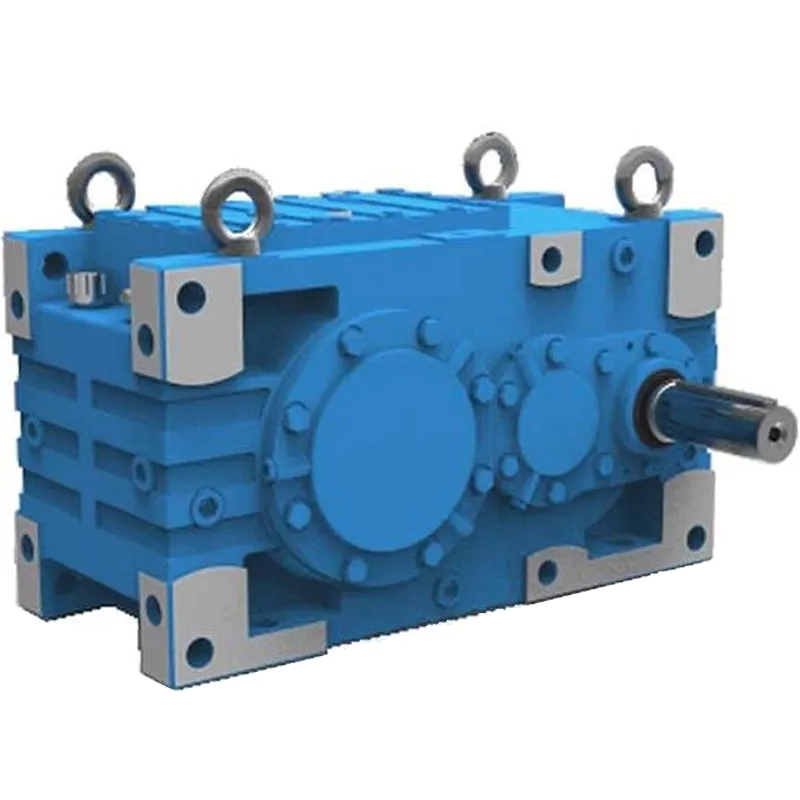
Can you explain the different types of gear reducers available in the market?
There are several types of gear reducers commonly used in industrial applications:
1. Spur Gear Reducers: These reducers have straight teeth and are cost-effective for applications requiring moderate torque and speed reduction. They are efficient but may produce more noise compared to other types.
2. Helical Gear Reducers: Helical gears have angled teeth, which provide smoother and quieter operation compared to spur gears. They offer higher torque capacities and are suitable for heavy-duty applications.
3. Bevel Gear Reducers: Bevel gears have conical shapes and intersect at an angle, allowing them to transmit power between non-parallel shafts. They are commonly used in applications where shafts intersect at 90 degrees.
4. Worm Gear Reducers: Worm gears consist of a worm (screw) and a mating gear (worm wheel). They offer high torque reduction and are used for applications requiring high ratios, although they can be less efficient.
5. Planetary Gear Reducers: These reducers use a system of planetary gears to achieve high torque output in a compact design. They provide excellent torque multiplication and are commonly used in robotics and automation.
6. Cycloidal Gear Reducers: Cycloidal drives use an eccentric cam to achieve speed reduction. They offer high shock load resistance and are suitable for applications with frequent starting and stopping.
7. Harmonic Drive Reducers: Harmonic drives use a flexible spline to achieve high gear reduction ratios. They provide high precision and are commonly used in applications requiring accurate positioning.
8. Hypoid Gear Reducers: Hypoid gears have helical teeth and non-intersecting shafts, making them suitable for applications with space limitations. They offer high torque and efficiency.
Each type of gear reducer has its own advantages and limitations, and the choice depends on factors such as torque requirements, speed ratios, noise levels, space constraints, and application-specific needs.


editor by CX 2023-09-01