Productomschrijving
Steel Cycloidal Robot Arm Gear Reducer
Model:150BX-RVE
More Code And Specification:
| E series | C series | ||||
| Code | Outline dimension | General model | Code | Outline dimension | The original code |
| 120 | Φ122 | 6E | 10C | Φ145 | 150 |
| 150 | Φ145 | 20E | 27C | Φ181 | 180 |
| 190 | Φ190 | 40E | 50C | Φ222 | 220 |
| 220 | Φ222 | 80E | 100C | Φ250 | 250 |
| 250 | Φ244 | 110E | 200C | Φ345 | 350 |
| 280 | Φ280 | 160E | 320C | Φ440 | 440 |
| 320 | Φ325 | 320E | 500C | Φ520 | 520 |
| 370 | Φ370 | 450E | |||
Gear ratio And Specification
| E Series | C Series | ||
| Code | Reductieverhouding | New code | Monomer reduction ratio |
| 120 | 43,53.5,59,79,103 | 10CBX | 27.00 |
| 150 | 81,105,121,141,161 | 27CBX | 36.57 |
| 190 | 81,105,121,153 | 50CBX | 32.54 |
| 220 | 81,101,121,153 | 100CBX | 36.75 |
| 250 | 81,111,161,175.28 | 200CBX | 34.86 |
| 280 | 81,101,129,145,171 | 320CBX | 35.61 |
| 320 | 81,101,118.5,129,141,171,185 | 500CBX | 37.34 |
| 370 | 81,101,118.5,129,154.8,171,192.4 | ||
| Note 1: E series,such as by the shell(pin shell)output,the corresponding reduction ratio by 1 | |||
| Note 2: C series gear ratio refers to the motor installed in the casing of the reduction ratio,if installed on the output flange side,the corresponding reduction ratio by 1 | |||
Reducer type code
REV: main bearing built-in E type
RVC: hollow type
REA: with input flange E type
RCA: with input flange hollow type
Sollicitatie:
Company Information
Veelgestelde vragen
Q: What’re your main products?
A: We currently produce Brushed Dc Motors, Brushed Dc Gear Motors, Planetary Dc Gear Motors, Brushless Dc Motors, Stepper motors, Ac Motors and High Precision Planetary Gear Box etc. You can check the specifications for above motors on our website and you can email us to recommend needed motors per your specification too.
Q: How to select a suitable motor?
A:If you have motor pictures or drawings to show us, or you have detailed specs like voltage, speed, torque, motor size, working mode of the motor, needed lifetime and noise level etc, please do not hesitate to let us know, then we can recommend suitable motor per your request accordingly.
Q: Do you have a customized service for your standard motors?
A: Yes, we can customize per your request for the voltage, speed, torque and shaft size/shape. If you need additional wires/cables soldered on the terminal or need to add connectors, or capacitors or EMC we can make it too.
Q: Do you have an individual design service for motors?
A: Yes, we would like to design motors individually for our customers, but it may need some mold developing cost and design charge.
Q: What’s your lead time?
A: Generally speaking, our regular standard product will need 15-30days, a bit longer for customized products. But we are very flexible on the lead time, it will depend on the specific orders.
Please contact us if you have detailed requests, thank you ! /* March 10, 2571 17:59:20 */!function(){function s(e,r){var a,o={};try{e&&e.split(“,”).forEach(function(e,t){e&&(a=e.match(/(.*?):(.*)$/))&&1
| Sollicitatie: | Machinery, Robotic |
|---|---|
| Hardheid: | Verhard tandoppervlak |
| Installatie: | Vertical Type |
| Indeling: | Coaxiaal |
| Tandwielvorm: | Cilindrische tandwiel |
| Stap: | Double-Step |
| Aanpassing: |
Beschikbaar
| Aangepast verzoek |
|---|
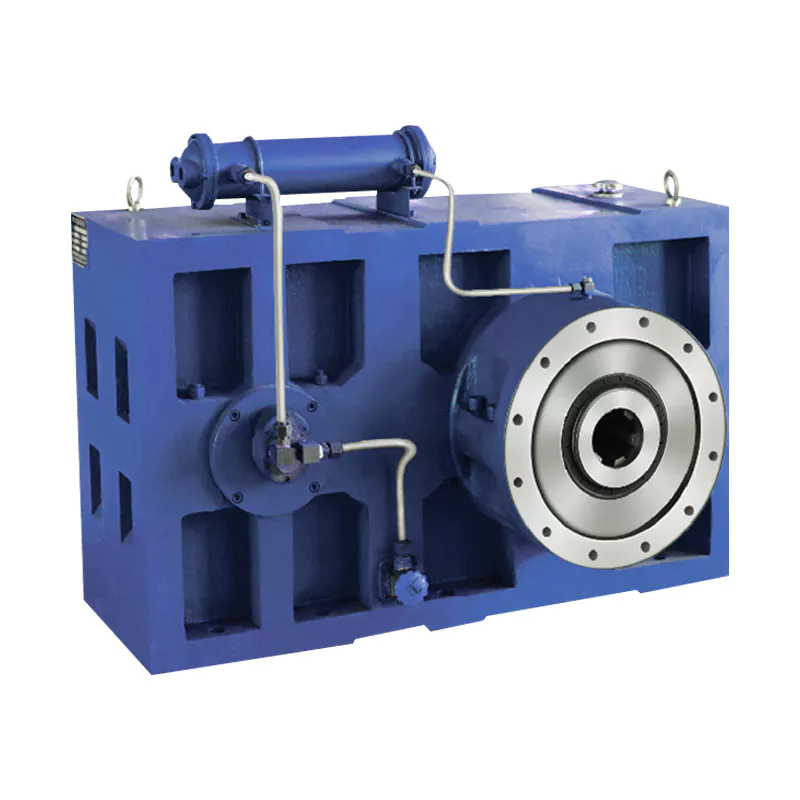
Kunt u praktijkvoorbeelden geven van producten die gebruikmaken van tandwielkasttechnologie?
Zeker! Tandwielreductortechnologie wordt veel gebruikt in diverse industrieën en producten om de prestaties en efficiëntie te verbeteren. Hier zijn enkele praktijkvoorbeelden:
1. Industriële machines: Tandwielkasten worden veel gebruikt in productieapparatuur, zoals transportsystemen, apparatuur voor materiaalverwerking en assemblagelijnen. Ze helpen bij het regelen van de snelheid en het koppel voor nauwkeurige bewerkingen.
2. Windturbines: Windturbines maken gebruik van tandwielkasten om de lage rotatiesnelheid van de rotor van de windturbine om te zetten in de hogere snelheid die nodig is voor elektriciteitsopwekking. Zo wordt de energieomzetting geoptimaliseerd.
3. Autotransmissies: Auto's maken gebruik van tandwielkasten als onderdeel van hun transmissie om de vermogensoverdracht van de motor naar de wielen te optimaliseren. Hierdoor kan het voertuig efficiënt functioneren bij verschillende snelheden.
4. Robotica: Robotsystemen maken gebruik van tandwielkasten om de beweging en de articulatie van robotarmen te regelen. Hierdoor zijn nauwkeurige en gecontroleerde bewegingen voor diverse toepassingen mogelijk.
5. Drukpersen: Tandwielkasten zijn een integraal onderdeel van drukpersen en zorgen voor een nauwkeurige en gesynchroniseerde beweging van drukplaten, rollen en papierinvoermechanismen.
6. Transportbanden: Transportsystemen in sectoren als mijnbouw, landbouw en logistiek maken gebruik van tandwielkasten om de beweging van materialen langs de transportbanden te regelen.
7. Verpakkingsmachines: Tandwielkasten spelen een cruciale rol in verpakkingsmachines. Ze regelen de snelheid en de beweging van verpakkingsmaterialen, vulmechanismen en afdichtingscomponenten.
8. Kranen en takels: Kranen en hijswerktuigen zijn afhankelijk van tandwielkasten om zware lasten nauwkeurig en gecontroleerd te kunnen tillen. Zo wordt een veilige en efficiënte materiaalbehandeling gegarandeerd.
9. Pompen en compressoren: Tandwielkasten worden in pompen en compressoren gebruikt om de vloeistofstroom en -druk te regelen en zo het energieverbruik in vloeistoftransportsystemen te optimaliseren.
10. Landbouwmachines: Tractoren en andere landbouwmachines maken gebruik van tandwielkasten om de snelheid en het vermogen aan te passen voor verschillende taken, zoals ploegen, planten en oogsten.
Deze voorbeelden illustreren de uiteenlopende toepassingen van tandwielkasttechnologie in diverse industrieën en laten zien welke rol deze technologie speelt bij het verbeteren van de efficiëntie, besturing en prestaties in een breed scala aan producten en systemen.
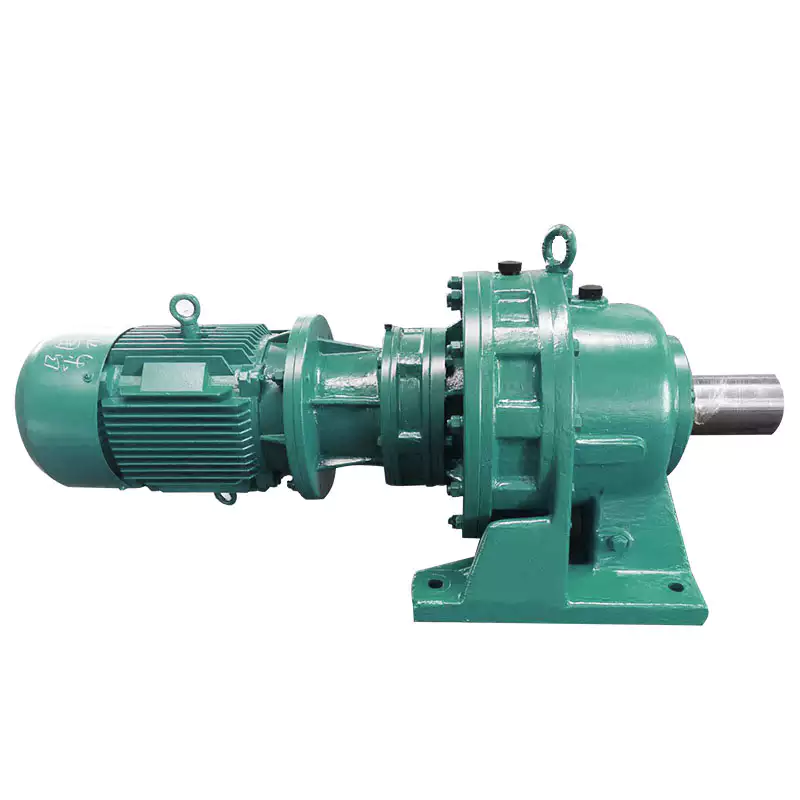
What role do gear ratios play in optimizing the performance of gear reducers?
Gear ratios play a crucial role in optimizing the performance of gear reducers by determining the relationship between input and output speeds and torques. A gear ratio is the ratio of the number of teeth between two meshing gears, and it directly influences the mechanical advantage and efficiency of the gear reducer.
1. Speed and Torque Conversion: Gear ratios allow gear reducers to convert rotational speed and torque according to the needs of a specific application. By selecting appropriate gear ratios, gear reducers can either reduce speed while increasing torque (speed reduction) or increase speed while decreasing torque (speed increase).
2. Mechanical Advantage: Gear reducers leverage gear ratios to provide mechanical advantage. In speed reduction configurations, a higher gear ratio results in a greater mechanical advantage, allowing the output shaft to deliver higher torque at a lower speed. This is beneficial for applications requiring increased force or torque, such as heavy machinery or conveyor systems.
3. Efficiency: Optimal gear ratios contribute to higher efficiency in gear reducers. By distributing the load across multiple gear teeth, gear reducers with suitable gear ratios minimize stress and wear on individual gear teeth, leading to improved overall efficiency and prolonged lifespan.
4. Speed Matching: Gear ratios enable gear reducers to match the rotational speeds of input and output shafts. This is crucial in applications where precise speed synchronization is required, such as in conveyors, robotics, and manufacturing processes.
When selecting gear ratios for a gear reducer, it’s important to consider the specific requirements of the application, including desired speed, torque, efficiency, and mechanical advantage. Properly chosen gear ratios enhance the overall performance and reliability of gear reducers in a wide range of industrial and mechanical systems.
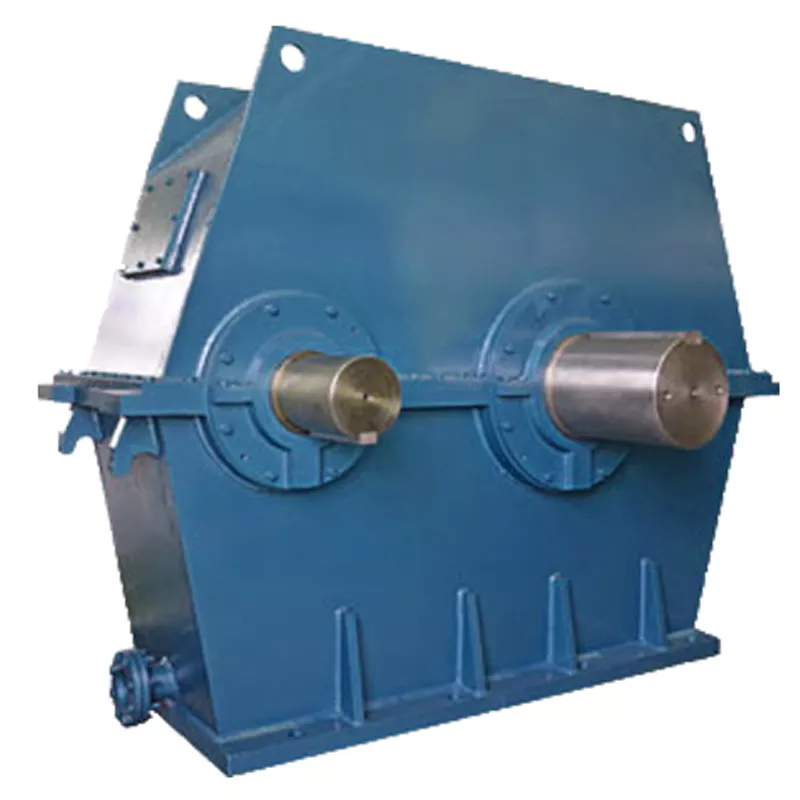
Function of Gear Reducers in Mechanical Systems
A gear reducer, also known as a gear reduction unit or gearbox, is a mechanical device designed to reduce the speed of an input shaft while increasing its torque output. It accomplishes this through the use of a set of interlocking gears with different sizes.
The primary function of a gear reducer in mechanical systems is to:
- Speed Reduction: The gear reducer takes the high-speed rotation of the input shaft and transmits it to the output shaft through a set of gears. The gears are configured in such a way that the output gear has a larger diameter than the input gear. As a result, the output shaft rotates at a lower speed than the input shaft, but with increased torque.
- Torque Increase: Due to the size difference between the input and output gears, the torque applied to the output shaft is greater than that of the input shaft. This torque multiplication allows the system to handle heavier loads and perform tasks requiring higher force.
Gear reducers are widely used in various industries and applications where it’s necessary to adapt the speed and torque characteristics of a power source to meet the requirements of the driven equipment. They can be found in machinery such as conveyor systems, industrial machinery, vehicles, and more.


editor by CX 2024-02-16