Опис производа
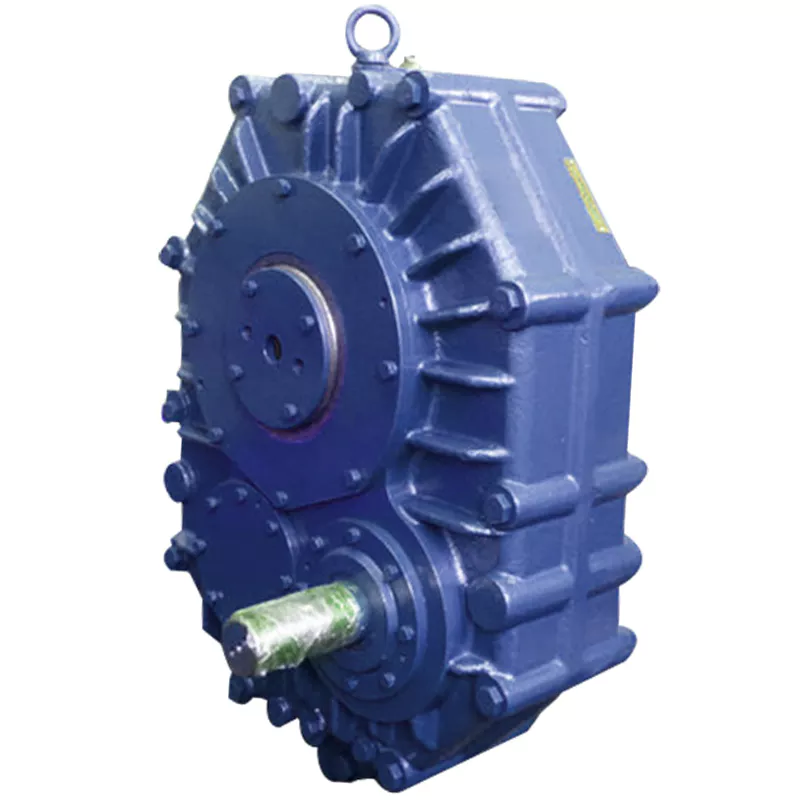
WP Worm Gear Reducer
Product Description:
Introducing our WP Worm Gear Reducer, a precision-engineered marvel that combines efficiency, durability, and versatility to meet the demands of various industrial applications. This high-performance gear reducer is designed to optimize power transmission and enhance the functionality of your machinery.
Key Features:
Efficient Power Transmission: The WP Worm Gear Reducer ensures efficient power transfer, making it an ideal choice for applications that require high torque and low speed.
Durable Construction: Crafted with the finest materials and precision engineering, this gear reducer is built to withstand heavy loads, ensuring long-lasting performance even in the most demanding environments.
Versatile Application: Our WP Worm Gear Reducer is adaptable to a wide range of industries, including manufacturing, robotics, agriculture, and more. It can be seamlessly integrated into your existing machinery for enhanced performance.
Smooth Operation: The worm gear design minimizes noise and provides a smooth, vibration-free operation, reducing wear and tear on your equipment.
Compact Design: Its compact and space-saving design allows for easy installation in constrained spaces, optimizing your workspace.
Customizable Options: We offer a variety of configurations, including different gear ratios and mounting options, to tailor the WP Worm Gear Reducer to your specific needs.
Low Maintenance: With minimal maintenance requirements, this gear reducer saves you time and resources, allowing you to focus on your core operations.
Applications:
Conveyor Systems
Material Handling Equipment
Packaging Machinery
Industrial Automation
Agricultural Equipment
Printing and Textile Machinery
And many more!
Whether you’re looking to enhance the efficiency of your manufacturing line or improve the performance of your agricultural equipment, the WP Worm Gear Reducer is the reliable choice for achieving your goals. Invest in quality and precision – choose the WP Worm Gear Reducer for your industrial needs.
| Примена: | Motor, Electric Cars, Motorcycle, Machinery, Marine, Toy, Agricultural Machinery, Car |
|---|---|
| Функција: | Distribution Power, Clutch, Change Drive Torque, Change Drive Direction, Speed Changing, Speed Reduction, Speed Increase |
| Распоред: | Coaxial |
| Тврдоћа: | Очвршћена површина зуба |
| Инсталација: | Хоризонтални тип |
| Корак: | Три корака |
| Узорци: |
US$ 100/Piece
1 комад (минимална поруџбина) | |
|---|
Are there any disadvantages or limitations to using gear reducer systems?
While gear reducer systems offer numerous advantages, they also come with certain disadvantages and limitations that should be considered during the selection and implementation process:
1. Size and Weight: Gear reducers can be bulky and heavy, especially for applications requiring high gear ratios. This can impact the overall size and weight of the machinery or equipment, which may be a concern in space-constrained environments.
2. Efficiency Loss: Despite their high efficiency, gear reducers can experience energy losses due to friction between gear teeth and other components. This can lead to a reduction in overall system efficiency, particularly in cases where multiple gear stages are used.
3. Cost: The design, manufacturing, and assembly of gear reducers can involve complex processes and precision machining, which can contribute to higher initial costs compared to other power transmission solutions.
4. Maintenance: Gear reducer systems require regular maintenance, including lubrication, inspection, and potential gear replacement over time. Maintenance activities can lead to downtime and associated costs in industrial settings.
5. Noise and Vibration: Gear reducers can generate noise and vibrations, especially at high speeds or when operating under heavy loads. Additional measures may be needed to mitigate noise and vibration issues.
6. Limited Gear Ratios: While gear reducers offer a wide range of gear ratios, there may be limitations in achieving extremely high or low ratios in certain designs.
7. Temperature Sensitivity: Extreme temperatures can affect the performance of gear reducer systems, particularly if inadequate lubrication or cooling is provided.
8. Shock Loads: While gear reducers are designed to handle shock loads to some extent, severe shock loads or abrupt changes in torque can still lead to potential damage or premature wear.
Despite these limitations, gear reducer systems remain widely used and versatile components in various industries, and their disadvantages can often be mitigated through proper design, selection, and maintenance practices.
Да ли се редуктори зупчаника могу користити и за смањење и за повећање брзине?
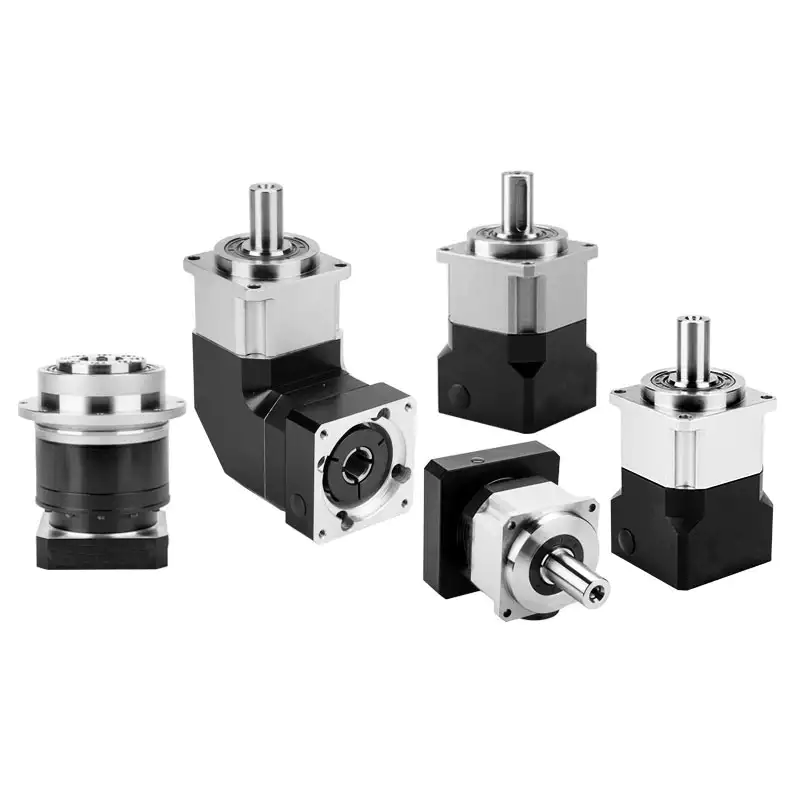
Да, редуктори зупчаника могу се користити и за смањење и за повећање брзине, у зависности од њиховог дизајна и распореда. Функционалност смањења или повећања брзине ротације постиже се променом распореда зупчаника унутар мењача.
1. Смањење брзине: У применама за смањење брзине, редуктор са зупчаницима је пројектован са зупчаницима различитих величина. Улазна осовина је повезана са већим зупчаником, док је излазна осовина повезана са мањим зупчаником. Како се улазна осовина окреће, већи зупчаник окреће мањи зупчаник, што резултира смањењем излазне брзине у поређењу са улазном брзином. Ова конфигурација обезбеђује већи излазни обртни момент при нижој брзини, што је чини погодном за примене које захтевају повећану силу или обртни момент.
2. Повећање брзине: За повећање брзине, распоред зупчаника је обрнут. Улазно вратило је повезано са мањим зупчаником, док је излазно вратило повезано са већим зупчаником. Како се улазно вратило окреће, мањи зупчаник покреће већи зупчаник, што резултира повећањем излазне брзине у поређењу са улазном брзином. Међутим, излазни обртни момент је мањи него код конфигурација са смањењем брзине.
Избором одговарајућих преносних односа и распореда, редуктори зупчаника могу се прилагодити специфичним захтевима брзине и обртног момента за различите индустријске примене. Важно је одабрати прави тип редуктора зупчаника и правилно га конфигурисати како би се постигло жељено смањење или повећање брзине.
Can you explain the different types of gear reducers available in the market?
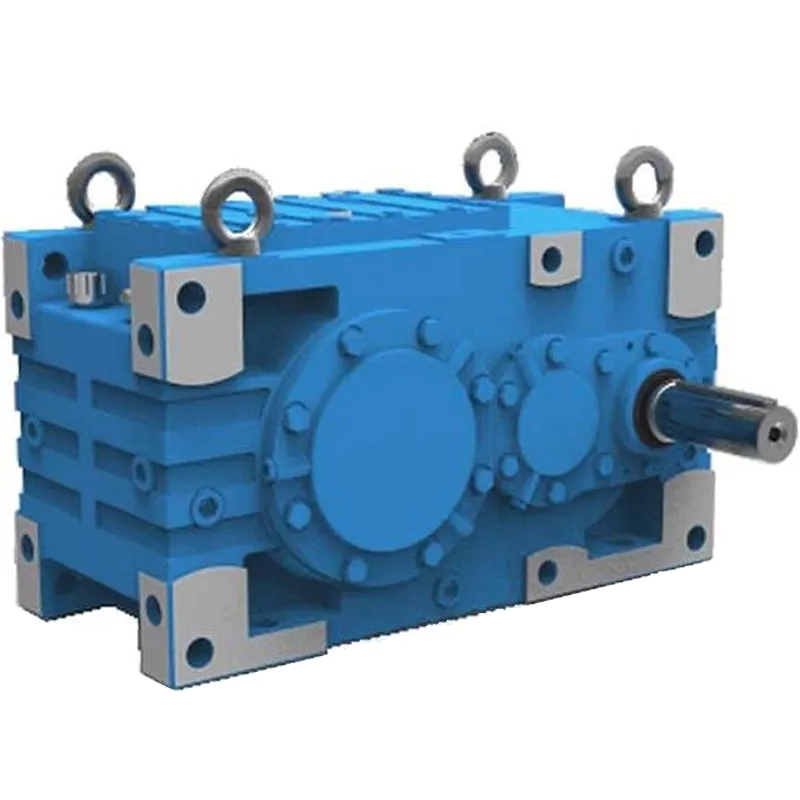
There are several types of gear reducers commonly used in industrial applications:
1. Spur Gear Reducers: These reducers have straight teeth and are cost-effective for applications requiring moderate torque and speed reduction. They are efficient but may produce more noise compared to other types.
2. Helical Gear Reducers: Helical gears have angled teeth, which provide smoother and quieter operation compared to spur gears. They offer higher torque capacities and are suitable for heavy-duty applications.
3. Bevel Gear Reducers: Bevel gears have conical shapes and intersect at an angle, allowing them to transmit power between non-parallel shafts. They are commonly used in applications where shafts intersect at 90 degrees.
4. Worm Gear Reducers: Worm gears consist of a worm (screw) and a mating gear (worm wheel). They offer high torque reduction and are used for applications requiring high ratios, although they can be less efficient.
5. Planetary Gear Reducers: These reducers use a system of planetary gears to achieve high torque output in a compact design. They provide excellent torque multiplication and are commonly used in robotics and automation.
6. Cycloidal Gear Reducers: Cycloidal drives use an eccentric cam to achieve speed reduction. They offer high shock load resistance and are suitable for applications with frequent starting and stopping.
7. Harmonic Drive Reducers: Harmonic drives use a flexible spline to achieve high gear reduction ratios. They provide high precision and are commonly used in applications requiring accurate positioning.
8. Hypoid Gear Reducers: Hypoid gears have helical teeth and non-intersecting shafts, making them suitable for applications with space limitations. They offer high torque and efficiency.
Each type of gear reducer has its own advantages and limitations, and the choice depends on factors such as torque requirements, speed ratios, noise levels, space constraints, and application-specific needs.


editor by CX 2023-11-28