Ürün Açıklaması
Products Description
Product Paramenters
| MODEL | FLE28 | Reduction ratio | Number of stage | |
| Nominal Output Torque | N.m | 4 | 3.71 | L1 |
| 4 | 5.18 | |||
| 6 | 13.70 | L2 | ||
| 6 | 19.20 | |||
| 6 | 27.00 | |||
| 6 | 51.00 | L3 | ||
| 6 | 71.00 | |||
| 6 | 99.00 | |||
| 6 | 139.00 | |||
| Sudden Stop Torque | N.m | 2 times of nominal output torque | ||
| Nominal Input Speed | devir/dakika | 1000 | ||
| Max Input Speed | devir/dakika | 2000 | ||
| Max Radial Load | N | 160 | ||
| Max Axial Load | N | 60 | ||
| Yeterlik | % | 90 | L1 | |
| 81 | L2 | |||
| 73 | L3 | |||
| Tepki | yay dakikası | ≤60 | L1 | |
| ≤75 | L2 | |||
| ≤90 | L3 | |||
| Gürültü | dB | ≤60 | ||
| Protection Level | IP | 54 | ||
| Life Span | h | 20000 | ||
| Working Temp. | C° | -20°~+150° | ||
| Lubrication Method | Permanent Lubrication | |||
| Ağırlık | kg | ≈0.18 | FLE28-L1 | |
| ≈0.20 | FLE28-L2 | |||
| ≈0.25 | FLE28-L3 | |||
Şirket Profili
Certifications
Exhibition
Product packaging
| Başvuru: | Motor, Electric Cars, Motorcycle, Machinery, Marine, Toy, Agricultural Machinery |
|---|---|
| İşlev: | Distribution Power, Clutch, Change Drive Torque, Change Drive Direction, Speed Changing, Speed Reduction, Speed Increase |
| Düzen: | Planetary Reducer |
| Sertlik: | Sertleştirilmiş Diş Yüzeyi |
| Kurulum: | Dikey Tip |
| Adım: | Four-Step |
| Özelleştirme: |
Mevcut
| Özelleştirilmiş İstek |
|---|
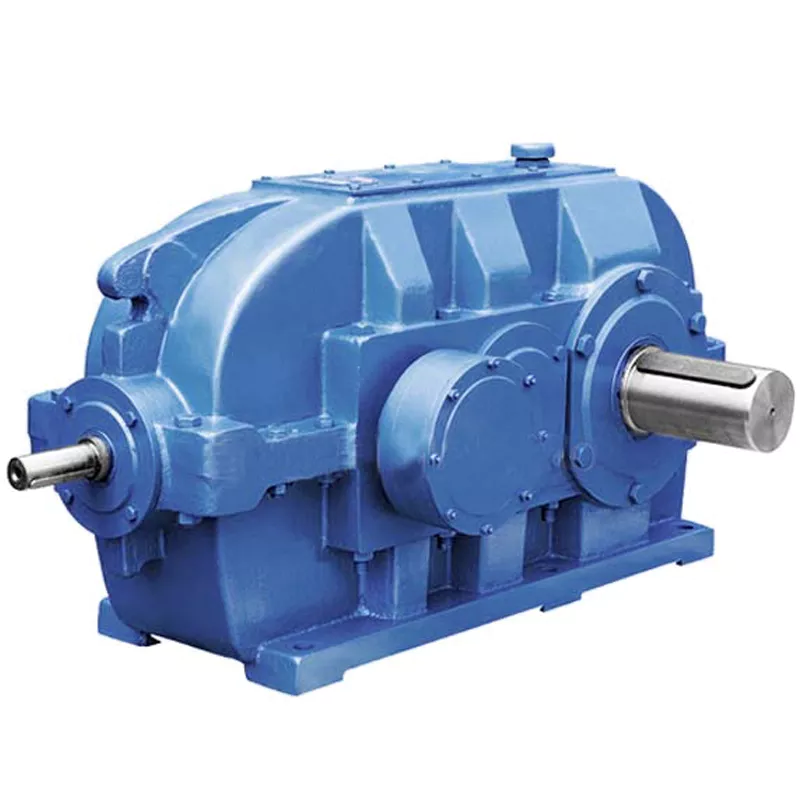
Dişli redüktörler konveyör sistemleri ve robotiklerin verimliliğini nasıl artırır?
Dişli redüktörler, hız, tork ve kontrolü optimize ederek hem konveyör sistemlerinin hem de robotik sistemlerin verimliliğini artırmada önemli bir rol oynar. İşte nasıl katkıda bulundukları:
Konveyör Sistemleri:
Konveyör sistemlerinde dişli redüktörler aşağıdaki şekillerde verimliliği artırır:
- Hız Kontrolü: Dişli redüktörler, konveyör bantlarının dönüş hızı üzerinde hassas kontrol sağlayarak, malzemelerin verimli üretim süreçleri için istenen hızda taşınmasını sağlar.
- Tork Ayarı: Dişli redüktörleri, dişli oranlarını ayarlayarak, değişen yükleri karşılamak için gerekli torku sağlar ve aşırı yüklenmeyi önleyerek enerji israfını en aza indirir.
- Ters İşlem: Dişli redüktörler, konveyör bantlarının çift yönlü düzgün hareket etmesini sağlayarak, ilave bileşenlere ihtiyaç duyulmadan yükleme, boşaltma ve dağıtım gibi görevlerin yapılmasını kolaylaştırır.
- Senkronizasyon: Dişli redüktörler, karmaşık sistemlerde birden fazla konveyör bandının senkronize hareketini sağlayarak malzeme akışını optimize eder ve sıkışmaları veya darboğazları en aza indirir.
Robotik:
Robotikte dişli redüktörleri aşağıdaki yollarla verimliliği artırır:
- Hassas Hareket: Dişli redüktörler, robot eklemlerinin ve kollarının hareketi üzerinde hassas kontrol sağlayarak nesnelerin doğru konumlandırılmasını ve manipüle edilmesini sağlar.
- Azaltılmış Atalet: Dişli redüktörler, robotik bileşenlerin maruz kaldığı ataleti azaltmaya yardımcı olarak enerji tasarrufu sağlarken daha hızlı ve daha duyarlı hareketler yapılmasına olanak tanır.
- Kompakt Tasarım: Dişli redüktörler, robotik sistemlerde çeşitli hareket profillerinin elde edilmesi için kompakt ve hafif bir çözüm sunarak, alan ve kaynakların verimli kullanılmasını sağlar.
- Tork Amplifikasyonu: Dişli redüktörler, motordan gelen torku artırarak robotların daha ağır yükleri kaldırabilmelerini ve daha fazla kuvvet gerektiren görevleri gerçekleştirebilmelerini sağlayarak genel yeteneklerini artırır.
Hassas hız kontrolü, tork ayarı ve güvenilir hareket iletimi sağlayarak dişli redüktörleri, konveyör sistemlerinin ve robotiklerin performansını optimize eder, verimliliği artırır, enerji tüketimini azaltır ve gelişmiş operasyonel yetenekler sunar.
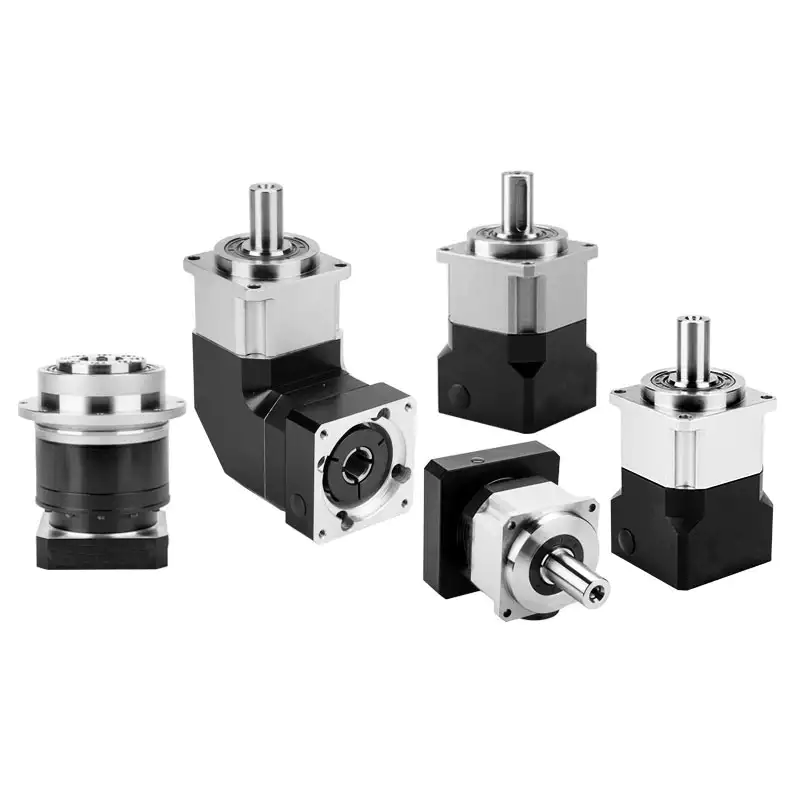
Can gear reducers be used for both speed reduction and speed increase?
Yes, gear reducers can be utilized for both speed reduction and speed increase, depending on their design and arrangement. The functionality to either decrease or increase rotational speed is achieved by altering the arrangement of gears within the gearbox.
1. Speed Reduction: In speed reduction applications, a gear reducer is designed with gears of different sizes. The input shaft connects to a larger gear, while the output shaft is connected to a smaller gear. As the input shaft rotates, the larger gear turns the smaller gear, resulting in a decrease in output speed compared to the input speed. This configuration provides higher torque output at a lower speed, making it suitable for applications that require increased force or torque.
2. Speed Increase: For speed increase, the gear arrangement is reversed. The input shaft connects to a smaller gear, while the output shaft is connected to a larger gear. As the input shaft rotates, the smaller gear drives the larger gear, resulting in an increase in output speed compared to the input speed. However, the torque output is lower than that of speed reduction configurations.
By choosing the appropriate gear ratios and arrangement, gear reducers can be customized to meet specific speed and torque requirements for various industrial applications. It’s important to select the right type of gear reducer and configure it correctly to achieve the desired speed reduction or speed increase.
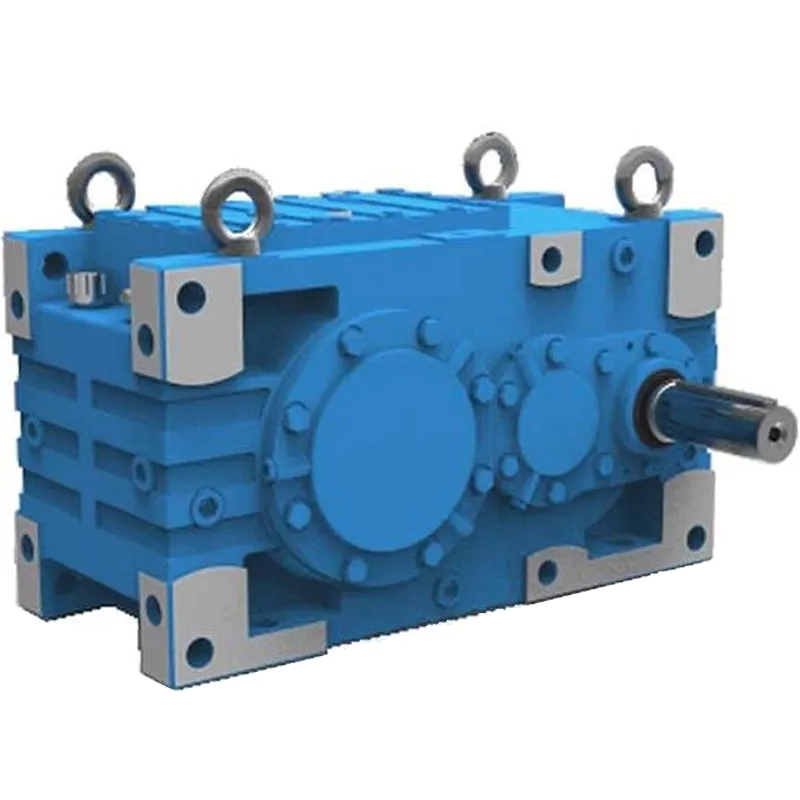
Can you explain the different types of gear reducers available in the market?
There are several types of gear reducers commonly used in industrial applications:
1. Spur Gear Reducers: These reducers have straight teeth and are cost-effective for applications requiring moderate torque and speed reduction. They are efficient but may produce more noise compared to other types.
2. Helical Gear Reducers: Helical gears have angled teeth, which provide smoother and quieter operation compared to spur gears. They offer higher torque capacities and are suitable for heavy-duty applications.
3. Bevel Gear Reducers: Bevel gears have conical shapes and intersect at an angle, allowing them to transmit power between non-parallel shafts. They are commonly used in applications where shafts intersect at 90 degrees.
4. Worm Gear Reducers: Worm gears consist of a worm (screw) and a mating gear (worm wheel). They offer high torque reduction and are used for applications requiring high ratios, although they can be less efficient.
5. Planetary Gear Reducers: These reducers use a system of planetary gears to achieve high torque output in a compact design. They provide excellent torque multiplication and are commonly used in robotics and automation.
6. Cycloidal Gear Reducers: Cycloidal drives use an eccentric cam to achieve speed reduction. They offer high shock load resistance and are suitable for applications with frequent starting and stopping.
7. Harmonic Drive Reducers: Harmonic drives use a flexible spline to achieve high gear reduction ratios. They provide high precision and are commonly used in applications requiring accurate positioning.
8. Hypoid Gear Reducers: Hypoid gears have helical teeth and non-intersecting shafts, making them suitable for applications with space limitations. They offer high torque and efficiency.
Each type of gear reducer has its own advantages and limitations, and the choice depends on factors such as torque requirements, speed ratios, noise levels, space constraints, and application-specific needs.


editor by CX 2023-10-24