Productomschrijving
Timber grab slew drive reducer
| Model Slewing Drive | SC14 | Brand | Coresun Drive |
| Holding Torque | 48Kn.m | Tilting Moment Torque | 67.8Kn.m |
| Self-locking | Yes | Gear Ratio | 85:1 |
| Outer Dia. | 390mm | Inner Dia. | 295mm |
| IP Class | IP65 | Precision | ≤0.12° |
Coresun Drive slew worm drive system is a compactly constructed unit which consists of a slewing ring, base plate and worm.
This unit brings the advantages of a slewing ring and a worm into 1 unit. It is suitable for applications which demand slow rotation with a continuous or cyclical movement capable of handling combined loads.
The product is with standard dimensions for coupling an electric or hydraulic motor as well as coupling a whole system to equipment. Due to its compactness, high rigidity and other mentioned advantages, a worm drive system is used in varying equipment such as mobile assembly platforms, satellite system, hydraulic loading cranes on haulage vehicles, small marine cranes, extendable rotating ladders, in wheel units of large marine portal transporters.
Advantages
1. Rotation 360 degrees
2. Connection of a driving motor from the left or right side
3. During installation, it is not necessary to adjust the gearing clearance; this is already set by the producer before factory
4. Simple installation and low maintenance
5. Rational space utilization
6. The gear is self-locking; therefore a brake is not necessary
7. Easy and fluent method of starting and stopping
Beschrijving
There are no special limitations of mounting angles and positions of this series of products. It can be mounted horizontally, vertically and inclined. Enclosed slewing drives are assembled of enclosed housing, slewing bearing, worm shaft and other parts. Users can choose electric motors or hydraulic motors as the driving power. It can slew 360 degrees clock-wise or otherwise. The slewing drive is compact and it is also easy to mount and maintain in comparison with other types of driving devises.
Features
It adopts enclosed design and the protection level can reach IP65. It can effectively prevent dust, rain and other hostile environments. It suits field usage such as desert, alpine and other hostile environments.
1.Products are easy to mount and maintain.
2.The design and mounting dimensions are international or domestic universal dimensions. It is easy for the users’ replacements in the future.
Tilting Moment Torque: Torque is the load multiplied by distance between the position of load and the center of slewing bearing. If the qorque generated by load and distance is greater than the rated tilting moment torque, slewing drive will be overturned.
Radial load: Load vertical to the axis of slewing bearing
Axial load: Load parallel to the axis of slewing bearing
Holding torque:It is the reverse torque.When the drive is rotating reversely, and parts are not damaged,The maximum torque achieved is called holding torque.
Self-locking: Only when loaded, the slewing drive is not able to reverse rotate and thus called self-locking.
Coresun Drive Slewing Bearing Production Precision and Backlash Testing.Ensuring smooth operation.
Coresun Drive testing reports for WH products on measurement, material and finished production.
CONTACT US
It is sincerely looking CHINAMFG to cooperating with you and providing the best quality product & service with all of our heart!
/* 22 januari 2571 19:08:37 */!function(){function s(e,r){var a,o={};try{e&&e.split(“,”).forEach(function(e,t){e&&(a=e.match(/(.*?):(.*)$/))&&1
| Holding Torque: | 48kn.M |
|---|---|
| Tilting Moment Torque: | 67.8kn.M |
| Static Axial Load: | 920kn |
| Static Radial Laod: | 343kn |
| Slewing Bearing: | Worm Gear |
| Sollicitatie: | Man Lift Crane |
| Aanpassing: |
Beschikbaar
| Aangepast verzoek |
|---|
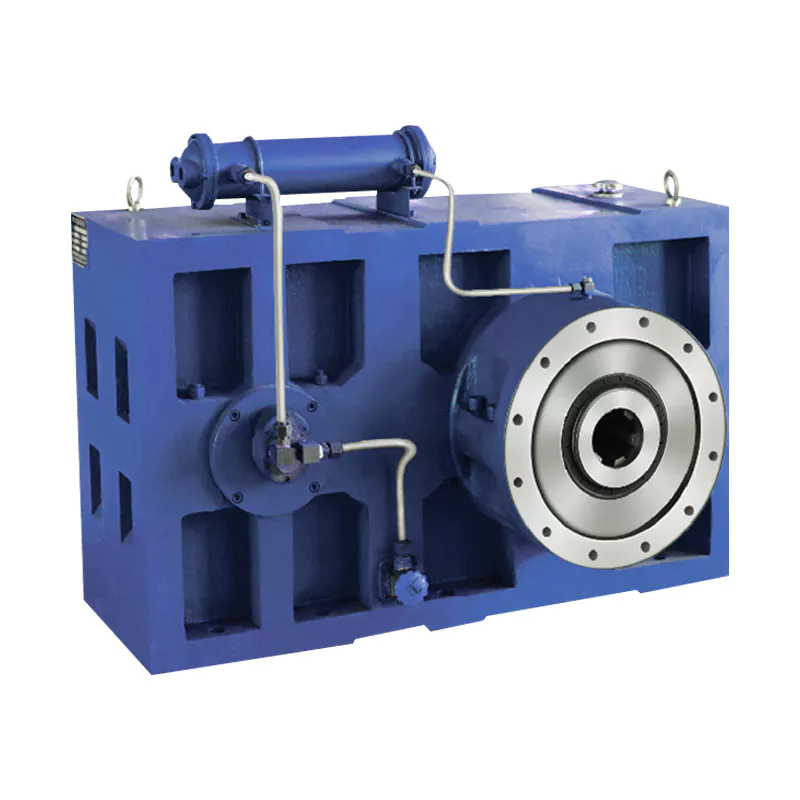
Kunt u praktijkvoorbeelden geven van producten die gebruikmaken van tandwielkasttechnologie?
Zeker! Tandwielreductortechnologie wordt veel gebruikt in diverse industrieën en producten om de prestaties en efficiëntie te verbeteren. Hier zijn enkele praktijkvoorbeelden:
1. Industriële machines: Tandwielkasten worden veel gebruikt in productieapparatuur, zoals transportsystemen, apparatuur voor materiaalverwerking en assemblagelijnen. Ze helpen bij het regelen van de snelheid en het koppel voor nauwkeurige bewerkingen.
2. Windturbines: Windturbines maken gebruik van tandwielkasten om de lage rotatiesnelheid van de rotor van de windturbine om te zetten in de hogere snelheid die nodig is voor elektriciteitsopwekking. Zo wordt de energieomzetting geoptimaliseerd.
3. Autotransmissies: Auto's maken gebruik van tandwielkasten als onderdeel van hun transmissie om de vermogensoverdracht van de motor naar de wielen te optimaliseren. Hierdoor kan het voertuig efficiënt functioneren bij verschillende snelheden.
4. Robotica: Robotsystemen maken gebruik van tandwielkasten om de beweging en de articulatie van robotarmen te regelen. Hierdoor zijn nauwkeurige en gecontroleerde bewegingen voor diverse toepassingen mogelijk.
5. Drukpersen: Tandwielkasten zijn een integraal onderdeel van drukpersen en zorgen voor een nauwkeurige en gesynchroniseerde beweging van drukplaten, rollen en papierinvoermechanismen.
6. Transportbanden: Transportsystemen in sectoren als mijnbouw, landbouw en logistiek maken gebruik van tandwielkasten om de beweging van materialen langs de transportbanden te regelen.
7. Verpakkingsmachines: Tandwielkasten spelen een cruciale rol in verpakkingsmachines. Ze regelen de snelheid en de beweging van verpakkingsmaterialen, vulmechanismen en afdichtingscomponenten.
8. Kranen en takels: Kranen en hijswerktuigen zijn afhankelijk van tandwielkasten om zware lasten nauwkeurig en gecontroleerd te kunnen tillen. Zo wordt een veilige en efficiënte materiaalbehandeling gegarandeerd.
9. Pompen en compressoren: Tandwielkasten worden in pompen en compressoren gebruikt om de vloeistofstroom en -druk te regelen en zo het energieverbruik in vloeistoftransportsystemen te optimaliseren.
10. Landbouwmachines: Tractoren en andere landbouwmachines maken gebruik van tandwielkasten om de snelheid en het vermogen aan te passen voor verschillende taken, zoals ploegen, planten en oogsten.
Deze voorbeelden illustreren de uiteenlopende toepassingen van tandwielkasttechnologie in diverse industrieën en laten zien welke rol deze technologie speelt bij het verbeteren van de efficiëntie, besturing en prestaties in een breed scala aan producten en systemen.
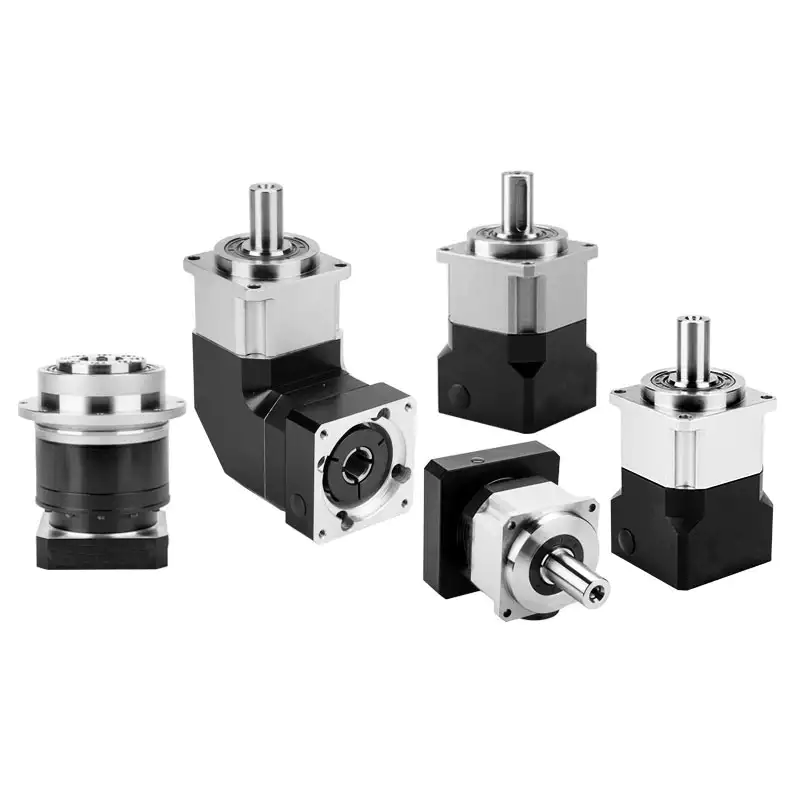
Can gear reducers be used for both speed reduction and speed increase?
Yes, gear reducers can be utilized for both speed reduction and speed increase, depending on their design and arrangement. The functionality to either decrease or increase rotational speed is achieved by altering the arrangement of gears within the gearbox.
1. Speed Reduction: In speed reduction applications, a gear reducer is designed with gears of different sizes. The input shaft connects to a larger gear, while the output shaft is connected to a smaller gear. As the input shaft rotates, the larger gear turns the smaller gear, resulting in a decrease in output speed compared to the input speed. This configuration provides higher torque output at a lower speed, making it suitable for applications that require increased force or torque.
2. Speed Increase: For speed increase, the gear arrangement is reversed. The input shaft connects to a smaller gear, while the output shaft is connected to a larger gear. As the input shaft rotates, the smaller gear drives the larger gear, resulting in an increase in output speed compared to the input speed. However, the torque output is lower than that of speed reduction configurations.
By choosing the appropriate gear ratios and arrangement, gear reducers can be customized to meet specific speed and torque requirements for various industrial applications. It’s important to select the right type of gear reducer and configure it correctly to achieve the desired speed reduction or speed increase.
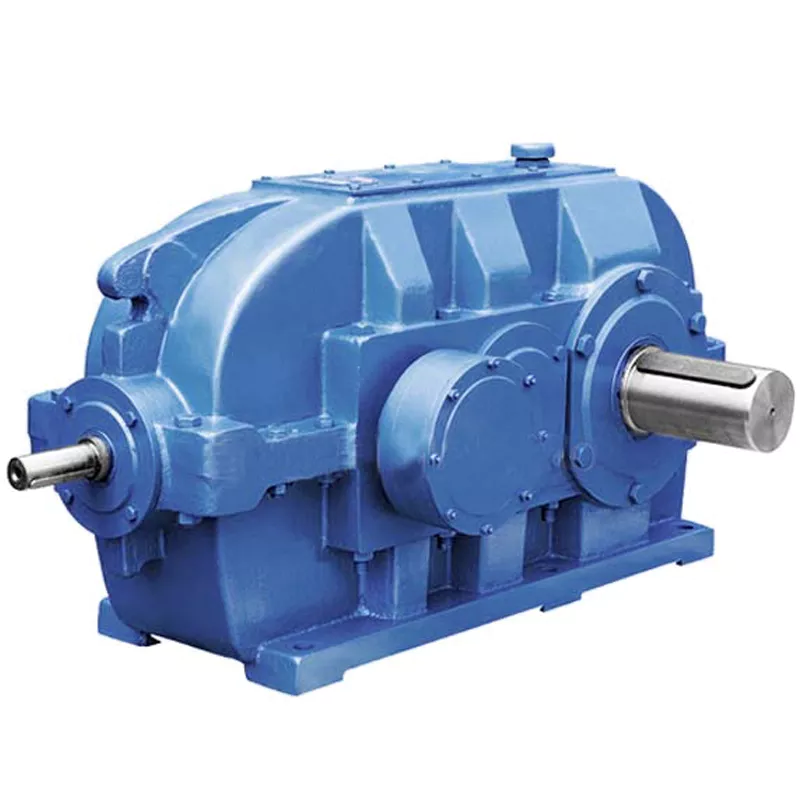
How do gear reducers handle variations in input and output speeds?
Gear reducers are designed to handle variations in input and output speeds through the use of different gear ratios and configurations. They achieve this by utilizing intermeshing gears of varying sizes to transmit torque and control rotational speed.
The basic principle involves connecting two or more gears with different numbers of teeth. When a larger gear (driving gear) engages with a smaller gear (driven gear), the rotational speed of the driven gear decreases while the torque increases. This reduction in speed and increase in torque enable gear reducers to efficiently adapt to variations in input and output speeds.
The gear ratio is a critical factor in determining how much the speed and torque change. It is calculated by dividing the number of teeth on the driven gear by the number of teeth on the driving gear. A higher gear ratio results in a greater reduction in speed and a proportionate increase in torque.
Planetary gear reducers, a common type, use a combination of gears including sun gears, planet gears, and ring gears to achieve different speed reductions and torque enhancements. This design provides versatility in handling variations in speed and torque requirements.
In summary, gear reducers handle variations in input and output speeds by using specific gear ratios and gear arrangements that enable them to efficiently transmit power and control motion characteristics according to the application’s needs.


editor by CX 2024-04-26